The sinking became a national trauma.
South Korea had experienced other accidents and disasters, but the Sewol tragedy struck a particularly painful nerve because it involved so many young people and raised questions about the systems designed to protect them.
The question was no longer only how the ferry had sunk.
It was how the disaster had been allowed to develop, why the evacuation had failed, and why the emergency response had not saved more lives.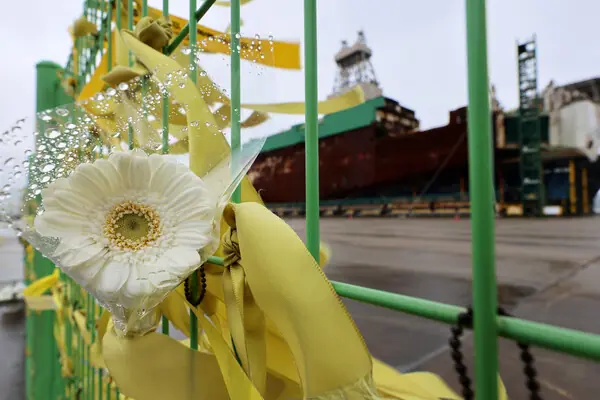
Chapter 6: What Caused the Sewol Ferry to Capsize?
The sinking of the Sewol was not attributed to one isolated mistake. Investigations identified a combination of problems involving the vessel's condition, cargo, stability, navigation, and operational oversight.
One of the most significant findings concerned the ferry's modification.
The ship had undergone structural changes intended to increase passenger and cargo capacity. Those changes affected its stability. A vessel's ability to remain upright depends on a careful balance among its design, weight distribution, ballast, cargo, and movement through the water.
When a ship is modified, its stability must be assessed properly. Changes to upper structures can raise the center of gravity, while additional cargo can affect how the vessel responds to turns and waves.
Investigators also found that the Sewol was carrying far more cargo than the recommended limit. The freight and vehicles aboard were reported to exceed the permitted cargo capacity by a substantial margin.
The vessel's ballast water was also insufficient. Ballast helps maintain stability by placing weight low in the ship. If there is too little ballast, the vessel may be less able to recover when it begins to lean.
These conditions created a dangerous combination.
On the morning of April 16, the ferry made a sharp turn while navigating waters known for strong currents. The movement contributed to cargo shifting inside the vessel. Once a large amount of weight moved toward one side, the ship began to list.
Because its stability had already been compromised by the modifications, overloading, and inadequate ballast, it could not recover.
The ferry continued to tilt until it capsized.
This explanation matters because it shows that the disaster was not simply the result of bad weather or an unavoidable natural event.
The sea conditions and navigation environment were part of the circumstances, but investigations identified serious failures in how the ship had been prepared, loaded, operated, and supervised.
The vessel's operator had responsibilities to ensure that the ferry was safe to sail. The crew had responsibilities to navigate and respond to danger. Inspection and regulatory bodies had responsibilities to ensure that safety requirements were being followed.
The disaster revealed failures across several parts of that chain.
A ship can be built to carry hundreds of people safely, but that capacity depends on the vessel being maintained and operated within its limits. When weight restrictions, stability requirements, and safety procedures are ignored, the consequences can be severe.
The Sewol tragedy became a case study in how multiple failures can combine to create a catastrophe.
It also demonstrated why maritime safety cannot depend only on the skill or judgment of one captain. It requires an entire system of checks, accountability, training, and emergency preparedness.
Chapter 7: The Cargo, the Modifications, and the Failures Behind the Disaster
The discovery that the Sewol had been overloaded and structurally altered shocked many people.
Passengers generally do not know how much cargo a ferry is carrying. They do not inspect ballast tanks, loading records, or stability calculations before boarding. They trust the operator and the relevant authorities to ensure that the vessel is fit for service.
That trust is a basic part of commercial transportation.
Investigators found that the ferry had been modified after its acquisition by the company operating it. The changes were intended to increase capacity, but they affected the ship's balance and stability.
The problem was compounded by the amount of cargo carried on the final voyage.
Vehicles and freight must be loaded according to strict procedures. Their weight and position matter. Cargo also needs to be secured so that it cannot move significantly when a vessel turns, encounters waves, or changes speed.
If heavy objects shift suddenly, the ship's center of gravity can change. That can make an existing list worse and reduce the vessel's ability to return to an upright position.
The Sewol's cargo was found to be far above the recommended maximum. Investigators reported that it was carrying more than three times the recommended cargo weight. The cargo was also not adequately secured.
The ferry's ballast water was insufficient, further reducing its stability.
These details are important because they help explain why the ship did not recover after the sharp turn. A vessel in good condition, properly loaded and correctly ballasted, is designed to withstand normal movements during navigation. The Sewol had lost much of that safety margin before the emergency began.
The findings also raised questions about the economic pressures surrounding the ferry operator.
The company was responsible for operating a commercial service. Revenue from passengers and freight was part of its business model. Investigators concluded that cargo loading practices were connected to the company's financial interests.
But commercial pressure cannot justify ignoring safety limits.
A ferry operator's responsibility is not simply to transport the greatest possible amount of freight. It must ensure that every voyage is conducted within the rules designed to protect passengers, crew, and the vessel itself.
The tragedy exposed the danger of treating safety requirements as obstacles to business efficiency.
It also raised questions about inspection. A ship's safety depends not only on what its operator claims but on whether independent oversight can verify the vessel's condition.
If a vessel is modified, overloaded, or improperly prepared, those problems should be identified before it leaves port.
The Sewol sailed despite conditions that investigators later identified as dangerous.
For the families of the victims, the findings made the disaster even harder to accept. The loss of life had not resulted from one unforeseeable moment alone. It was connected to decisions and failures that had developed over time.
Chapter 8: The Captain, the Crew, and the Question of Responsibility
The conduct of the captain and crew became one of the most controversial parts of the Sewol disaster.
In a maritime emergency, the captain holds a position of responsibility. Passengers depend on the captain and crew to understand the condition of the ship, issue clear instructions, and coordinate an evacuation when necessary.
The Sewol's passengers were repeatedly told to remain inside even as the vessel was listing more severely.
That decision had devastating consequences.
The captain and several crew members left the ship and were rescued. Many passengers remained aboard, unable to escape before the ferry sank.
The contrast caused widespread outrage.
Families asked how the people responsible for passenger safety could leave while children and other travelers were still trapped. Survivors described the confusion caused by the announcements and the difficulty of escaping as the ship tilted.
The captain was later convicted in criminal proceedings. Initially sentenced to a lengthy prison term, his sentence was increased to life imprisonment on appeal. Other crew members also faced criminal convictions and penalties.
The legal proceedings were important, but they did not resolve every question.
Responsibility for a disaster of this scale cannot be examined only through the actions of the people on the bridge. The ship operator, those responsible for loading and securing cargo, inspection bodies, and emergency agencies all formed part of the wider system.
The Sewol tragedy demonstrated that safety depends on many people performing their duties correctly.
The captain's decisions during the emergency were central, but they were not the only failures that mattered.