These findings helped establish that the disaster was not simply an unavoidable accident.
The captain and crew members faced criminal proceedings. The captain received a life sentence, while other crew members were also convicted. Officials and employees connected to the ferry operator and other parts of the system faced investigations and legal consequences.
The company responsible for operating the ferry became a central focus of scrutiny. Its management practices and relationship with the vessel's safety requirements were examined.
The wider corporate and regulatory environment also attracted attention. The disaster raised concerns about whether oversight systems had become too closely connected to the businesses they were supposed to supervise.
In the years that followed, the government and independent bodies continued examining different aspects of the tragedy.
Not every question was answered to the satisfaction of the families. Some relatives continued to seek a fuller explanation of the rescue operation and the decisions made by officials.
This continuing search for accountability became part of the Sewol story.
For bereaved families, a conviction or official report could not bring back their children. But understanding how the disaster happened mattered because it could help prevent another tragedy.
They wanted more than expressions of sympathy. They wanted institutions to acknowledge failures and demonstrate that lessons had been learned.
Chapter 13: How the Disaster Changed the Conversation About Safety
The Sewol disaster forced South Korea to reconsider the way passenger transportation and emergency response were managed.
Safety regulations are meaningful only when they are enforced. A ferry can have emergency equipment, trained staff, and formal procedures, but those protections are ineffective if the vessel is overloaded or the crew does not know how to respond.
The disaster highlighted several areas that require constant attention.
First, vessel stability must be protected. Structural modifications, cargo weight, ballast, and loading arrangements must be assessed carefully. A ship should never be allowed to sail with conditions that compromise its ability to remain upright.
Second, cargo must be secured properly. Heavy vehicles and freight can shift during navigation. Their placement and securing arrangements are not minor operational details. They are essential parts of maritime safety.
Third, passenger instructions must be clear. During an emergency, passengers may be frightened and confused. They need direct guidance about whether to remain in place, put on life jackets, move toward an exit, or abandon the vessel.
Fourth, crew members must be trained for real emergencies. Routine safety demonstrations are not enough. Crew members must understand their roles and be prepared to act when normal procedures are no longer possible.
Fifth, rescue agencies need effective coordination. The response to a major maritime emergency involves multiple organizations. They must share accurate information, establish clear command responsibilities, and deploy resources without unnecessary delays.
Finally, accountability must extend beyond the people physically present during the emergency. Operators, inspectors, regulators, and government agencies all have responsibilities that contribute to passenger safety.
These lessons apply far beyond South Korea.
Passenger ferries carry millions of people around the world. Many routes connect islands, coastal communities, and major cities. For some passengers, ferries are an essential form of transportation rather than a holiday experience.
Every operator must understand that safety is not an optional expense. It is the foundation of the service.
The Sewol disaster demonstrated what can happen when several safeguards fail at the same time.
Chapter 14: Remembering the 304 Victims
The number 304 has become inseparable from the name Sewol.
But behind that number were individual lives.
There were students who had been looking forward to their trip, teachers who had accompanied them, and other passengers who had boarded the ferry for different reasons. Each person had family members and friends who expected to see them again.
For parents who lost children, the tragedy changed every part of daily life.
Birthdays became reminders of the years their children would never experience. School calendars and graduation ceremonies became painful occasions. Ordinary objects, photographs, messages, and personal belongings could bring back memories with overwhelming intensity.
The families also had to navigate public attention. Their grief became part of a national conversation, and many relatives continued speaking publicly because they believed that the tragedy should never be forgotten.
The yellow ribbon became a symbol of that commitment.
It appeared at memorials, public gatherings, schools, and private homes. For many people, wearing or displaying the ribbon was a simple way to express solidarity with the families.
Memorials also preserved the names and photographs of the victims.
These spaces matter because remembrance is more than an annual ceremony. It is a way of recognizing that the victims were people whose lives had value and whose absence continues to affect others.
The recovered ferry itself became an important physical reminder of the disaster. After a long salvage operation, the vessel was raised from the seabed in 2017 and transported to Mokpo.
Its damaged and rusted structure became a visible reminder of the events of April 16, 2014.
For visitors and families, seeing the ship can bring the tragedy into sharper focus. It is no longer only a story told through photographs or television reports. It is a physical object connected to a moment that changed hundreds of families forever.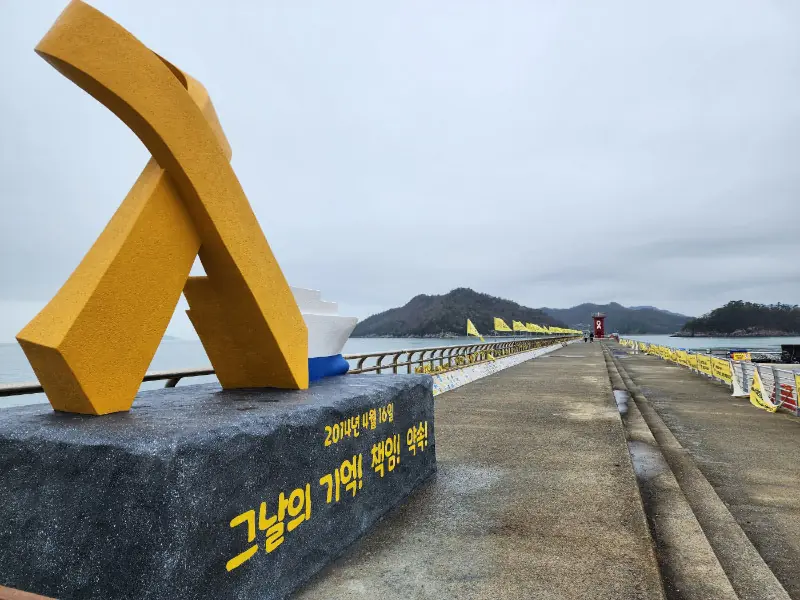
Chapter 15: Why the Sewol Disaster Must Never Be Reduced to a Statistic
More than a decade after the sinking, the Sewol disaster remains a defining event in South Korean public memory.
The passage of time has changed the way some people encounter the story. Younger generations may learn about it through school lessons, documentaries, memorials, and accounts from survivors and families.
But the central questions remain important.
How can a passenger vessel be allowed to sail with dangerous loading conditions? Why were passengers repeatedly instructed to remain inside while the ferry was capsizing? Why was the rescue response unable to reach so many people? And how can institutions ensure that similar failures do not happen again?
These are not questions that belong only to the past.
They are relevant to every country that operates passenger ships, organizes school excursions, or relies on public agencies during emergencies.
The tragedy also reminds people that safety depends on a culture of responsibility. Regulations must be respected even when compliance costs money or slows business. Crew members must be empowered and trained to act. Emergency agencies must communicate clearly. Leaders must accept responsibility when systems fail.
Most importantly, passengers must never be treated as secondary to operational convenience.
The students aboard the Sewol were not statistics. They were young people with lives ahead of them. Their families had trusted that a school trip and a commercial ferry journey would be safe.
That trust was broken.
Remembering the Sewol disaster means remembering the 304 people who died, acknowledging the survivors and families who continue to carry its consequences, and recognizing the failures that made the tragedy possible.
It also means asking whether the lessons have been put into practice.
A memorial can preserve a name. An investigation can establish facts. A court can determine legal responsibility. But preventing another disaster requires continuous action long after public attention has moved elsewhere.
The Sewol ferry was supposed to carry its passengers to Jeju Island.
Instead, it became the center of one of South Korea's darkest maritime tragedies—a disaster that exposed the consequences of unsafe operations, failed leadership, and an emergency response that came too late for hundreds of people.
The 304 lives lost must never be forgotten. Their memory is not only a reason to mourn. It is a responsibility to make sure that the safety of every passenger is treated as something that can never be compromised.