At 22 years old, he seemed like the definition of good health. He exercised several times a week, maintained a balanced diet, and rarely caught even a common cold. There were no chronic illnesses in his medical history, no smoking habits, and only occasional social drinking. From the outside—and even to himself—there was no reason to suspect that anything serious was developing beneath the surface.
That is precisely why the diagnosis felt so unreal.
He had tuberculosis.
Not the dramatic, historical image often associated with the disease. Not the extreme, visibly debilitating version portrayed in old photographs. Instead, it was active pulmonary tuberculosis—quiet, infectious, and potentially dangerous—identified only because of a symptom subtle enough that most people would have dismissed it.
The Symptom That Seemed Harmless
It began with something ordinary: a cough.
There was no alarming fever. No sharp chest pain. No dramatic weight loss. Just a mild, persistent cough that lingered longer than expected. At first, it seemed insignificant. Perhaps seasonal allergies. Maybe a mild viral infection. Possibly irritation from dry air or pollution.
Some days the cough faded, almost disappearing. Other days it returned, dry and irritating. It never felt severe—just persistent.
Weeks passed.
Then came occasional night sweats. Not soaking sheets or frightening episodes—just waking up slightly damp, uncomfortable, and confused. Stress, he assumed. Warm weather. A heavy blanket.
Life continued. Work continued. Social outings continued.
He felt functional. Productive. Normal.
What ultimately prompted him to see a doctor was not pain or fear—it was duration. The cough had lasted more than a month. It was no longer a minor inconvenience. It was a pattern.
That decision—to seek evaluation—likely prevented far greater consequences.
The Diagnosis No One Expected
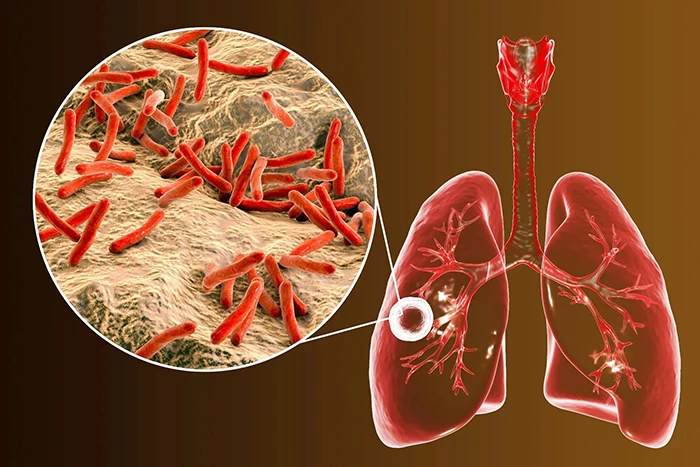
A routine medical visit led to a chest X-ray. The imaging revealed abnormalities in his lungs. Additional laboratory testing confirmed the presence of Mycobacterium tuberculosis—the bacterium responsible for tuberculosis (TB).
Pulmonary tuberculosis.
The words felt misplaced in his life.
Tuberculosis is often associated with:
-
Advanced age
-
Malnutrition
-
Weakened immune systems
-
Crowded or impoverished living conditions
He did not identify with any of those risk categories.
But infectious diseases do not follow stereotypes.
Why Tuberculosis Is Often Overlooked
Many people assume tuberculosis is a relic of the past. In reality, it remains a global public health concern, affecting millions annually. While rates are lower in some countries, the disease has not disappeared.
One of the reasons TB continues to spread is that early symptoms are subtle and nonspecific.
Common early signs include:
-
A cough lasting more than 2–3 weeks
-
Mild but persistent fatigue
-
Low-grade fever
-
Night sweats
-
Gradual, unexplained weight loss
Each of these symptoms can easily be attributed to something minor—stress, a lingering cold, overwork, or lifestyle changes.
Young adults, in particular, often dismiss such signs because they generally feel resilient and healthy.
In this case, the 22-year-old man continued commuting, working, exercising, and socializing while unknowingly carrying an airborne infection.

The Hidden Risk of Waiting
Tuberculosis spreads through microscopic droplets expelled when an infected person coughs, speaks, laughs, or even breathes in close proximity to others. Enclosed spaces increase transmission risk.
If left untreated:
-
Lung tissue can suffer progressive damage
-
Cavities may form in the lungs
-
The infection can spread beyond the lungs
-
Treatment becomes more complex and prolonged
-
Multiple individuals may become infected
Doctors explained that early detection significantly reduced the likelihood of severe lung destruction and community spread.
The disease had not yet advanced to its most destructive stage.
Timing made the difference.

Treatment: Long, Demanding, but Effective
Tuberculosis treatment is not simple. It requires a carefully monitored, multi-drug antibiotic regimen lasting several months—often six months or longer.
During the initial phase, he was required to limit close contact with others to prevent transmission.
The medications were powerful and came with side effects:
-
Fatigue
-
Nausea
-
Appetite fluctuations
-
Occasional dizziness
Consistency was critical. Missing doses could allow the bacteria to develop resistance, making treatment more difficult and dangerous.
Gradually, follow-up imaging showed improvement. The infection responded to therapy. The inflammation in his lungs decreased. His cough diminished.
Because the disease was identified before extensive damage occurred, his prognosis remains strong. Physicians expect a full recovery.
The Broader Lesson
This experience reveals an important reality:
Youth does not equal immunity.
Good habits reduce risk—but they do not eliminate it.
Tuberculosis does not always announce itself dramatically. Sometimes it whispers through small, persistent signals:
-
A cough that lingers
-
Night sweats without explanation
-
Fatigue disproportionate to daily activity
The danger lies not in how loudly it begins, but in how easily it can be ignored.
When Should Medical Evaluation Be Considered?
Healthcare professionals generally recommend seeking medical attention if you experience:
-
A cough lasting longer than 2–3 weeks
-
Recurrent night sweats without clear cause
-
Persistent, unexplained fatigue
-
Gradual weight loss
-
Coughing up blood—even small amounts
These symptoms do not automatically indicate tuberculosis. Many conditions can cause similar signs. However, persistent symptoms warrant investigation.
Early diagnosis not only protects individual health but also prevents transmission to others.
Final Reflection
The 22-year-old man never imagined tuberculosis as a possibility. Most people in his position would not.
That is precisely why his story matters.
Tuberculosis remains dangerous not because it begins aggressively—but because it often begins quietly.
Awareness is not panic. It is preparedness.
Sometimes the body speaks softly. And sometimes, the smallest symptom carries the most important message.