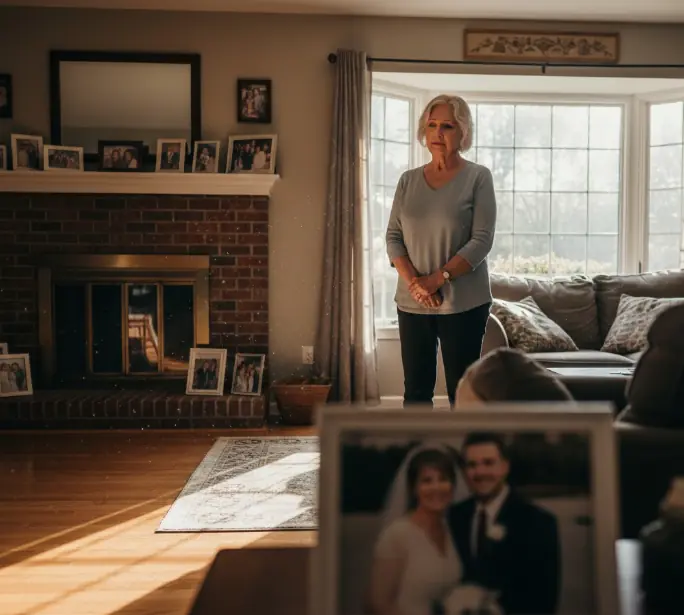
I didn't hate my daughter-in-law, i just didn't know how to let go of my son
I didn't hate my daughter-in-law, i just didn't know how to let go of my son
Story 08/02/2026 10:12
After twenty years of marriage i realized we had become strangers
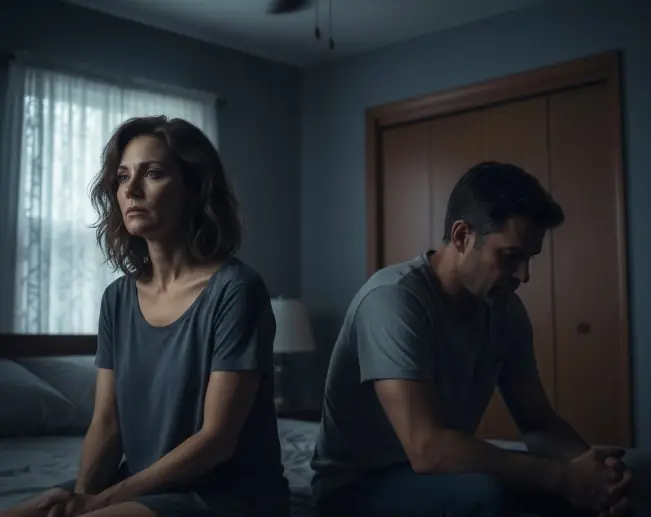
The sound of the ceiling fan was the only thing filling the bedroom—a rhythmic, hypnotic "click-whoosh" that had become the soundtrack to my insomnia. Beside me, Thomas breathed with the heavy, predictable cadence of a man who was already miles away in sleep. I lay there, staring at the familiar patterns of moonlight on the closet door, and realized that if a stranger were to walk into this room, they would see two people sharing a bed. But I knew the truth: we were just two bodies occupying the same coordinates, separated by a vast, invisible ocean that had been rising for two decades.
We didn't become strangers overnight. It wasn't a sudden storm that washed away the bridge between us; it was a slow, persistent drought.
Twenty years ago, our conversations were like sprawling, unmapped trails. We would sit in our first cramped apartment in Boston and talk until the sun came up—about our fears of failure, our ridiculous dreams of traveling to Iceland, and the strange, beautiful ways our minds worked. Back then, Thomas knew the specific cadence of my laughter and the exact shade of my silence when I was worried. I knew the way his hands shook when he was excited and the way he tucked his chin when he was about to say something profound.
Now, our dialogue had been reduced to a lean, efficient shorthand. It was a language of logistics. "Did you pay the water bill?" "The car needs an oil change on Thursday." "Don't forget it's your mother’s birthday next week." We were excellent project managers of a life we no longer seemed to inhabit together. We had mastered the art of co-existence while failing the art of connection.
The realization hit me with the quiet force of a falling leaf during dinner a few nights ago. I was telling him about a book I had started—a memoir about a woman who traveled through the Silk Road. I was halfway through a sentence about the author’s description of the desert stars when I looked up. Thomas was nodding, but his eyes were fixed on the salt shaker. He wasn't listening to the story; he was waiting for the noise to stop so he could ask if we had enough laundry detergent.
In that moment, I saw the distance. It wasn't that he was being unkind; it was simply that he had stopped being curious about me. And, with a sharp pang of guilt, I realized I had stopped being curious about him, too. I hadn't asked him what he thought about lately, or what he was afraid of, or if he still wanted to go to Iceland. I had accepted the "shorthand" version of Thomas because it was easier than navigating the complex man underneath.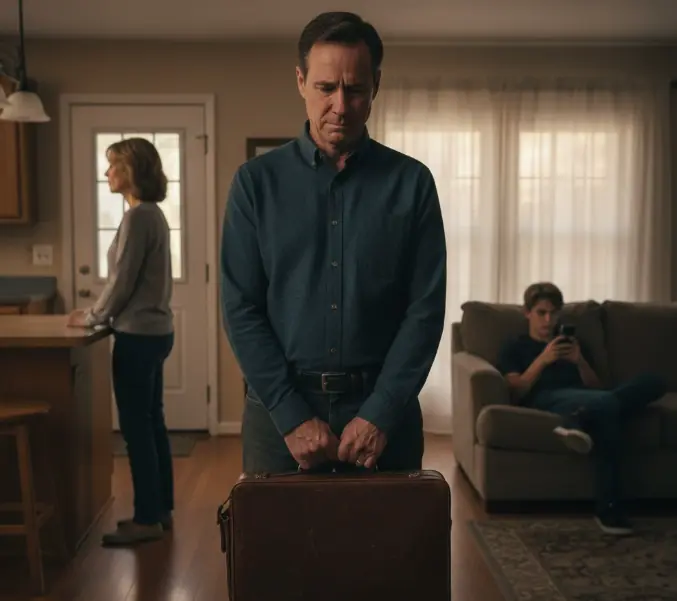
The emotional disconnect was a physical weight. We would sit on the same sofa to watch a movie, but we sat on separate cushions, our shoulders never touching. We walked the dog together in the evenings, but we kept a three-foot gap between us, both of us staring straight ahead as if the sidewalk held the answers to our isolation. We were two people who knew each other’s medical histories and social security numbers, yet we didn't know what the other person was thinking when they looked out the window.
The routine was our armor. We hid behind the kids' school schedules, the house renovations, and the demanding cycles of our careers. We told ourselves we were "busy," but the truth was we were hiding. It is terrifying to admit that the person you promised to spend your life with has become a mystery to you. It is easier to talk about the leaky faucet than it is to talk about the leak in the marriage.
I spent weeks in a state of internal mourning. I missed the man who used to read poetry to me while I cooked. I missed the woman who used to believe that love was enough to bridge any gap. I wondered if this was just the natural evolution of long-term partnership—if the fire eventually just turns into a pile of lukewarm stones. I questioned if I was being ungrateful. We had a good life. We were safe, we were healthy, and we were "fine." But "fine" is a dangerous word when it comes to the heart. It is a word that suggests we have settled for a life without color.
The turning point didn't come from a dramatic argument or a tearful ultimatum. It came on a rainy Saturday afternoon while we were cleaning out the garage. I found an old, dusty box of cassette tapes from our college days. One of them had "For Elena" written in Thomas’s messy, youthful scrawl.
I took it inside and found an old player in the attic. As the crackly music began to fill the kitchen—a song we had danced to at our wedding—Thomas walked in. He stopped in the doorway, a box of old tools in his arms. He stood there for a long time, the music bridging the twenty-year gap between the people we were and the strangers we had become.
"I remember this," he said, his voice sounding different—younger, somehow.
"I found it in the garage," I replied, leaning against the counter. "I haven't heard this in a lifetime."
He set the box down and walked over to me. He didn't hug me or offer a grand apology. He just stood close enough that I could feel the heat from his skin.
"Elena," he said, looking at me—really looking at me—for the first time in months. "When was the last time we actually talked? Not about the house or the kids, but... just talked?"
The honesty of the question was like a sudden light in a dark room. "I don't know," I admitted. "I think we got lost in the logistics, Thomas. I think we started treating each other like roommates instead of partners."
"I’ve missed you," he said, and the vulnerability in his voice made my heart ache. "I’ve been sitting right next to you for years, and I’ve missed you the whole time."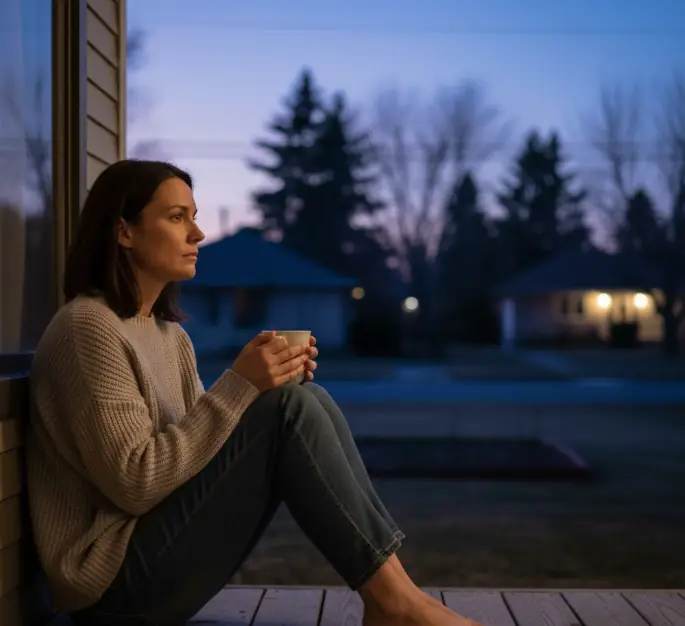
We didn't solve everything that afternoon. You don't undo twenty years of drift in a single conversation. But we sat at the kitchen table with our coffee, and for the first time in a decade, we didn't talk about the bills or the schedule. We talked about the music. We talked about the dreams we had tucked away. We talked about how tired we were of being "fine."
It was an honest, awkward, and deeply uncomfortable conversation. We had to admit that we had both been lazy with our love. We had to acknowledge that we had allowed the routine to become a substitute for intimacy. But as the sun began to set, casting a warm, golden glow across the table, I felt a sense of peace that I hadn't felt in years.
Acceptance is a quiet thing. I realized that the "Iceland version" of our love was gone, and that was okay. We couldn't go back to being twenty-two, but we could start being forty-two together. We could choose to be curious again. We could choose to bridge the ocean, one small, honest word at a time.
Tonight, as I lie here listening to the ceiling fan, the silence doesn't feel like a canyon anymore. Thomas reached out in his sleep and rested his hand on my arm—a small, unconscious gesture of connection. I didn't pull away. I closed my eyes and realized that while we had become strangers, we weren't lost. We were just two people who had forgotten the way home, and we were finally, slowly, beginning to find it again. We aren't "fine" tonight. We are something much better: we are awake.
I didn't hate my daughter-in-law, i just didn't know how to let go of my son

We stayed together after the affair but nothing ever felt the same
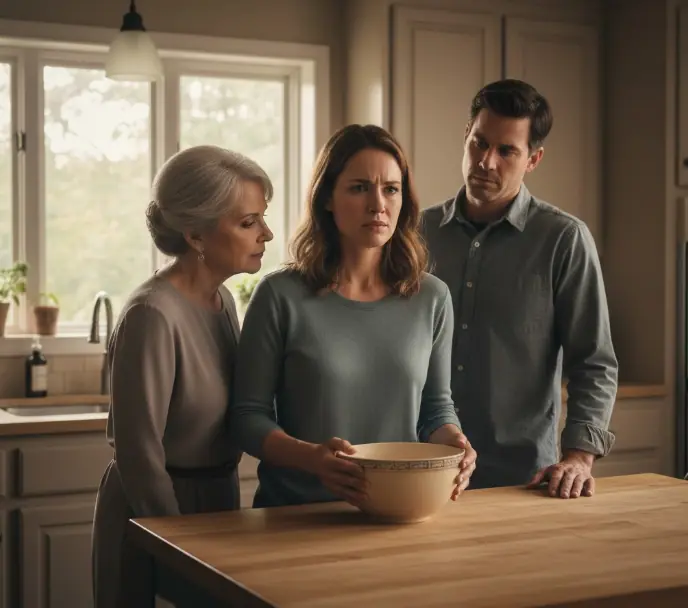
I thought marrying him meant building a life together, not living under his mother’s shadow
I fell in love with someone who was already married and i chose to walk away
I thought providing for my family was enough until i saw the distance in their eyes
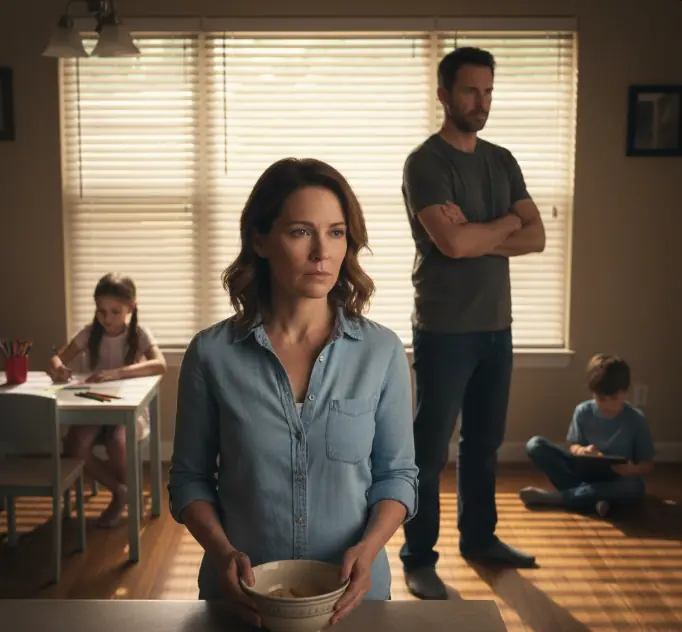
I stayed in my marriage for the children and lost myself along the way
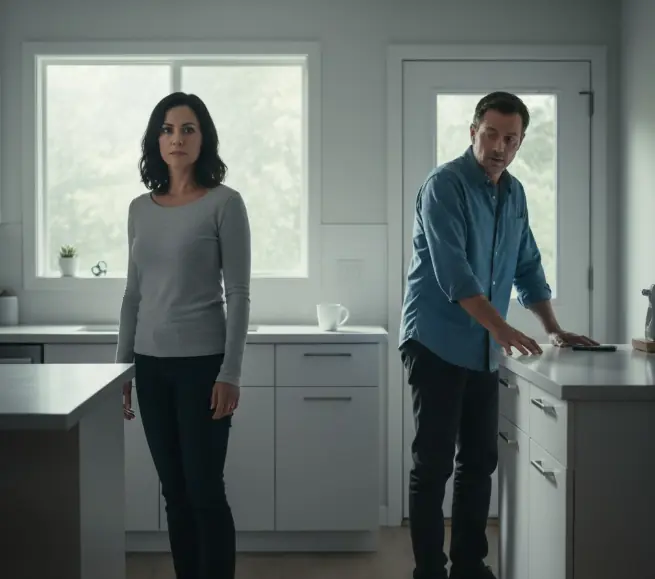
I found out about my husband’s affair long before he knew i knew

— Here are the keys to your apartment; I’m keeping the car — the wife left the family on her own birthday

“You’re giving your apartment to my wife!” the sister’s husband declared. “It’s only fair.”
A Husband Threatened That His Mother Would Come and “Set His Wife Straight.” But Her Reply Made Them Both Regret It

Filing for divorce, her ex-husband thought he’d leave his wife without money or a home – but he was in for a surprise

I’m the one choosing the land plot—I’m the man! And you’re paying for it,” her husband blurted resentfully

“Yes, I Put the Home in My Name. No, It’s Not a Dorm for My Husband’s Relatives Now!”

I’ll be spending New Year’s with my mistress. I’m already ashamed to show you off to my buddies!” her husband declared

And what makes you think I’m the one leaving with the kids? You filed for divorce, so you raise them yourself!” the wife said

“You’re sleeping in the kitchen tonight,” the wife told her husband after his mother’s visit

Just imagine her face when she sees—there’s no money!” my husband laughed, transferring all of his wife’s money to his mother

“Leaving, are you? And who’s going to pay off my parents’ loan?” the husband asked his wife
I didn't hate my daughter-in-law, i just didn't know how to let go of my son
We stayed together after the affair but nothing ever felt the same
I thought marrying him meant building a life together, not living under his mother’s shadow
I fell in love with someone who was already married and i chose to walk away
I thought providing for my family was enough until i saw the distance in their eyes
I stayed in my marriage for the children and lost myself along the way

I never planned to hurt my family but one choice changed everything
I found out about my husband’s affair long before he knew i knew

Crispy fried mushrooms: the irresistible snack everyone is craving

Heart attacks rarely happen without warning. In many cases, the body begins sending subtle but persistent signals weeks before a major cardiac event.

Even young individuals can experience strokes, as highlighted by the case of a 19-year-old suffering a stroke after a headache.
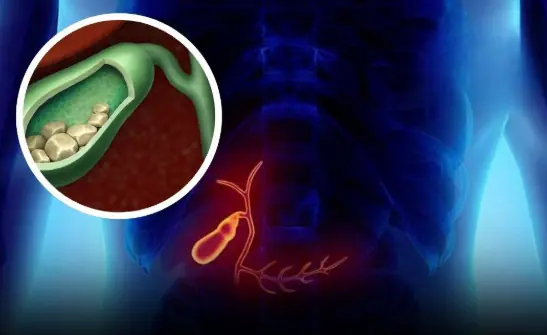
Abdominal pain, loss of appetite, vomiting, weight loss... can be warning signs of gallbladder cancer.

Chicken eggs contain various types of protein that can trigger allergies, especially in the egg white.

In addition to its vital deto.xification role, the liver also functions in metabolism, synthesis, and secretion of essential compounds in the body.

The Importance of Beans in Controlling Diabetes.


Kidney failure is a serious condition that can lead to lifelong dialysis or other severe health complications if left untreated.

One Key Tip for Choosing Cabbage: Guaranteed Crunchy and Sweet Flavor
— Here are the keys to your apartment; I’m keeping the car — the wife left the family on her own birthday