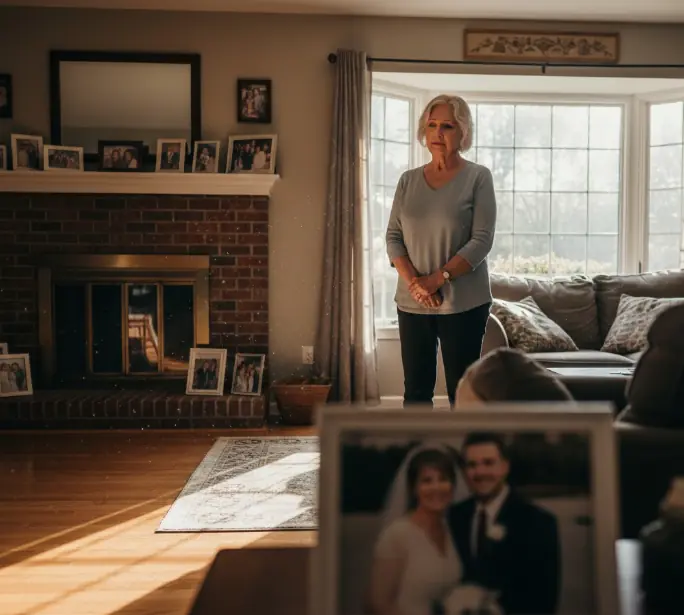
I didn't hate my daughter-in-law, i just didn't know how to let go of my son
I didn't hate my daughter-in-law, i just didn't know how to let go of my son
Story 08/02/2026 10:12
I thought marrying him meant building a life together, not living under his mother’s shadow
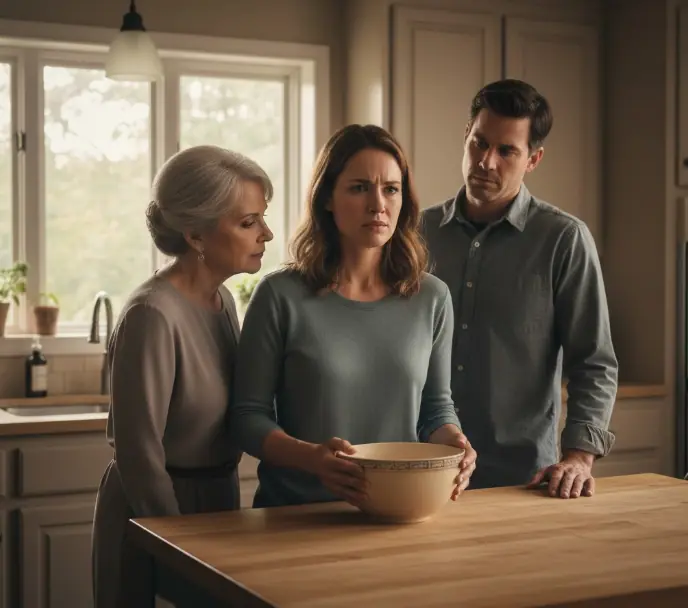
The morning light in our kitchen in Connecticut was always beautiful, but lately, it felt like it was illuminating a space that wasn't entirely mine. I was standing at the stove, carefully preparing a batch of blueberry muffins for a Saturday brunch we were hosting for some of Mark’s old college friends. It was a small thing—a recipe I had perfected over the years—but as I reached for the cinnamon, the back door clicked open.
I didn't have to look up to know who it was. The rhythmic, confident click of heels on the hardwood announced the arrival of Eleanor, my mother-in-law. She didn't knock; she never did. In her mind, she wasn't an intruder; she was the matriarch tending to her kingdom.
"Oh, Elena dear," she said, her voice like silk wrapped around a needle. She leaned over my shoulder, peering into the mixing bowl. "Blueberries? Mark has always preferred lemon poppy seed for brunch. It’s a family tradition, you know. I brought over a tin of the proper seeds just in case you wanted his friends to feel truly at home."
She placed the tin on the counter, inches from my bowl. It was a gesture of "helpfulness" that felt like a gentle shove. This was the pattern of my marriage—a series of subtle, soft-spoken interventions disguised as concern. It wasn't just the muffins; it was the color of our curtains, the way we invested our savings, and even the frequency of our visits to my own parents. Eleanor didn't bark orders; she suggested, she sighed, and she reminded us of how things "should" be done in their family.
When I first met Mark, I admired his closeness with his mother. In a world of fractured families, their bond seemed like a testament to his capacity for love. I thought marrying him meant joining a warm, supportive circle. I didn't realize that the circle was actually a fence, and Eleanor held the gate.
The drama of living under Eleanor’s shadow wasn't a series of shouting matches. It was far more psychological. It was the way she would call Mark at 10:00 PM to discuss a "minor" health concern, knowing we were finally sitting down for a quiet movie. It was the way she would offer unsolicited advice on my career, suggesting that perhaps a "less demanding" role would be better for our future family. It was emotional manipulation practiced with the precision of a surgeon.
"I only say this because I love you both so much," she would whisper, her hand resting on my arm. "I just want you to have the easiest path possible."
The real ache, however, didn't come from Eleanor. It came from the silence of my husband.
Mark is a kind man, a brilliant engineer who can solve the most complex structural problems, yet he becomes entirely paralyzed when it comes to the structure of our marriage. Every time I tried to bring up the lack of boundaries, he would offer the same weary defense.
"She’s just being Mom, Elena. She’s getting older, and she just wants to be involved. Is it really worth a fight?"
He didn't see that by refusing to "fight" her, he was forcing me to fight for my own autonomy every single day. He didn't see that every time he allowed her to overrule a decision we had made together, he was chipping away at the foundation of our partnership. I wasn't just living with a husband; I was living with a husband and his mother’s invisible, constant presence at the dinner table.
I remember a specific evening in late October. We had finally decided to repaint the guest room—a project I was excited about because it felt like we were finally making this house ours. I had chosen a warm, earthy terracotta. I spent the afternoon with swatches taped to the wall, feeling a sense of creative ownership.
When Mark came home, he looked at the wall and hesitated. "It’s a great color, El. But Mom stopped by earlier while I was in the garden. She mentioned that a soft cream would make the room look larger for when her sisters come to stay. She said the terracotta might feel a bit... heavy."
I stood there, the paintbrush in my hand feeling like a lead weight. It wasn't about the paint. It was about the fact that Eleanor’s opinion had arrived at our house before I had even finished my day. It was about the fact that Mark had listened to her "suggestion" and brought it to me as if it were a valid concern, instead of saying, "Elena and I have already decided."
The emotional loneliness of being "the other woman" in your own marriage is a unique kind of grief. You start to doubt your own instincts. You wonder if you’re being too sensitive, too demanding, or too modern. You try to play the part of the "good wife," which in Eleanor’s world meant being a vessel for her traditions.
The realization that love alone is not enough hit me during a quiet Sunday afternoon. We were at Eleanor’s house for the mandatory weekly lunch. I was sitting in her perfectly preserved living room, surrounded by photos of Mark as a boy, when I heard them talking in the kitchen.
"She’s a lovely girl, Mark," Eleanor said, her voice low. "But she’s very headstrong. You have to be careful, darling. A home needs a gentle hand to guide it, like I guided your father. I’m only telling you this because I want your marriage to last."
I waited for Mark to defend me. I waited for him to say that my strength was one of the reasons he loved me. I waited for him to tell her that her "guidance" was no longer required.
But all I heard was a quiet, "I know, Mom. I’ll talk to her."
The "I’ll talk to her" felt like a betrayal more profound than any lie. In that moment, I saw our relationship with terrifying clarity. Mark wasn't building a life with me; he was trying to fit me into the life his mother had already designed. He was a man divided, and as long as he refused to choose his wife over his mother’s comfort, I would always be an outsider in my own home.
Respect is the soil in which love grows. Without it, love eventually withers into resentment. I realized that by accepting the "lemon poppy seed" interventions and the "soft cream" guest rooms, I was teaching Mark that my boundaries didn't matter. I was allowing my own autonomy to be traded for a superficial peace.
I didn't pack a bag that night. I didn't scream or issue an ultimatum. Instead, when we got home, I sat Mark down in our terracotta-colored guest room.
"Mark," I said, my voice calm and steady. "I love you. But I’ve realized that I’ve been living in a house with three people, and there’s only room for two. I cannot be the person who manages your mother’s expectations for the rest of my life. That is your job. And until you decide that our vision for this life is more important than her 'suggestions,' we aren't actually partners. We’re just playing house under her supervision."
He looked at me, really looked at me, for the first time in months. I saw the fear in his eyes—the fear of upsetting the woman who had raised him. But I also saw a flicker of understanding.
"I don't want you to feel like an outsider," he whispered.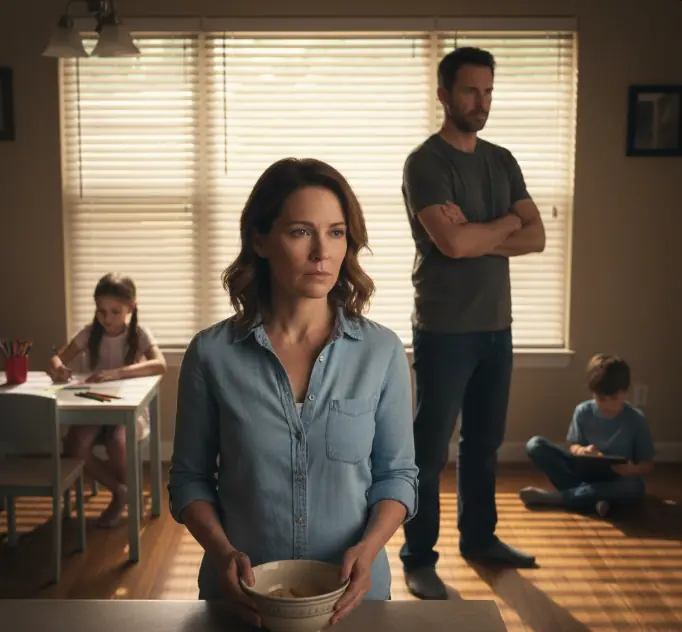
"Then stop making me one," I replied.
The clarity didn't fix the marriage overnight. Eleanor still tries to walk through the back door without knocking, and Mark still struggles with the word "no." But the shadow has begun to recede. I am learning that setting a boundary isn't an act of war; it’s an act of self-respect. I am reclaiming my kitchen, my guest room, and my voice.
I’m no longer waiting for Eleanor to change, because I’ve realized she never will. The change had to come from me. I had to decide that my autonomy was worth the discomfort of a difficult conversation. I am building a life now—one where the blueberries belong in the muffins because I want them there, and where the man I love is finally starting to stand by my side, rather than in his mother’s shadow.
I didn't hate my daughter-in-law, i just didn't know how to let go of my son

We stayed together after the affair but nothing ever felt the same
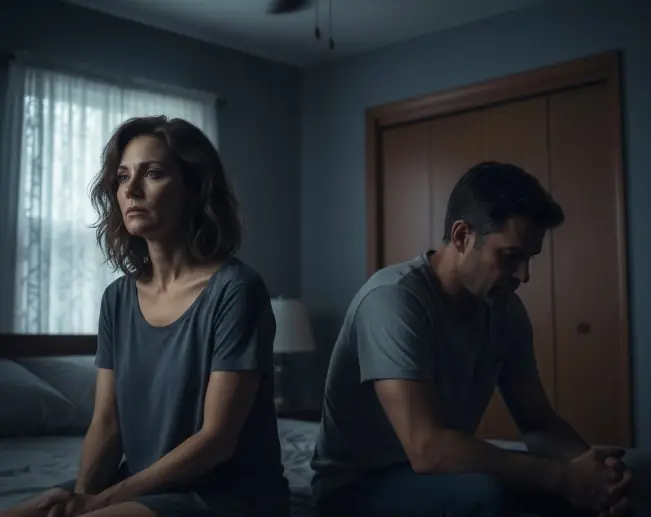
After twenty years of marriage i realized we had become strangers
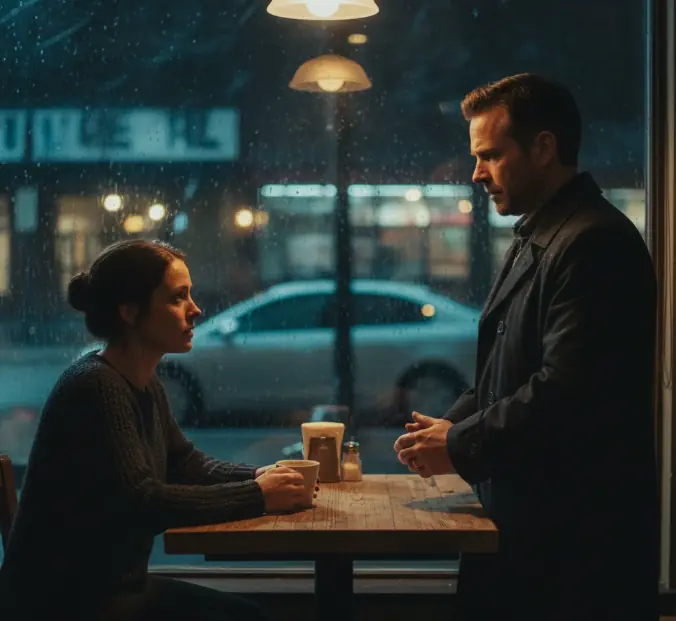
I fell in love with someone who was already married and i chose to walk away

I thought providing for my family was enough until i saw the distance in their eyes
I stayed in my marriage for the children and lost myself along the way

I never planned to hurt my family but one choice changed everything

I found out about my husband’s affair long before he knew i knew

— Here are the keys to your apartment; I’m keeping the car — the wife left the family on her own birthday

“You’re giving your apartment to my wife!” the sister’s husband declared. “It’s only fair.”
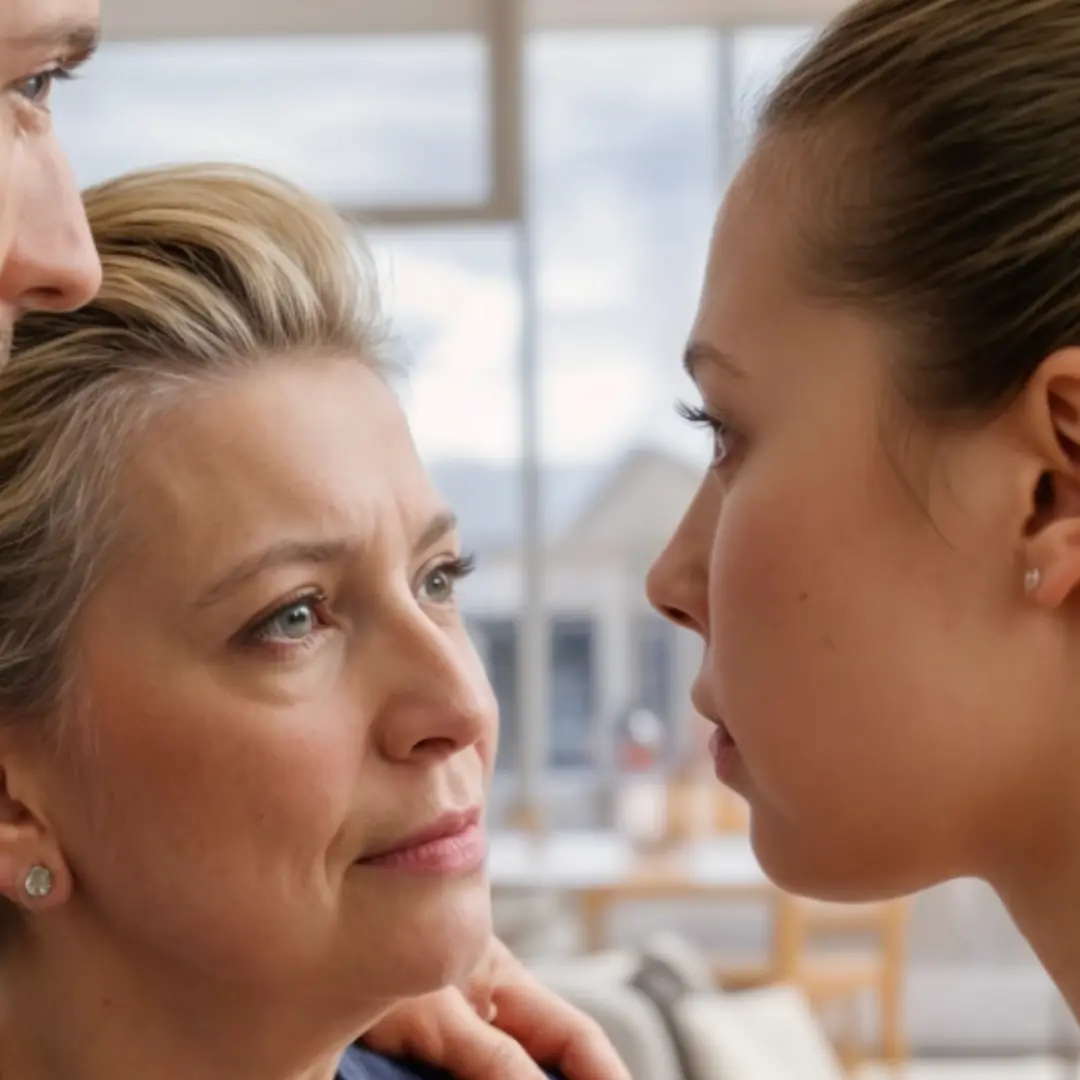
A Husband Threatened That His Mother Would Come and “Set His Wife Straight.” But Her Reply Made Them Both Regret It

Filing for divorce, her ex-husband thought he’d leave his wife without money or a home – but he was in for a surprise

I’m the one choosing the land plot—I’m the man! And you’re paying for it,” her husband blurted resentfully

“Yes, I Put the Home in My Name. No, It’s Not a Dorm for My Husband’s Relatives Now!”

I’ll be spending New Year’s with my mistress. I’m already ashamed to show you off to my buddies!” her husband declared

And what makes you think I’m the one leaving with the kids? You filed for divorce, so you raise them yourself!” the wife said

“You’re sleeping in the kitchen tonight,” the wife told her husband after his mother’s visit

Just imagine her face when she sees—there’s no money!” my husband laughed, transferring all of his wife’s money to his mother

I didn't hate my daughter-in-law, i just didn't know how to let go of my son
We stayed together after the affair but nothing ever felt the same
After twenty years of marriage i realized we had become strangers
I fell in love with someone who was already married and i chose to walk away
I thought providing for my family was enough until i saw the distance in their eyes
I stayed in my marriage for the children and lost myself along the way
I never planned to hurt my family but one choice changed everything
I found out about my husband’s affair long before he knew i knew

Crispy fried mushrooms: the irresistible snack everyone is craving

Heart attacks rarely happen without warning. In many cases, the body begins sending subtle but persistent signals weeks before a major cardiac event.

Even young individuals can experience strokes, as highlighted by the case of a 19-year-old suffering a stroke after a headache.

Abdominal pain, loss of appetite, vomiting, weight loss... can be warning signs of gallbladder cancer.

Chicken eggs contain various types of protein that can trigger allergies, especially in the egg white.

In addition to its vital deto.xification role, the liver also functions in metabolism, synthesis, and secretion of essential compounds in the body.

The Importance of Beans in Controlling Diabetes.


Kidney failure is a serious condition that can lead to lifelong dialysis or other severe health complications if left untreated.

One Key Tip for Choosing Cabbage: Guaranteed Crunchy and Sweet Flavor