The absence of a visible drainage hole does not automatically mean that a lock is poorly made. It may simply use another design approach.
Likewise, the presence of a hole does not automatically mean that a padlock is suitable for every outdoor environment. Its resistance to rain, salt, dust, and corrosion depends on the complete construction, not one small feature.
Materials also play a role.
Brass is commonly used in padlock bodies because it offers useful corrosion resistance in many everyday environments. Stainless steel is another material associated with resistance to rust, although its performance depends on the grade and the conditions in which it is used. Hardened steel may be used for shackles because strength and resistance to cutting are important considerations.
Different combinations of materials can produce different results.
A lock may have a corrosion-resistant body but a shackle that requires additional protection. Another may be designed specifically for environments where salt or moisture exposure is frequent.
The best choice depends on where and how the lock will be used.
For a dry indoor cupboard, a basic padlock may be perfectly adequate. For a garden gate exposed to rain, a model specifically rated or described for outdoor use may be a better option. For a coastal property, where salty air can accelerate corrosion, a more specialized product may be worth considering.
In other words, the tiny hole is only one part of the story. The overall design determines how well a padlock handles its surroundings.
The Difference Between a Weather-Resistant and a Waterproof Padlock
These terms are sometimes used casually, but they should not be treated as interchangeable.
A weather-resistant padlock is designed to tolerate certain environmental conditions better than an ordinary indoor lock. Depending on the model, this may include exposure to rain, humidity, temperature changes, and corrosion.
A waterproof product makes a stronger claim, but the exact meaning depends on the manufacturer's specifications and any applicable testing standard.
A drainage hole alone does not make a padlock waterproof.
In fact, the opening exists partly because moisture may find its way inside. Its purpose is to help manage that moisture, not necessarily to prevent all water from entering.
This is an important distinction when choosing a lock for a particularly demanding location.
For example, a padlock attached to a garden shed may experience occasional rain and damp air. A lock installed near the sea may face salt spray and more aggressive corrosion conditions. A lock used on a boat or exposed outdoor storage unit may need a more specialized level of protection.
Before buying, examine the product description rather than relying only on appearance.
Look for information about:
-
Intended indoor or outdoor use.
-
Body and shackle materials.
-
Corrosion resistance.
-
Weather protection.
-
Manufacturer-recommended maintenance.
-
Any stated limitations or environmental ratings.
A heavy-looking padlock is not necessarily the best choice for a wet environment. Weight and size do not tell the whole story.
A smaller lock made with suitable materials and a design intended for outdoor conditions may provide more reliable long-term service than a larger model intended mainly for indoor use.
How to Maintain a Padlock So It Lasts Longer
Even a well-designed padlock benefits from occasional care.
People often assume that a lock requires no attention because it has no obvious moving handle or visible mechanism. In reality, the internal components are working every time the key turns or the shackle moves.
Dust, grit, moisture, and other contaminants can gradually affect those components. Regular inspection and suitable maintenance can help prevent small problems from becoming major failures.
The first step is simply to look at the lock.
Check the body for visible corrosion, damaged coatings, cracks, or signs that the housing has been struck or deformed. Examine the shackle for rust, scratches, or unusual wear. If the key no longer enters smoothly, or if the mechanism feels different from normal, investigate before the problem becomes worse.
The second step is to keep the exterior clean.
Dirt can collect around the shackle openings and keyway. If it is left there, it may eventually work its way into the mechanism. A soft cloth can remove ordinary surface dirt, while a suitable brush may help clear debris from accessible areas.
Avoid forcing dirt deeper into the lock.
If the manufacturer recommends using compressed air to clear dust from the keyway and shackle openings, follow the instructions carefully. Do not use excessive pressure or attempt to disassemble a lock that is not designed for user servicing.
The third step is to lubricate the mechanism when necessary.
Lubrication can reduce friction and help moving parts operate smoothly. However, the product must be appropriate for the lock. Master Lock, for example, publishes maintenance guidance recommending its specified PTFE lock lubricant for its products and advises against using dry graphite or silicone lubricant in the models covered by that guidance.
That recommendation should not be interpreted as a universal rule for every lock on the market. Other manufacturers may specify different products or procedures.
Always check the instructions for your particular model.
The fourth step is to avoid over-lubrication.
More lubricant does not necessarily mean better performance. Excessive application can leave residue, collect dirt, or interfere with the movement of small components. A light application, when recommended, is generally preferable to filling the housing with liquid.
Finally, give the lock time to dry before returning it to a demanding outdoor environment if the maintenance instructions require that step.
A simple inspection every few months can help identify problems early, especially when a padlock is used outside or in a dusty, humid, or corrosive environment.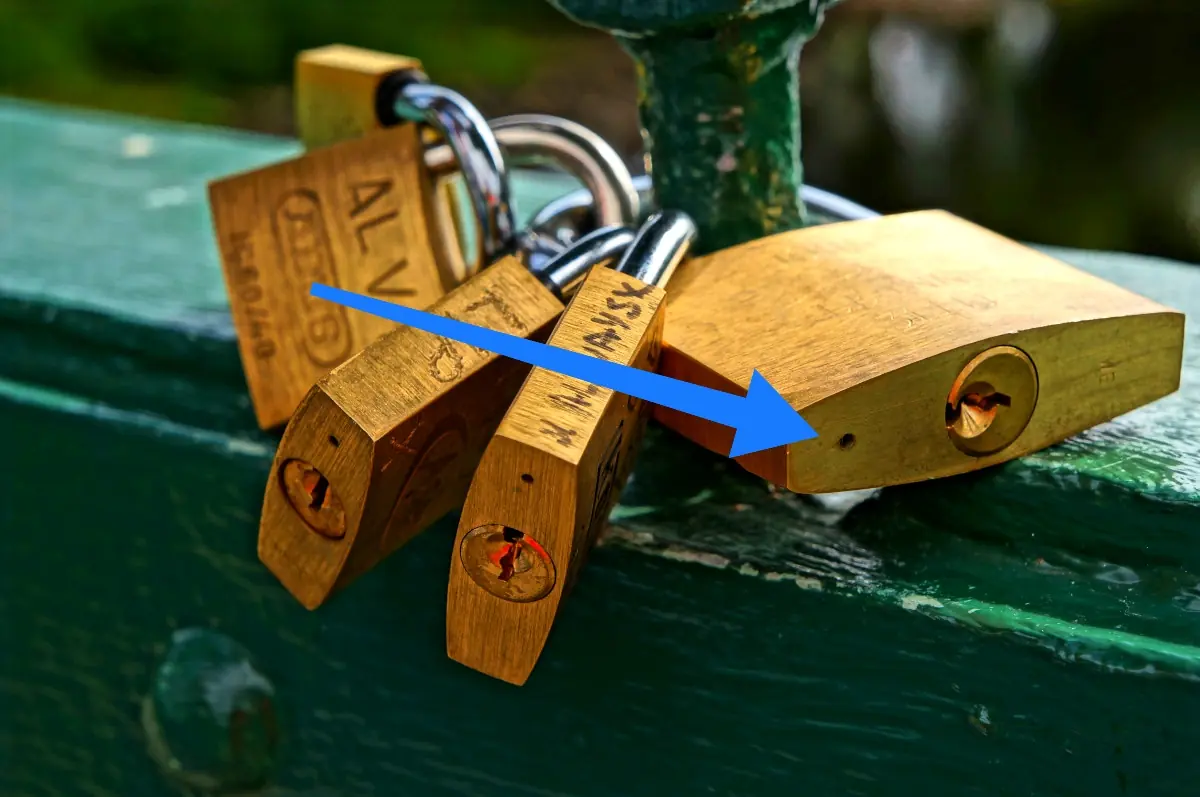
Why Household Oils Are Not Always a Good Idea
When a padlock becomes stiff, many people reach for whatever lubricant happens to be nearby.
Cooking oil, general-purpose household oil, grease, and multipurpose sprays may seem like convenient solutions. They are easy to find, and they can make some mechanical parts feel smoother temporarily.
However, a product that works well on a hinge or bicycle chain may not be suitable for the narrow internal mechanism of a padlock.
Some household oils can leave a sticky film as they age. That residue may attract dust and small particles, creating a mixture that can make the mechanism feel even less responsive over time.
Thick grease can also be unsuitable for a precision lock cylinder. It may not flow into the areas where it is needed, and excessive amounts can collect around moving parts.
Cooking oils are particularly poor choices for this type of maintenance because they are not formulated for lock mechanisms and may deteriorate or become sticky.
General-purpose sprays also vary. Some are designed primarily to displace water or loosen corrosion rather than provide long-term lubrication for precision components.
This does not mean that every multipurpose product is harmful to every padlock. It means that the label and the manufacturer's recommendations matter.
A dedicated lock lubricant is usually the safer starting point when the manufacturer calls for lubrication.
If a lock is already badly corroded, applying lubricant may not solve the underlying problem. A damaged spring, worn cylinder, or severely rusted component may need professional attention or replacement.
The goal is to maintain a functioning mechanism, not to force an unreliable lock to keep working indefinitely.
What to Do When a Padlock Becomes Difficult to Open
A stiff padlock can be frustrating, especially when it is securing something that needs to be accessed immediately.
Before assuming that the lock is broken, consider the conditions in which it has been used.
Has it been exposed to heavy rain? Has it been sitting outdoors for months without maintenance? Is there visible rust around the shackle or keyway? Has the weather recently become unusually cold?