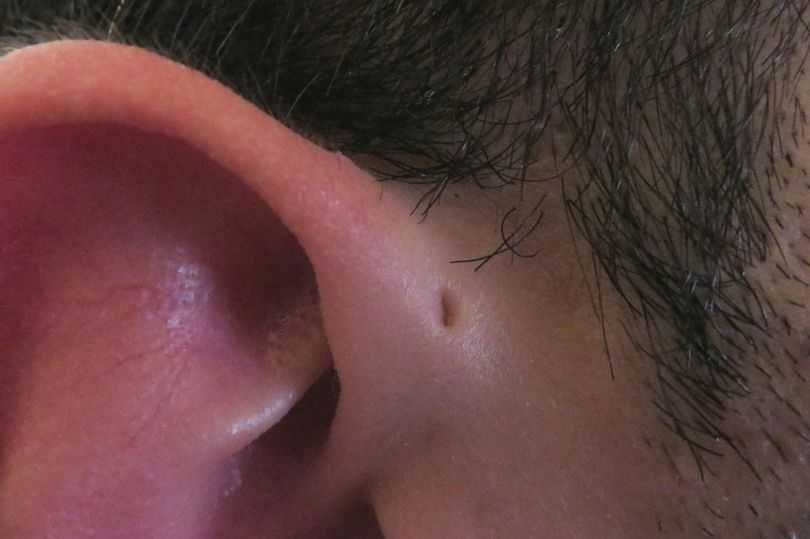
At first glance, a small mark near the ear might seem like nothing more than a harmless skin feature—perhaps a mole, a tiny bump, or a natural indentation. But in recent years, images like this have gone viral online, sparking curiosity and even concern. Many people wonder: could this small mark actually signal something deeper about your health?
Let’s break down what this mark could be, what science says about it, and whether you should really be paying attention.
What Is This “Mark” on the Ear?

The mark shown in the image appears to be a small spot or indentation near the outer ear. In most cases, this could be one of the following:
- A mole (nevus)
- A preauricular pit (a small congenital hole or indentation)
- A minor skin variation or pore
These are usually harmless and quite common.
The Viral Claim: Is It Linked to Heart Disease?
Some social media posts suggest that marks or creases on the ear—especially around the earlobe—could be linked to heart problems. This idea is often associated with a feature called:
- Diagonal Earlobe Crease
This is a diagonal line or crease on the earlobe that some studies have explored as a possible indicator of cardiovascular issues.
However, it’s important to understand:
👉 This is not the same as a small dot or mark near the ear.
👉 And even for earlobe creases, the evidence is still debated.
What Science Actually Says
Research into Frank's sign has shown mixed results:
- Some studies suggest a possible correlation with heart disease
- Others find no strong or consistent link
- It is not used as a diagnostic tool in modern medicine
In short: it may be an interesting observation—but not a reliable medical indicator.

More Likely Explanations for the Mark
For most people, a mark like this is simply:
1. A Natural Skin Feature
Everyone’s skin is unique. Small marks, pores, or pigment spots are normal.
2. A Preauricular Pit
A harmless congenital condition present from birth. It usually causes no problems unless infected.
3. A Mole or Freckle
Pigmented spots that are typically benign but should be monitored for changes.
When Should You Be Concerned?
While most ear marks are harmless, you should pay attention if you notice:
- Rapid changes in size, color, or shape
- Pain, swelling, or discharge
- Bleeding or irritation
- New symptoms appearing suddenly
If any of these occur, it’s best to consult a healthcare professional.
The Psychology Behind Viral Health Claims
Content like this spreads quickly online because it triggers curiosity and concern. It often follows a pattern:
- Show a common feature
- Suggest a hidden meaning
- Create urgency or fear
While some claims are based on partial truths, they are often oversimplified or exaggerated.
What You Should Really Focus On
Instead of relying on visual “signs” alone, focus on proven indicators of health:
- Regular medical check-ups
- Monitoring blood pressure and cholesterol
- Maintaining a healthy lifestyle
- Paying attention to real symptoms (like chest pain or fatigue)
These are far more reliable than interpreting small physical marks.
Final Thoughts
That small mark on the ear? In most cases, it’s completely harmless. While certain ear features like earlobe creases have been studied, they are not definitive indicators of serious conditions.
The key takeaway is simple:
👉 Don’t panic over viral claims - but don’t ignore real symptoms either.