If you drool while sleeping often, check for these 6 diseases
Health 20/12/2025 01:55
If You Have Tiny White Bumps on Your Face, Don’t Try to Remove Them!
Our skin—constantly exposed to the environment—is prone to a variety of conditions. While some issues like eczema or psoriasis are rooted in inflammation and require treatment, not every skin irregularity needs intervention. One common but harmless example? Milia.
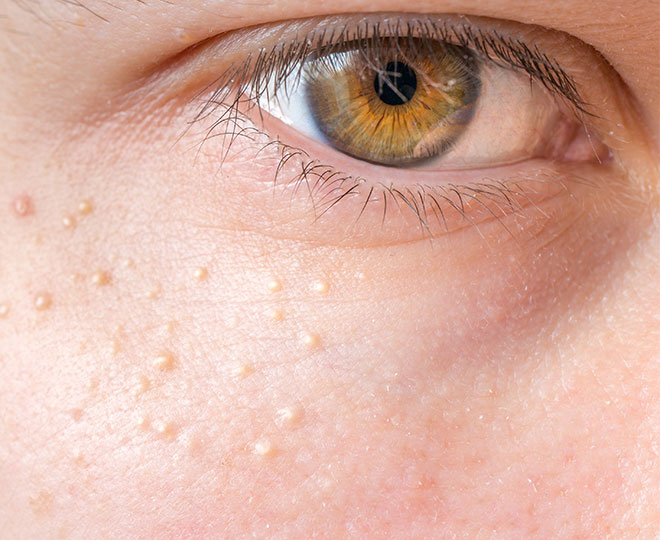
You may have had milia as a baby without even realizing it. These small white bumps, called milium cysts, are caused by trapped keratin—a protein found in skin, hair, and nails. Milia is most common in newborns, as their skin is still learning to exfoliate, but it can appear at any age when dead skin becomes trapped under the surface, often after injury, burns, or heavy product use.
These bumps often show up on the nose, cheeks, chin, and sometimes around the eyes or other parts of the body. Though they may look concerning, milia is completely harmless and usually goes away on its own. Understanding what type of milia you have can help determine whether treatment is needed—or if it’s best left alone.
Milia is classified by age of onset and underlying cause. Here are the main types:
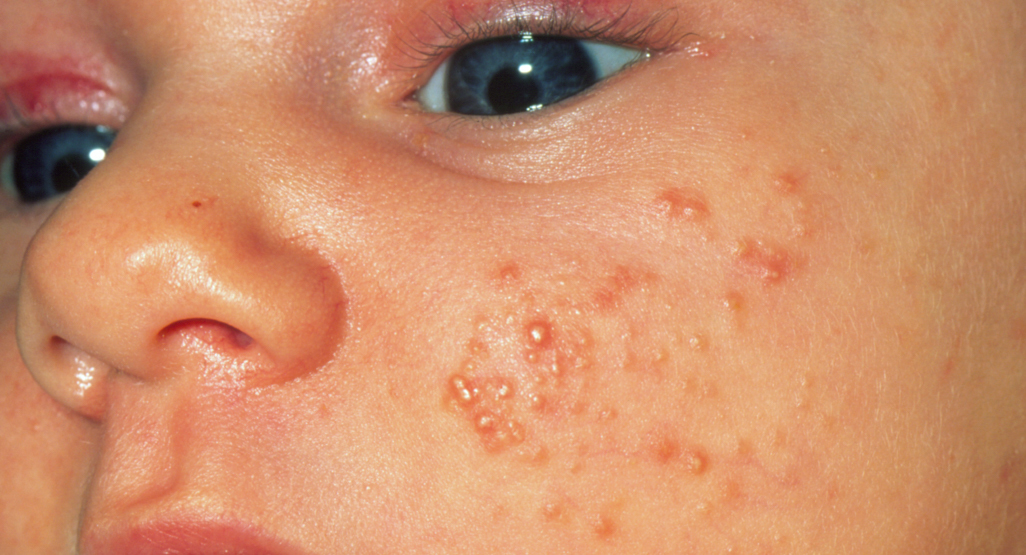
Common in newborns, affecting up to 40% of infants, neonatal milia appears on the face, scalp, or upper torso and typically clears up within a few weeks without treatment.
This rare form is linked to certain genetic conditions like Gardner’s syndrome, Pachyonychia congenita, or NBCCS. It tends to appear early in life and may require specialist care.
This type appears in middle-aged women (though it can affect anyone), and is associated with autoimmune skin conditions like lichen planus or discoid lupus. It typically appears on the eyelids, ears, cheeks, or jawline.
Found in older children and adults, primary milia develops spontaneously around the eyelids, forehead, or genital area and can last from weeks to several months.
These cysts form after skin injuries, such as burns or rashes. They may appear inflamed—red around the edges with a white center—but are still benign.
Milia is usually diagnosed visually by a dermatologist, with no need for skin biopsies in most cases. If you're unsure about the white bumps on your skin, consult a doctor to confirm whether they’re milia or another condition.
In most cases, no treatment is necessary, especially for infants. However, older children and adults may choose removal for cosmetic reasons or mild discomfort.
Common medical treatments include:
Cryotherapy – Freezing the milia with liquid nitrogen.
Deroofing – Using a sterile needle to extract the contents.
Topical retinoids – Creams with vitamin A that help exfoliate the skin.
Chemical peels – Removing the outer skin layer to clear clogged pores.
Laser ablation – Targeting milia with a focused laser.
Diathermy – Using heat to destroy the cyst.
Curettage – Scraping and cauterizing the cyst surgically.
⚠️ Note: Some people try DIY methods using tools like paper clips, but this is not recommended. Always seek professional help to avoid infection or scarring.
Though harmless, milia can be frustrating. The good news? Preventing them is possible with a few lifestyle adjustments:
Sun damage can trigger milia. Protect your skin with broad-spectrum SPF whenever you’re outdoors.
Thick creams, ointments, and even some makeup products can block your pores. Switch to lightweight, non-comedogenic alternatives and avoid exfoliants with harsh microbeads.
Regular exfoliation helps your skin shed dead cells and reduces keratin buildup. While babies don’t need this step, adults should exfoliate as part of their skincare routine.
Milia are harmless, painless, and often temporary. While they may be cosmetically bothersome, they generally don’t require treatment unless you choose to pursue it. If you're unsure or concerned, consult a dermatologist to discuss your options.
In the meantime, treat your skin gently, avoid heavy products, and don’t try to pop or extract milia at home. With patience and the right skincare routine, those tiny white bumps will likely disappear on their own.