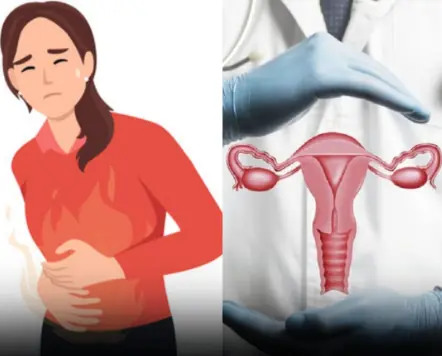
8 Early Warning Signs Of Ovarian Cancer You Shouldn’t Ignore
Health 23/12/2025 00:38
A recent medical case has drawn attention to the potential health risks associated with improper use of nonstick cookware. A woman diagnosed with liver cancer was found to have high levels of so-called “forever chemicals” in her body — substances increasingly linked to serious long-term health effects.
“Forever chemicals” is a common term for PFAS (per- and polyfluoroalkyl substances), a group of synthetic chemicals widely used for their heat resistance and nonstick properties. They are commonly found in:
Nonstick cookware coatings
Waterproof fabrics
Food packaging
Firefighting foams
PFAS are called “forever chemicals” because they do not easily break down and can accumulate in the human body over time.
Experts explain that nonstick pans are generally safe when used correctly, but risks increase when:
Pans are overheated (especially empty pans on high heat)
Coatings are scratched or peeling
Damaged pans continue to be used for years
At high temperatures, degraded coatings may release harmful fumes or increase PFAS exposure, which can then enter the body through inhalation or food contamination.
Multiple international studies have suggested that long-term PFAS exposure may be associated with:
Liver inflammation
Elevated liver enzymes
Fatty liver disease
Increased risk of liver cancer
The liver is particularly vulnerable because it plays a central role in detoxifying chemicals from the bloodstream.
Doctors and toxicology specialists advise consumers to:
Avoid heating nonstick pans on high heat
Replace pans with damaged or peeling coatings
Use wooden or silicone utensils instead of metal
Consider alternatives such as stainless steel or cast iron cookware
They also emphasize that PFAS exposure comes from multiple sources, not just cookware, making risk reduction a cumulative effort.
While a single pan will not cause cancer on its own, chronic low-level exposure over many years may increase health risks. Awareness and correct usage are key to minimizing unnecessary chemical exposure in daily life.