The 5 Stages of Kidney Failure
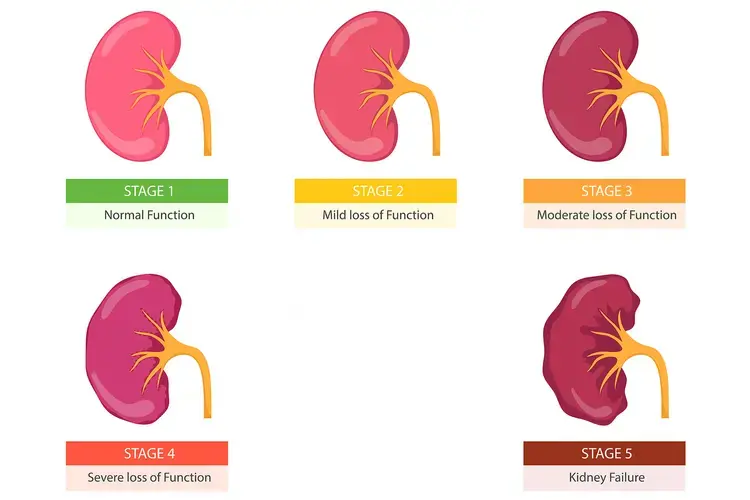
Kidney failure progresses through five stages, based on the estimated glomerular filtration rate (eGFR), which measures how well the kidneys filter waste from the blood. As kidney function declines, waste builds up in the body.
Stage 1: eGFR 90 or above
Kidneys are functioning normally but may show mild signs of damage. There are usually no noticeable symptoms. Monitoring and healthy lifestyle habits are important to prevent progression.
Stage 2: eGFR 60–89
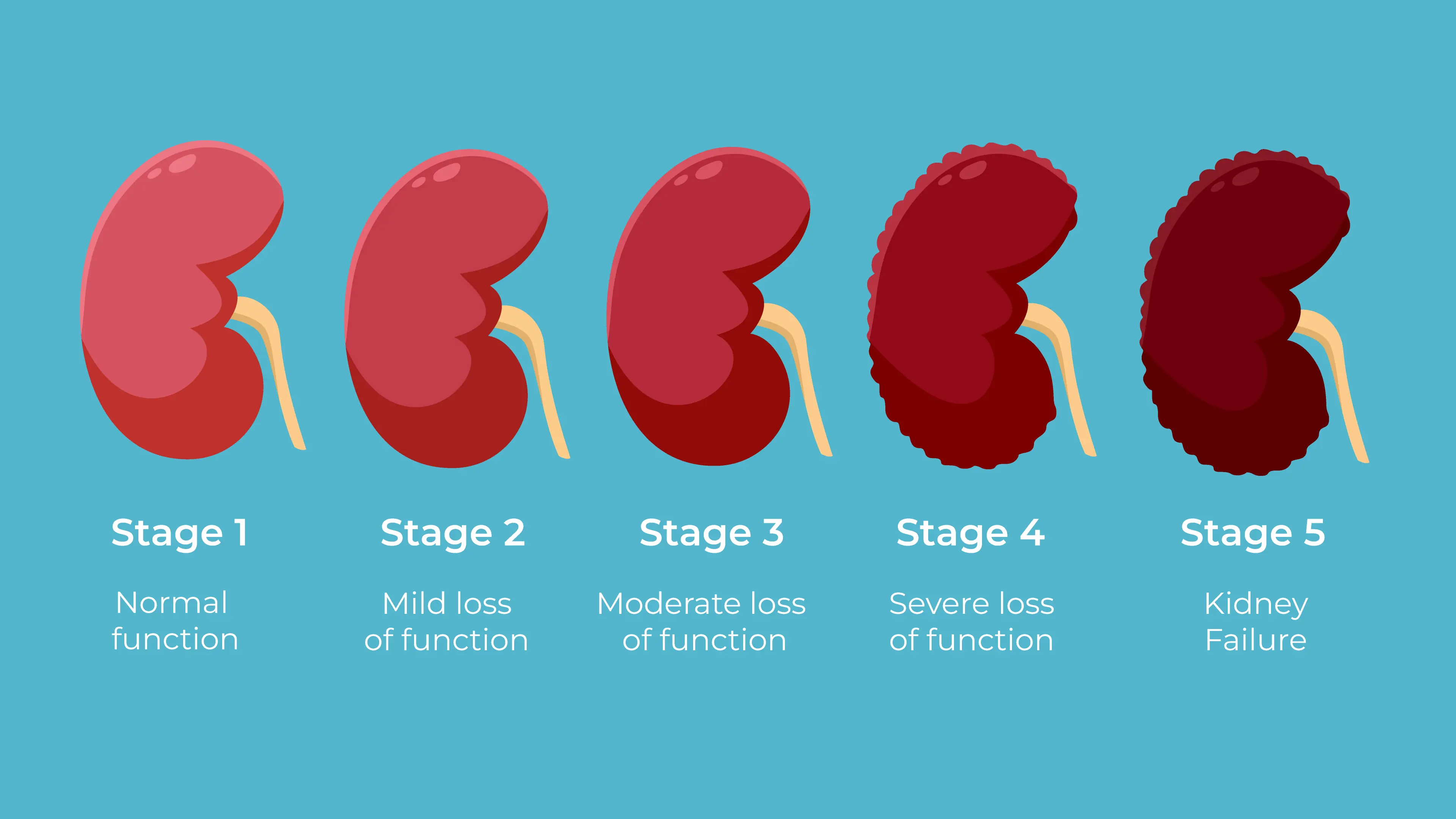
Mild decrease in kidney function. Most people still have no clear symptoms. Managing blood pressure, blood sugar, and diet can help slow further damage.
Stage 3: eGFR 30–59
Moderate kidney damage. Waste may begin to build up in the body. Some people experience fatigue, swelling, or changes in urination. Regular monitoring and medical management are essential.
Stage 4: eGFR 15–29
Severe decrease in kidney function. Symptoms may include fatigue, swelling, shortness of breath, and changes in urination. Treatment planning for dialysis or transplant typically begins at this stage.
Stage 5: eGFR below 15
Also known as end-stage kidney disease. The kidneys have lost nearly all function. Dialysis or a kidney transplant is required for survival.
Summary
Chronic kidney disease develops gradually and often has few symptoms in early stages. Regular check-ups and early detection are crucial. Managing underlying conditions such as high blood pressure and diabetes can help slow progression and protect kidney function.