Smoking can also contribute to reflux symptoms and has many other health risks. People who smoke may benefit from discussing support for quitting with a healthcare professional.
Weight management may be relevant for people who are overweight and experience GERD. Excess abdominal pressure can contribute to reflux, although the relationship varies between individuals.
It is also useful to avoid wearing clothing that puts excessive pressure around the abdomen after eating. Tight waistbands may increase discomfort for some people.
These habits do not guarantee that reflux will disappear. They are practical measures that may reduce symptoms and can be considered alongside medical advice.
People who have persistent heartburn should not rely indefinitely on lifestyle changes or frequent over-the-counter medication without discussing the issue with a clinician.
The aim is to identify what is causing the symptoms and choose a treatment that is appropriate for the individual.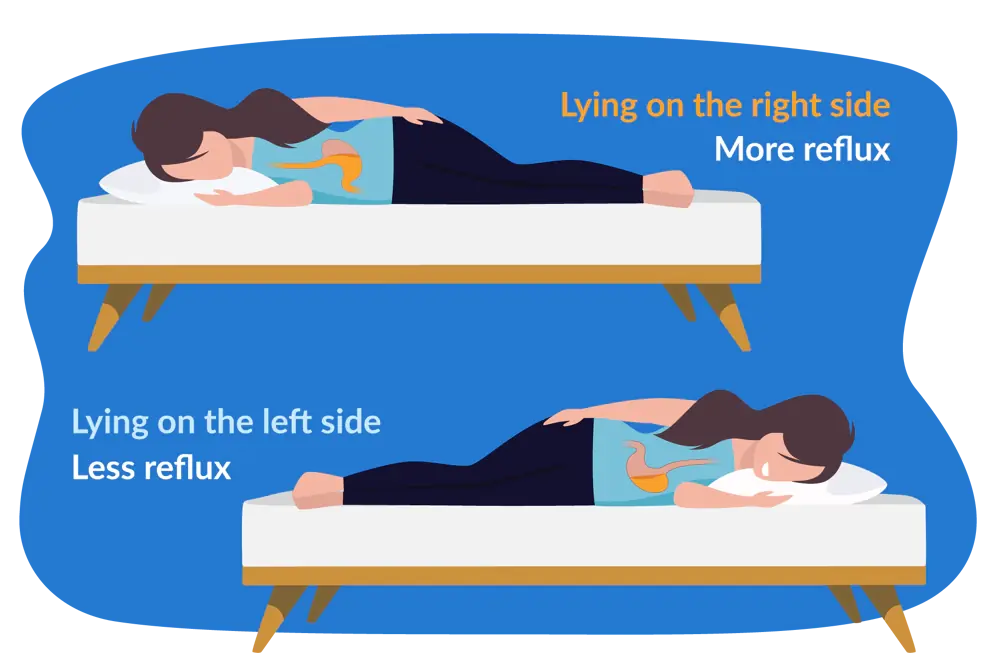
Chapter 12: How to Find a Comfortable Sleeping Position Without Worrying
A good sleeping position should support comfort, breathing and any relevant medical needs. It should not become a source of constant anxiety.
For people who regularly experience nighttime reflux, trying the left side is a reasonable starting point. They can also consider elevating the upper body and avoiding meals shortly before bed.
For people who do not have reflux, either side may be comfortable. There is no general requirement to abandon right-side sleeping if it does not cause symptoms.
For people who snore or have possible sleep apnea, side sleeping may be helpful, but persistent symptoms deserve medical assessment.
For pregnant people in later pregnancy, side sleeping is generally recommended, and either side can be used. Pillows may help improve comfort and reduce pressure.
For people with shoulder or hip pain, the priority may be pressure relief and proper support rather than choosing a particular side for digestive reasons.
A gradual approach is often more successful than trying to force a sudden change. Someone who has slept on the right side for decades may find it difficult to remain on the left immediately. They can experiment with a supportive pillow, adjust their mattress arrangement and allow themselves time to adapt.
It is also normal to move during sleep. The body does not need to remain in one position for the entire night for a person to receive the benefits of rest.
If a person wakes up on the opposite side from where they started, that is not automatically a problem. They can simply return to a comfortable position.
The important thing is to recognize whether a particular position repeatedly causes symptoms. If right-side sleeping is associated with heartburn, testing the left side may be useful. If one side causes shoulder pain, adjusting support or changing sides may help.
A sleep diary can make patterns easier to recognize. Record when symptoms occur, what was eaten in the evening, whether meals were close to bedtime and which position seemed most comfortable.
This information may also help a doctor understand recurring problems.
Chapter 13: When Should You Talk to a Doctor About Nighttime Symptoms?
A change in sleeping position can be a useful adjustment, but it should not delay medical care when symptoms suggest a more significant problem.
Frequent heartburn is one reason to seek advice. If symptoms occur repeatedly, disturb sleep or require regular medication, a healthcare professional can assess whether GERD or another condition may be involved.
Difficulty swallowing deserves particular attention. Food that repeatedly feels stuck, pain when swallowing or progressive difficulty eating should not be dismissed as ordinary indigestion.
Unexplained weight loss, persistent vomiting, vomiting blood or black stools also require medical evaluation.
Chest pain should be treated cautiously. Heartburn and heart-related pain can feel similar. If chest discomfort is severe, new or accompanied by breathlessness, sweating, faintness or pain spreading to the arm, jaw or back, seek emergency help.
People who snore loudly and experience pauses in breathing, gasping or excessive daytime sleepiness should ask about sleep apnea. Changing sides may reduce symptoms for some people, but it does not establish whether the airway is functioning normally.
Pregnant people should discuss unusual symptoms, severe discomfort or concerns about sleeping positions with their maternity team. General guidance can be helpful, but individual medical circumstances matter.
People with heart disease, chronic lung conditions, neurological disorders or other significant medical problems may also need personalized advice about sleeping position.
The most important point is that a sleeping position is only one part of health. It cannot replace diagnosis, medication or treatment when these are needed.
Chapter 14: The Real Answer—Should You Stop Sleeping on Your Right Side?
So, should everyone stop sleeping on the right side?
No. The evidence does not support a universal warning that right-side sleeping is harmful to all people.
The strongest reason to consider changing sides is nighttime acid reflux. Research and clinical guidance suggest that sleeping on the left may reduce reflux in people who experience GERD symptoms. The effect is related to the position of the stomach and the way gravity influences the movement of stomach contents.
For someone who regularly wakes with heartburn, a trial of left-side sleeping may be worthwhile. Combining it with earlier evening meals and appropriate upper-body elevation may offer additional relief.
For people without reflux, right-side sleeping is generally a normal position. There is no need to feel frightened or assume that years of sleeping on that side have damaged their organs.
The same balanced approach applies to breathing and circulation. Side sleeping may help some people with positional snoring or sleep apnea, while pregnancy guidance emphasizes sleeping on either side later in pregnancy rather than insisting on the left alone.
Comfort also matters. A position that causes shoulder pain, hip stiffness or numbness may not be suitable for someone, even if it offers a potential benefit in another area.
The most useful advice is to pay attention to how your body responds. Notice recurring symptoms, make reasonable adjustments and seek medical guidance when problems persist.
A healthy night of sleep is not determined by one perfect position. It depends on enough sleep, a comfortable environment, appropriate support and attention to any underlying health conditions.
If sleeping on the right side feels comfortable and causes no problems, there is no reason to panic. But if nighttime heartburn repeatedly interrupts your rest, turning to the left may be a small change worth trying.
That is the real message behind the headline: your sleeping position can matter, but the best position is the one that supports your individual health—not a rule that everyone must follow.