Observe Your Nails to Detect Health Issues: If Your Nails Show These 3 Signs, See a Doctor Immediately
1. Check the Color
According to Dr. Zainab Laftah, a dermatology consultant at HCA Healthcare UK, if your nails appear white, yellow, blue, or black, it could be a sign of a serious health condition. Specifically, if your nails look pale, it may indicate iron deficiency, leading to anemia, and could also suggest potential issues with your heart or kidneys.
Brittle and easily broken nails may also be a result of iron deficiency.
In such cases, it is advisable to consume iron-rich foods such as meat, figs, dates, and molasses, which are excellent sources of easily absorbable iron.
If your nails turn yellow, this could be a warning sign of a thyroid infection or lung disease. Meanwhile, blue nails suggest that your blood lacks sufficient oxygen. If you do not have anemia but still have blue nails, there could be an underlying condition affecting your body's ability to pump oxygen-rich blood, which might indicate heart or lung disease.
When exposed to cold temperatures, nails may temporarily turn bluish-purple, but if they remain blue even in warm conditions, this could be a symptom of cyanosis.
White nails with white spots or streaks might be caused by underlying factors such as allergies, trauma, fungal infections, poisoning, diabetes, heart failure, or cirrhosis.
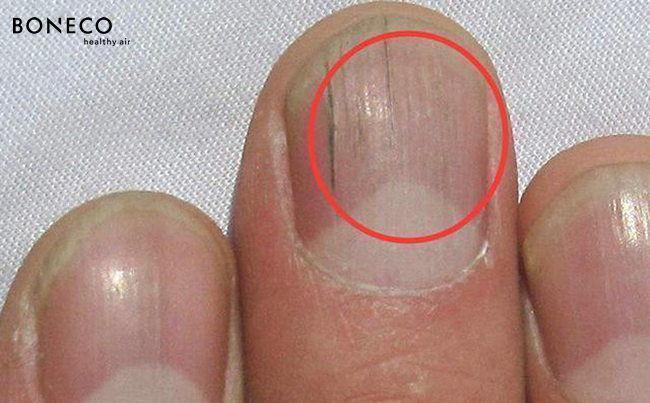
Dark streaks on the nails could indicate skin cancer. Dr. Laftah advises, "If you notice dark spots or streaks, consult a general practitioner or dermatologist immediately."
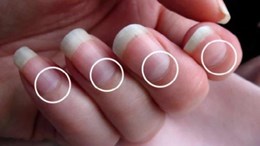
Black nails may result from trauma or fungal infections, but in some cases, they could indicate heart disease or melanoma. Melanoma may present as one or multiple dark, irregular patches on the skin, sometimes appearing underneath the nails.
Red nails may be a sign of heart disease or kidney problems and are also linked to conditions such as psoriasis and lupus. If you notice a persistent change in nail color, seek medical advice.
2. Examine the Shape
If your nails become thin, concave, and curve upward around the edges, forming what is known as "spoon nails" or "koilonychia," this could be a sign of iron-deficiency anemia or cardiovascular disease.
On the other hand, if your nails develop a clubbed appearance—where the fingertips swell and the cuticle area, which is normally slightly concave, becomes swollen—this may indicate heart, respiratory, or digestive disorders.
3. Assess the Texture
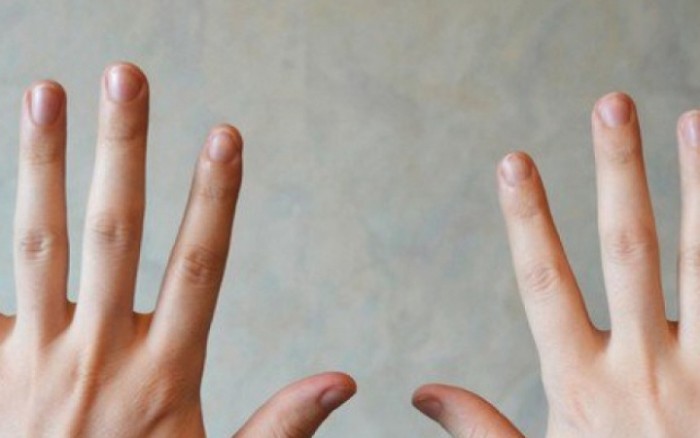
Healthy nails should be smooth and firm. If your nails become brittle or prone to breaking, this might be a sign of hypothyroidism.
The presence of small pits or depressions on the nail surface could be a symptom of psoriasis. Up to 35% of people with psoriasis experience pitting in their nails.
Changes in nail texture can also be linked to vitamin and mineral deficiencies. Deficiencies in vitamin B12, iron, zinc, or magnesium may cause vertical ridges on the nails, while a lack of vitamins A and C can lead to nail chipping or fragility.
Take a close look at your nails now to see if you exhibit any of these symptoms.