A Rare and Extremely Valuable Plant: Why Vietnam’s Ginseng Holds a Unique Place in the World
Across the global herbal medicine market, very few plants are described as both rare and exceptionally valuable without exaggeration, yet Vietnamese ginseng occupies that space with quiet credibility rather than loud marketing. Often referred to internationally as Vietnamese ginseng or Panax vietnamensis, this plant is not merely expensive because of scarcity, but because of a combination of biological uniqueness, ecological limitation, and decades of scientific study that distinguish it from other ginseng species.
It is not valuable because it is mysterious.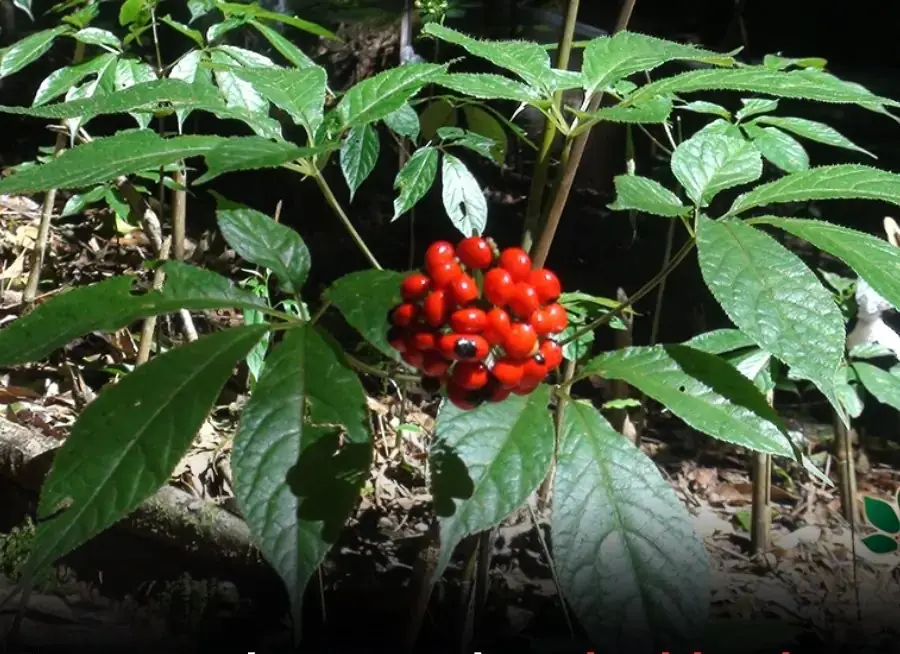
It is valuable because it is specific.
A Plant Defined by Geography
Vietnamese ginseng grows naturally only in very narrow ecological conditions, primarily in the high-altitude forests of central Vietnam. Its survival depends on precise combinations of soil composition, humidity, shade, and altitude, making large-scale cultivation extremely difficult even within the country itself.
This geographic restriction is not a marketing claim; it is a biological reality. Attempts to grow the plant outside its native environment have consistently faced challenges in maintaining its chemical profile and growth stability.
As a result, genuine Vietnamese ginseng remains limited in supply, even as global demand continues to rise.
What Makes It Scientifically Distinct
From a scientific perspective, Vietnamese ginseng stands apart due to its diverse and unusually rich saponin profile. Saponins are bioactive compounds commonly studied for their role in stress adaptation, immune modulation, and metabolic regulation.
Research has shown that Vietnamese ginseng contains a broader range of saponins than many other ginseng species, including compounds that are rarely found elsewhere. This chemical diversity is the primary reason researchers have taken interest—not because the plant “cures” disease, but because it supports multiple physiological systems simultaneously.
It is important to emphasize this distinction.
Support is not treatment.
Biological activity is not a medical claim.
Why It Is Considered One of the Most Expensive Plants
The high value of Vietnamese ginseng is driven by several converging factors:
-
Extremely slow growth, often requiring many years before harvest
-
Limited natural habitat, restricting supply
-
Strict conservation and harvesting controls
-
High demand in traditional medicine and wellness markets
-
Scientific validation of its complex chemical composition
Unlike commodities that become expensive through speculation alone, Vietnamese ginseng’s price reflects genuine scarcity combined with labor-intensive cultivation and verification processes.
Traditional Knowledge Meets Modern Research
Long before laboratory analysis, local communities recognized the plant’s effects on stamina, recovery, and resilience. Traditionally, it was not consumed casually, but reserved for periods of physical exhaustion, prolonged illness, or recovery.
Modern research has not replaced this knowledge—it has contextualized it. Studies now explore how the plant interacts with stress response systems, immune signaling pathways, and energy metabolism, offering explanations for observations made generations earlier.
This pattern is common in ethnobotany: tradition identifies value first, science explains it later.
Not a Miracle, Not a Myth
One of the greatest risks surrounding rare medicinal plants is exaggeration. Claims that frame Vietnamese ginseng as a miracle cure undermine both science and conservation. No responsible researcher or medical institution supports such narratives.
What evidence does support is more nuanced:
-
Improved stress tolerance in controlled settings
-
Support for physical endurance and recovery
-
Modulation of immune responses under stress
-
Potential benefits for metabolic balance
These effects are context-dependent, dose-dependent, and individual-dependent.
Conservation and Ethical Concerns
Because of its value, Vietnamese ginseng has faced risks of overharvesting and illegal trade. Conservation efforts now play a critical role in ensuring the plant’s survival. Sustainable cultivation, genetic preservation, and controlled distribution are essential, not only for ecological reasons but also to protect the integrity of scientific research.
Rarity should never justify exploitation.
True value includes responsibility.
Why “Found Only in Vietnam” Matters
The phrase does not imply superiority; it implies specificity. Vietnamese ginseng is not better because it is Vietnamese—it is unique because it evolved under conditions that cannot be easily replicated elsewhere.
This uniqueness is what places it among the world’s most valuable plants, not as a luxury item, but as a biological resource that demands careful stewardship.
A Broader Perspective on Value
In a global market saturated with supplements and shortcuts, Vietnamese ginseng stands out precisely because it resists simplification. It cannot be mass-produced without losing its identity. It cannot be reduced to a single compound or promise.
Its value lies in complexity.
In time.
In restraint.
A Responsible Conclusion

Vietnamese ginseng is rare, valuable, and scientifically significant—not because it offers instant solutions, but because it represents the intersection of ecology, tradition, and modern research.
It is not a cure, not a commodity, and not a myth.
It is a reminder that some of the world’s most valuable resources are defined not by abundance, but by balance.
And that balance is something no price tag can fully capture.