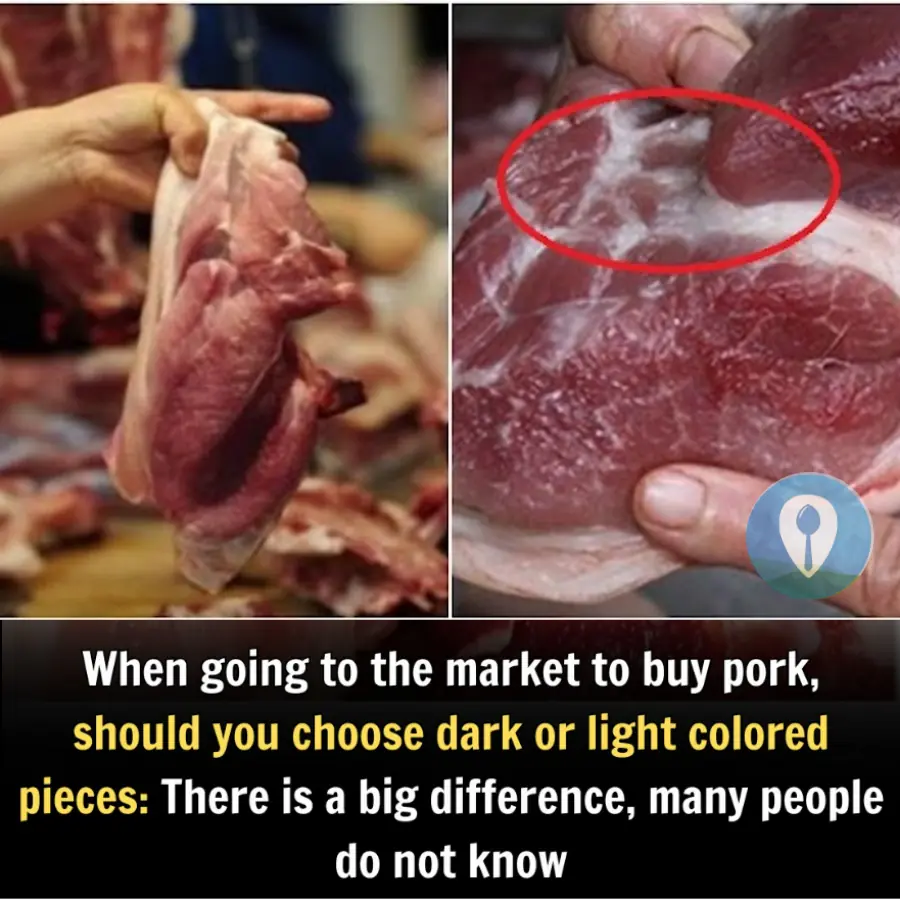
When buying pork at the market, paying attention to the color of the meat is crucial to ensure its freshness and quality. The color can give you important clues about the condition of the pork and how it’s been handled. Here are some key things to look out for:
1. Fresh Pork Color
- Ideal Color: Fresh pork should have a light pink or pale reddish-pink color. The fat should appear white or creamy.
- Why It Matters: The pinkish hue indicates that the pork is fresh, properly handled, and not exposed to too much air or light, which could affect its quality.
2. Dark or Dull Pork
- Warning Signs: If the pork appears dark red, brown, or grayish, it could indicate that it’s older or has been improperly stored.
- Why It Happens: As meat ages, its color can darken due to the breakdown of proteins and exposure to oxygen. This could also be a sign that the pork has been left out at the wrong temperature, increasing the risk of spoilage.
3. Pale or Faded Pork
- Warning Signs: If the pork appears pale or yellowish, especially if the fat is yellow or too soft, it may not be fresh.
- Why It Happens: This discoloration can result from exposure to light or prolonged storage. It can also be a sign of poor handling or that the pig was not raised in ideal conditions.
4. Marbling and Fat Color
- Ideal Fat: The fat should be white or creamy in color, not yellow or discolored. Marbling, which refers to the small streaks of fat within the meat, should also be visible in certain cuts of pork, like pork shoulder or loin.
- Why It Matters: White fat indicates the pig was healthy and well-fed. If the fat appears yellow, it might be older or improperly stored, and it may affect the taste and texture of the meat.
5. Smell Test
- Important Additional Check: While color is important, smell is another critical factor. Fresh pork should have a mild, slightly sweet aroma, not a strong or sour odor. If the pork smells bad, it’s a strong indication of spoilage, regardless of its color.
6. Packaging
- Look for Vacuum-Sealed Packaging: If pork is sold in vacuum-sealed packages, the color may appear darker due to lack of oxygen, but the meat is likely fresh. Once opened, it should return to its typical pinkish color.
- Avoid Exposed Meat: Meat displayed on open trays can lose its color quickly, especially if it’s exposed to air for too long. Always check the sell-by date and consider how long it’s been sitting out.
Summary
When buying pork:
- Look for light pink to pale reddish-pink meat and white fat for freshness.
- Avoid pork that is dark, grayish, or pale as it could indicate age or poor storage.
- Always use the smell test to ensure the meat is fresh and safe to consume.
By being attentive to the color and handling of the pork, you can make a more informed purchase and avoid the risk of buying meat that is past its prime.