People Are Only Just Realising Why Public Toilet Doors Don’t Touch the Floor
Public restrooms are something most people use without giving them much thought. You walk in, find a stall, close the door, and get on with your day. Yet one design feature has quietly puzzled people for decades: the noticeable gap between the bottom of the toilet door and the floor. Recently, many people have started asking the same question—why is it designed this way?
As it turns out, the answer has very little to do with aesthetics and everything to do with safety, hygiene, cost, and practicality.
Safety Comes First
One of the most important reasons public toilet doors do not touch the floor is safety. In public spaces, emergencies can and do happen. Someone may faint, become ill, or require urgent assistance inside a stall. A raised door allows others to quickly see if something is wrong and enables staff or emergency responders to help without needing to break the door down.
If a person collapses inside a fully enclosed stall, a floor-length door could delay rescue. The gap provides visibility and access when seconds matter. While it may feel awkward from a privacy standpoint, this design choice can quite literally save lives.
Easier Cleaning and Better Hygiene
Public restrooms need to be cleaned frequently and efficiently. Floor-level doors would trap moisture, dirt, and bacteria, making cleaning far more difficult. The gap allows janitorial staff to mop, disinfect, and rinse floors quickly without opening every stall door.
In high-traffic restrooms, spills, leaks, and overflow are common. A raised door prevents water from soaking into the bottom of the door, which could cause swelling, mold, and unpleasant odors over time. Better airflow under the door also helps reduce humidity and speeds up drying, improving overall hygiene.
Cost and Maintenance Efficiency
From a construction and maintenance perspective, raised toilet doors are significantly cheaper. They require less material and are easier to install. Floor-level doors would need precise measurements to account for uneven flooring, which is common in older buildings.
Additionally, restroom floors are often sloped slightly toward drains. If doors touched the floor, they could scrape, jam, or fail to close properly over time. A small gap eliminates these issues and reduces long-term maintenance costs for public facilities.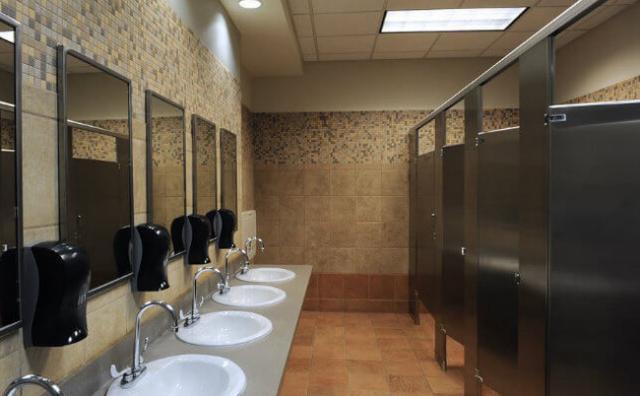
Discouraging Misuse and Vandalism
Public restrooms are unfortunately common sites for vandalism and inappropriate behavior. The open space beneath the door discourages people from spending excessive time inside stalls or using them for activities beyond their intended purpose.
While not foolproof, the design creates a sense of visibility and accountability. It reduces the likelihood of people hiding inside stalls for long periods, damaging property, or engaging in unsafe behavior. This is particularly important in places like schools, shopping centers, and transportation hubs.
Occupancy Awareness and Line Management
Another practical benefit of the door gap is that it helps people quickly determine whether a stall is occupied. Feet are usually visible under the door, reducing awkward door checks and unnecessary knocking.
This small design detail improves traffic flow in busy restrooms, especially during peak hours. It may not seem important, but in crowded venues, efficient stall usage makes a noticeable difference.
Ventilation and Odor Control
No one enjoys a poorly ventilated restroom. Gaps under stall doors improve air circulation, allowing unpleasant odors to dissipate more quickly. This works alongside ventilation systems to keep the space more tolerable for everyone.
Fully enclosed stalls would trap smells inside, making restrooms feel stuffy and uncomfortable. The open design helps maintain airflow, which is especially important in facilities used by hundreds or thousands of people each day.
Privacy Versus Practicality
The biggest complaint about public toilet door gaps is privacy. Many people feel uncomfortable knowing others can see beneath the stall. However, designers aim to balance privacy with function. The gap is typically positioned low enough to limit visibility while still serving its practical purposes.
In recent years, some modern restrooms have begun offering more privacy-focused designs, including smaller gaps or floor-length doors, especially in upscale locations. These options, however, come at a higher cost and require stricter maintenance.
A Design You Rarely Notice—Until You Do
Once people learn the reasons behind the design, public toilet doors make more sense. What seems like an odd or careless choice is actually a carefully considered solution to multiple real-world problems.
The next time you step into a public restroom and notice that familiar gap beneath the door, remember that it is there for safety, cleanliness, efficiency, and practicality. It may not be perfect, but it is far from accidental.