Keeping a home clean and free of dust is a daily challenge for many households. Floors, in particular, tend to collect dirt, dust particles, and small debris that are constantly brought in from outside. While many people rely on simple mopping with plain water, this method is often not as effective as it seems.
Water alone may remove visible dirt, but it does not always eliminate oils, fine dust, or bacteria that accumulate on floors. As a result, floors may appear clean at first but quickly attract dust again.
By adding a few simple ingredients to your cleaning routine, you can improve the effectiveness of mopping and help keep your home cleaner for longer.
Why Cleaning with Plain Water Isn’t Always Enough
Plain water can help remove loose dirt, but it has limitations. Dust particles often contain oils, skin cells, and microscopic debris that can cling to floor surfaces.
When water alone is used:
-
Dust may simply be spread across the floor
-
Sticky residues may remain
-
Bacteria may not be fully removed
-
Floors may lose their shine more quickly
Because of these factors, cleaning solutions are often more effective at breaking down dirt and lifting it away from surfaces.
A Simple Addition: Vinegar
One commonly used household ingredient for floor cleaning is white vinegar.
Vinegar contains mild natural acids that help dissolve mineral deposits, grease, and certain types of residue that plain water cannot easily remove.
Adding a small amount of vinegar to cleaning water can help:
-
Break down dirt and grime
-
Reduce unpleasant odors
-
Leave floors looking brighter
-
Improve overall cleaning effectiveness
A typical mixture is one cup of white vinegar in a bucket of warm water.
This solution is often used on tile, vinyl, and certain sealed floors.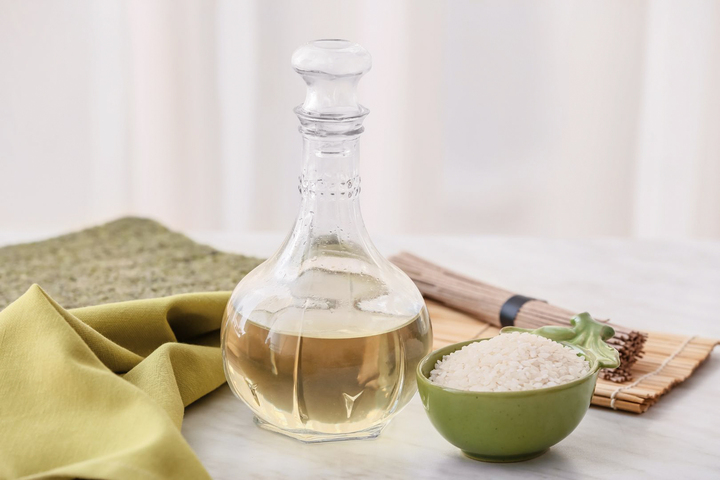
Another Helpful Ingredient: Baking Soda
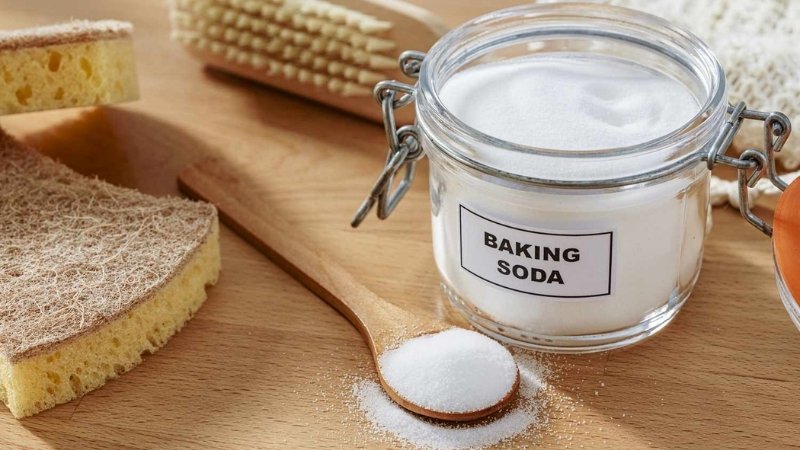
For areas that require extra cleaning power, baking soda can be another useful addition.
Baking soda works as a gentle abrasive and natural deodorizer. When used carefully, it can help lift stubborn dirt or stains.
It may be especially useful for:
-
Kitchen floors
-
Areas near trash bins
-
High-traffic zones
A small amount of baking soda can be sprinkled onto problem spots before mopping.
Adding a Few Drops of Dish Soap
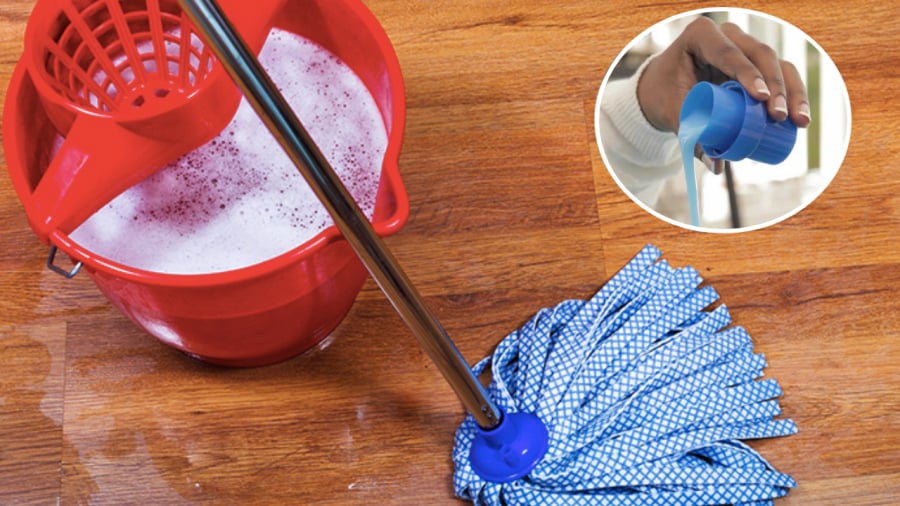
Sometimes floors accumulate oily residue from cooking, food spills, or everyday use. A few drops of mild dish soap mixed into the water can help break down these residues.
Dish soap works by separating oils from surfaces, allowing them to be lifted away during mopping.
However, only a small amount should be used. Too much soap can leave a sticky film that attracts more dust.
Essential Oils for Freshness
Some people also add a few drops of essential oils to their cleaning water for fragrance and mild antimicrobial properties.
Popular choices include:
-
Lemon oil
-
Tea tree oil
-
Lavender oil
While essential oils are not a substitute for disinfectants, they can help create a pleasant scent and contribute to a fresher home environment.
Proper Mopping Techniques
Even with the right cleaning solution, technique matters.
To clean floors effectively:
-
Sweep or vacuum the floor first to remove loose debris.
-
Use warm water rather than cold water to improve cleaning.
-
Wring the mop well to avoid excess moisture.
-
Mop in small sections rather than spreading water across large areas.
-
Rinse the mop regularly to prevent spreading dirt.
These habits help ensure that dirt is removed rather than redistributed.
Why Dust Returns Quickly
Even after thorough cleaning, dust often returns within a short time. This happens because dust originates from many sources, including:
-
Outdoor particles entering through doors or windows
-
Pet hair and dander
-
Fabric fibers
-
Skin cells
-
Cooking residues
Regular cleaning combined with proper ventilation and dust control can help reduce buildup.
Other Ways to Keep Floors Dust-Free Longer
In addition to improving your mopping solution, several habits can help maintain cleaner floors.
Use Doormats
Placing doormats at entrances helps trap dirt before it enters the home.
Remove Shoes Indoors
Shoes often carry dust, soil, and bacteria from outside surfaces.
Clean High-Traffic Areas Frequently
Hallways, kitchens, and entryways tend to collect more dirt than other areas.
Maintain Indoor Air Quality
Air purifiers and proper ventilation can help reduce airborne dust that settles on floors.
Choosing the Right Cleaning Method for Your Floor Type
Different floor materials require different care.
For example:
-
Tile and vinyl floors usually tolerate vinegar-based solutions well.
-
Wood floors may require special cleaners designed for sealed wood.
-
Laminate floors should not be exposed to excessive moisture.
Before using any cleaning solution, it is important to ensure that it is safe for the specific flooring material.
Final Thoughts
Cleaning floors with plain water may seem sufficient, but adding simple household ingredients like vinegar, mild soap, or baking soda can make the process far more effective. These additions help break down dirt, remove residues, and reduce odors, leaving floors cleaner for longer.
Combined with proper cleaning techniques and good household habits, these simple adjustments can help maintain a fresh, dust-free home environment throughout the week.
Sometimes, improving everyday routines only requires small changes—yet those small changes can make a noticeable difference in keeping a home clean and comfortable.