A storage compartment beneath the table could hold a telephone directory, address book, or writing materials.
The design was not simply decorative. It was intended to make telephone use easier and more comfortable.
The furniture's name also reflects a social habit that once played an important role in daily life.
People often used the telephone to catch up with friends, relatives, and neighbors. A long conversation might involve exchanging family news, discussing local events, or making plans for the following week.
The gossip bench provided a comfortable place for those conversations to take place.
Chapter 3: Why Telephones Once Needed Their Own Furniture
To understand the popularity of telephone chairs, it helps to remember that household telephones were very different from modern smartphones.
A telephone was typically connected to a wall outlet or telephone line. It had to remain close enough to the connection point to function properly.
In many homes, the telephone was placed in a hallway, living room, or another shared area.
The location was chosen partly for convenience. A central hallway allowed family members to answer calls without traveling through the entire house.
However, standing for a long telephone conversation was not always comfortable.
A person might need to hold a receiver for several minutes while speaking with a relative or arranging an appointment.
Some people could sit on a nearby chair, but that meant moving furniture whenever they wanted to use the telephone.
A dedicated telephone chair eliminated that inconvenience.
It provided a permanent seating position next to the telephone, allowing the user to make calls without rearranging the room.
The attached tabletop also created a convenient place to rest a notebook or directory.
This arrangement became especially useful as telephone ownership expanded and calling became a more regular part of household life.
Historical accounts of telephone furniture describe how these specialized pieces developed alongside the increasing use of telephones in homes.
backthenhistory.com+1
Chapter 4: The Telephone Directory Was an Important Part of the Design
One of the most interesting features of an old telephone chair was the storage space beneath its tabletop.
Today, most people can find a telephone number by searching a contact list or typing a name into a digital device.
Before that convenience existed, finding a telephone number could require a printed directory.
Telephone directories were often large books containing listings arranged by name or address.
They might include thousands of entries, depending on the size of the community.
The directory was useful, but it was not always convenient to hold while sitting or standing beside a telephone.
A telephone chair solved the problem by providing a dedicated place for the book.
The user could open the directory, search for a name, and write down the number without leaving the seat.
Some designs included a shelf or compartment that kept the directory close at hand.
The same space could hold an address book, pencil, notepad, or other small items.
In a household where telephone calls were frequent, these details made the furniture much more useful than it might initially appear.
The storage compartment was not an unnecessary decoration. It was part of the furniture's original purpose.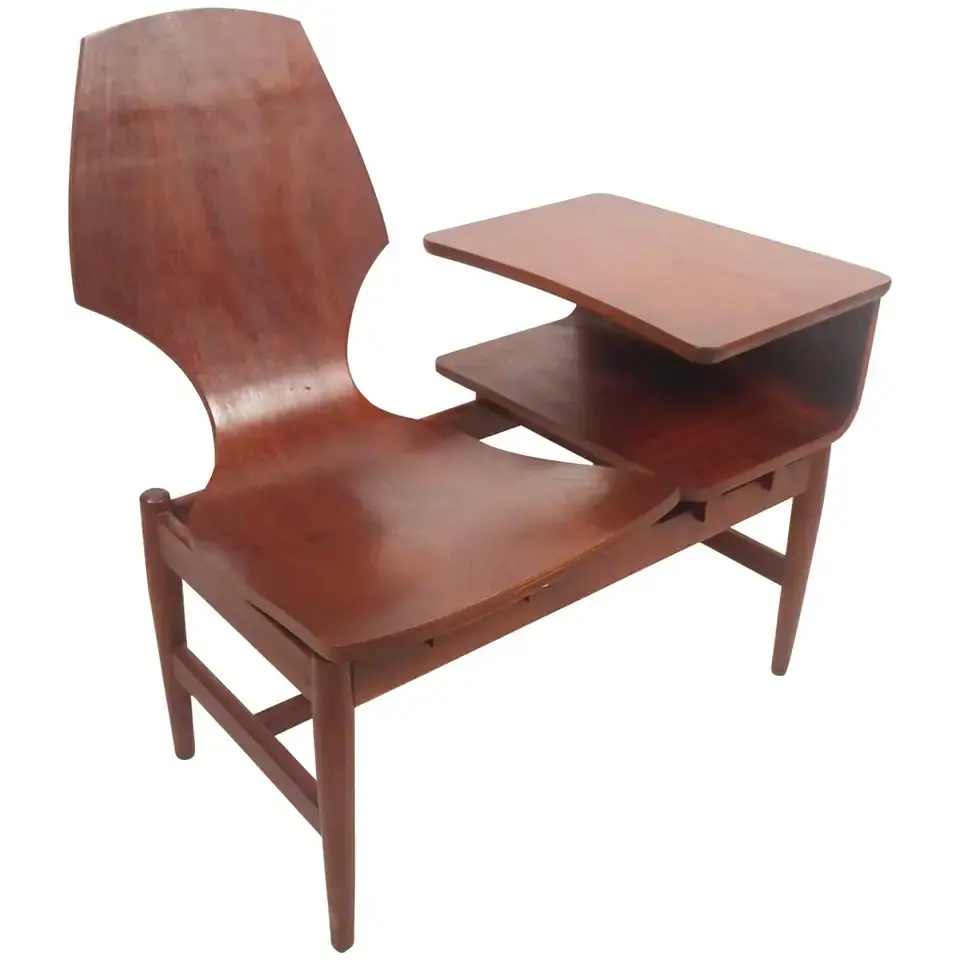
Chapter 5: The Built-In Table Was More Than a Decorative Feature
The raised tabletop is probably the detail that makes the chair look so unusual to modern viewers.
A conventional chair has a seat and a backrest. A telephone chair added a separate surface beside the seat.
That surface allowed the telephone to remain at a comfortable height.
The user could sit down, reach the receiver, and begin a conversation without needing a separate table.
The tabletop also provided space for writing.
During a telephone call, someone might need to record an appointment, note an address, write down a message, or remember a number.
A small writing surface made these tasks easier.
Some furniture designs placed the tabletop slightly above the seat, while others incorporated a larger side desk.
The arrangement depended on the model and the available space.
The tabletop could also support a small lamp or other household accessories.
In some homes, the telephone chair became a permanent part of the hallway or living room.
It was not moved around like an ordinary chair because its attached table made it less convenient to relocate.
Instead, it occupied a specific place in the home, much like a desk or cabinet.