The design was a practical example of furniture created around a particular activity.
Chapter 6: Why the Furniture Became Popular in American Homes
The telephone chair became especially familiar during the decades when household telephones were increasingly integrated into everyday life.
The gossip bench is often associated with the 1930s through the 1950s, although telephone furniture existed in different forms before and after that period.
backthenhistory.com
During those years, a telephone was an important household communication tool.
Families used it to contact relatives, arrange visits, speak with businesses, make appointments, and exchange news.
A telephone chair offered a convenient place to perform all those tasks.
It also fit naturally into the domestic interiors of the period.
Wooden furniture was common in living rooms and hallways, and a telephone chair could be designed to match other pieces.
Some models featured dark polished wood, while others used lighter finishes.
Decorative details could make the furniture look elegant rather than purely functional.
The chair therefore served two purposes.
It was useful, and it could also contribute to the appearance of the room.
This combination helped make telephone furniture a familiar part of many households.
Chapter 7: A Place for Private Conversations
Although the telephone chair was often located in a shared area, it could provide a small degree of personal comfort.
A person sitting beside the telephone might spend several minutes talking with a friend or relative.
The chair offered a dedicated place to settle down rather than standing in the hallway.
In some homes, the telephone was positioned near a window or in a quiet corner.
That arrangement made it easier to hear the conversation and avoid disturbing other family members.
The furniture could also create a small personal space within a larger room.
A person might sit down to call a sibling, discuss family matters, or arrange a visit.
The telephone chair was therefore connected not only to technology but also to the social routines of the household.
It provided a physical place for communication.
That is one reason the furniture can feel nostalgic to people who remember using it.
The chair may have been simple, but the conversations that took place beside it were often meaningful.
Chapter 8: The Furniture Was Designed for a Different Kind of Phone Call
Modern telephone conversations can happen almost anywhere.
People can walk through a house while speaking, sit outside, travel on a bus, or make a call while doing other activities.
Older telephone calls were often more stationary.
The telephone was connected to a fixed line, and the receiver was attached to the telephone by a cord.
The user had to remain close enough to the instrument.
That limitation influenced the design of telephone furniture.
A telephone chair placed the user in a comfortable position beside the device.
The attached table kept the telephone stable and within reach.
The storage compartment held the materials needed during a conversation.
The furniture made the telephone easier to use without changing the technology itself.
In that sense, the telephone chair was an example of how household objects adapted to technological limitations.
It was not the telephone that changed to become portable.
Instead, the furniture changed to accommodate the telephone.
Chapter 9: Different Designs for Different Homes
Not every telephone chair looked the same.
Some were designed for small apartments, where space was limited and furniture needed to serve more than one purpose.
Others were larger and more decorative.
A simple model might have a wooden seat, a narrow tabletop, and a small storage shelf.
A more elaborate example could include upholstered seating, a curved backrest, decorative legs, and a larger writing surface.
Some telephone chairs were made from solid wood, while others used a combination of wood and upholstered materials.
The tabletop could be rectangular, curved, or shaped to fit the chair's frame.
The storage compartment might be open or enclosed.
These variations allowed manufacturers to produce furniture for different tastes and household budgets.
A modest telephone chair could fit into a small hallway, while a more elaborate model might become a decorative feature in a living room.
The furniture's appearance often reflected the design trends of the period in which it was made.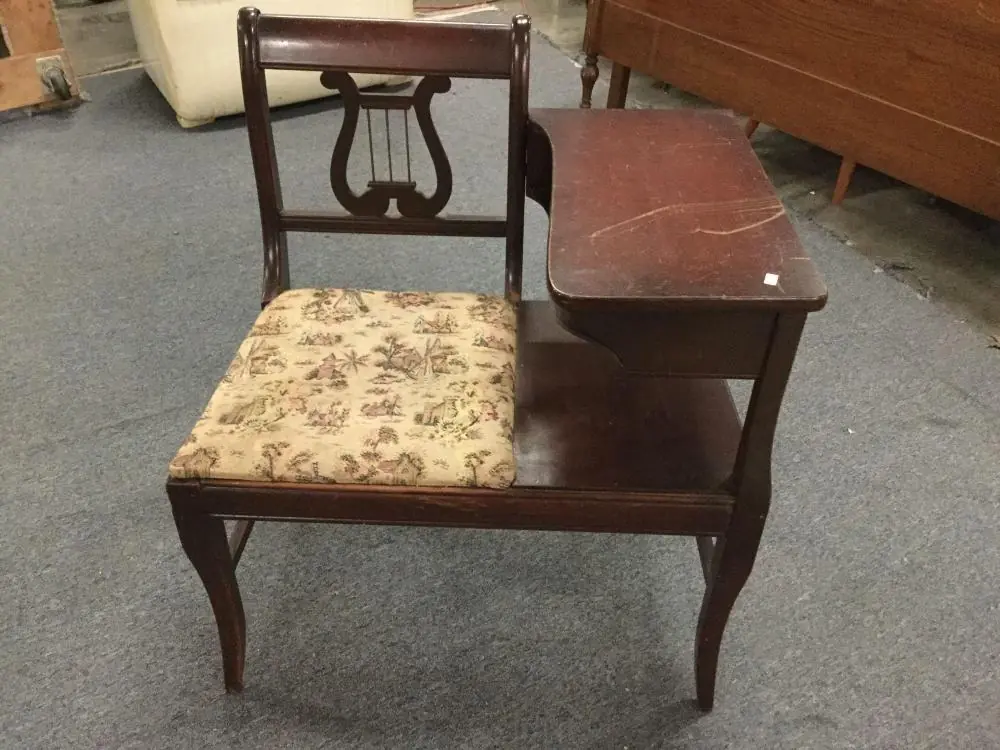
Chapter 10: The Telephone Chair and the American Hallway
The hallway was a natural location for telephone furniture.
It was often close to the entrance, making it convenient for family members and visitors.