Shrimp is one of the most popular seafood choices worldwide. It’s quick to cook, versatile, and packed with protein. But despite how common
shrimp is on dinner plates, many people don’t actually know how to prepare it correctly - especially when it comes to that thin black line
running along its back.
That so-called “black vein” is more than just a cosmetic issue. Understanding what it is, why it matters, and how to remove it properly can
improve both the safety and taste of your shrimp dishes.
Let’s break it down step by step.
What Is the Black Vein in Shrimp?
The black vein is not a vein at all.
It is actually the shrimp’s digestive tract, also known as the intestine. This tract may contain sand, grit, and partially digested food, depending
on where the shrimp lived and what it consumed.
The color can vary:
-
Dark brown or black
-
Greenish
-
Gray
Shrimp that live near sandy or muddy bottoms often have darker, more noticeable digestive tracts.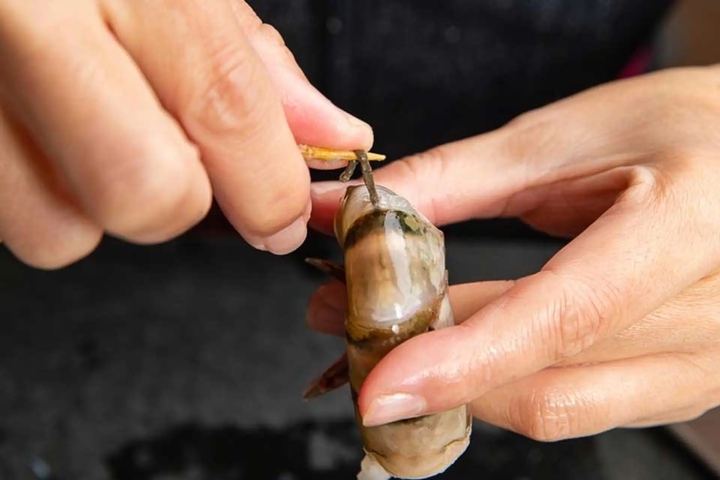
Is It Dangerous to Eat the Black Vein?
Technically, eating the black vein is not usually dangerous if the shrimp is properly cooked. However, there are several important reasons
why most chefs and food safety experts recommend removing it.
1. It Can Contain Waste and Bacteria
Because the black vein is the digestive tract, it may hold:
-
Sand or grit
-
Microorganisms
-
Waste material
While cooking kills many bacteria, consuming intestinal contents is still unhygienic and unnecessary.
2. It Affects Taste and Texture
Shrimp with the vein intact may taste:
-
Bitter
-
Muddy
-
Gritty
This is especially noticeable in larger shrimp, where the tract is thicker and more likely to contain residue.
Removing it results in:
-
Cleaner flavor
-
Better texture
-
More appealing presentation
3. It Can Trigger Digestive Discomfort
Some people experience stomach upset after eating shrimp that hasn’t been deveined, particularly if they have sensitive digestion.
When Is It Especially Important to Remove the Vein?
You should always remove the vein if:
-
The shrimp are large or jumbo
-
The vein is thick and dark
-
You’re serving shrimp raw or lightly cooked (e.g., sushi-style dishes)
-
You want the cleanest flavor and appearance
For very small shrimp, some people choose to leave it in, but removing it is still considered best practice.
How to Prepare Shrimp Properly (Step-by-Step)
1. Thaw Shrimp Safely (If Frozen)
-
Place shrimp in the refrigerator overnight
-
Or rinse under cold running water for quick thawing
-
Never thaw at room temperature
2. Remove the Shell (Optional)
Depending on the recipe:
-
Peel off the shell and legs
-
Leave the tail on for presentation, if desired
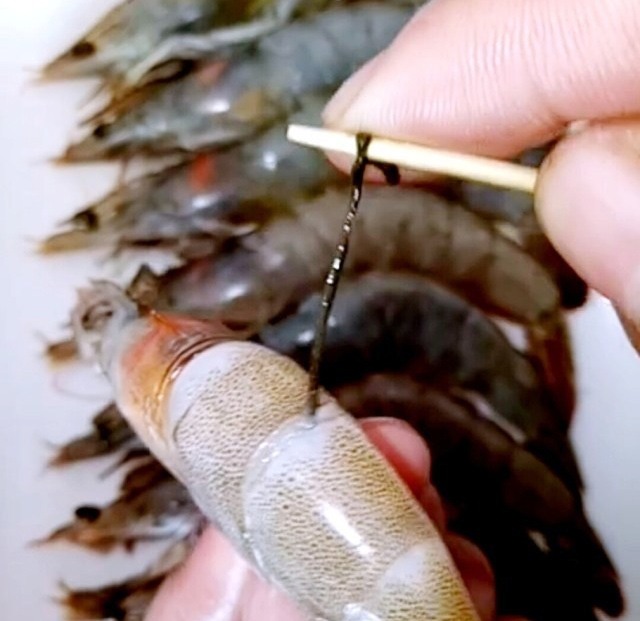
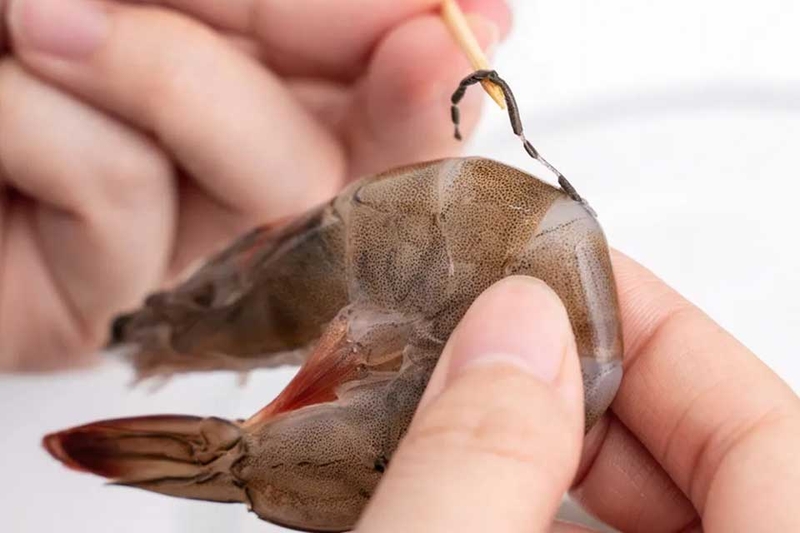
3. Devein the Shrimp
Method 1: Using a Knife
-
Lay the shrimp flat
-
Make a shallow cut along the back
-
Lift out the black vein with the tip of the knife
-
Rinse briefly under cold water
Method 2: Using a Deveining Tool
-
Slide the tool under the vein
-
Lift and pull it out cleanly
4. Rinse and Pat Dry
-
Rinse shrimp quickly under cold water
-
Pat dry with paper towels
-
Avoid soaking, which can dilute flavor
What About the Vein on the Belly Side?
Sometimes shrimp have a second, lighter-colored tract on the underside. This is part of the nervous system, not waste, and does not need to
be removed.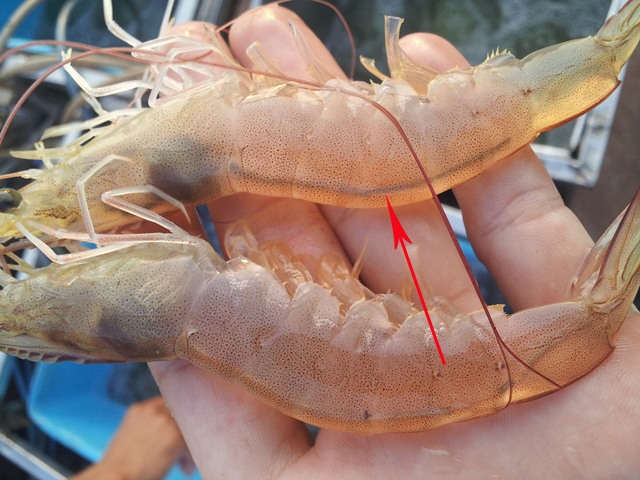
Should You Remove the Vein Before or After Cooking?
Always devein shrimp before cooking.
Cooking makes the tract more brittle and harder to remove cleanly, and it can release unpleasant flavors into the meat.
Additional Shrimp Safety Tips
-
Always cook shrimp to an opaque, pink color
-
Avoid overcooking, which makes shrimp rubbery
-
Store raw shrimp below 40°F (4°C)
-
Use within 1–2 days of purchase
Why Restaurants Always Devein Shrimp
Professional kitchens remove the vein because:
-
It improves food safety standards
-
It ensures consistent taste
-
It enhances visual appeal
-
It prevents customer complaints
If restaurants take the time to do it, it’s a good sign you should too.
Final Thoughts
The black vein in shrimp may not be deadly, but it’s definitely something you don’t want to eat if you care about flavor, hygiene, and
digestion.
Preparing shrimp properly - peeling, deveining, and cooking it correctly - takes only a few extra minutes and makes a noticeable difference
in the final dish.
Next time you cook shrimp, remember:
Clean shrimp isn’t just about looks - it’s about better taste, better texture, and better health.
A small step in preparation can elevate your seafood from average to excellent.