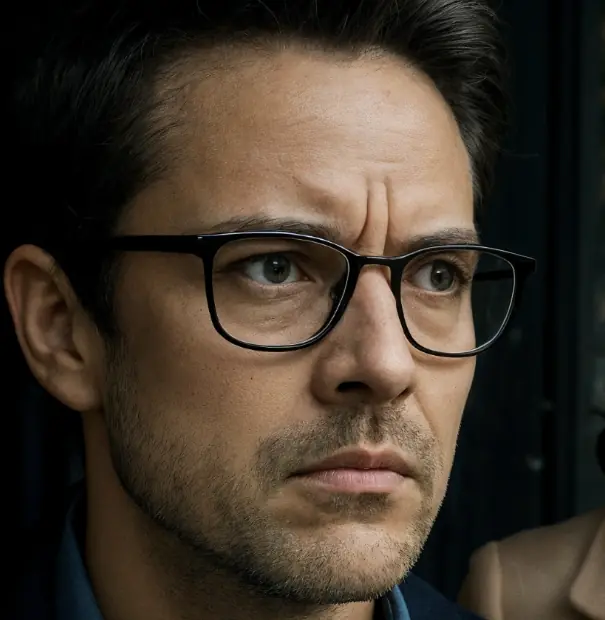
The night she left was ordinary—quiet, unremarkable, unchanged on the surface. But inside the small house, something had finally broken. Not loudly, not violently, but with the soft, decisive sound of a worn rope snapping after years of strain. She didn’t slam doors. She didn’t leave a note. She simply gathered the essentials—documents, some clothes, a few toys—and lifted her children from their beds, holding them close as she whispered, “We’re going somewhere safe.”
Her husband slept through all of it.
Or maybe he pretended to.
She didn’t look back. Not once. Not at the house, not at the life she was abandoning, not at the man who had long since stopped seeing her. The shame, the shouting, the indifference, the exhaustion—they stayed behind in that house like ghosts she refused to carry any longer. When the car engine hummed to life and she drove into the darkness, her hands trembled, but her heartbeat steadied for the first time in years.
The children woke halfway through the drive.
“Where are we going, Mama?”
“Somewhere new,” she answered gently, her eyes fixed on the road.
“Will Dad come?”
Her throat tightened—but she said nothing.
Three days later, they arrived in a coastal town miles away—a place where the sea erased footprints each morning and no one knew her name. It wasn’t glamorous, but it was quiet. It was safe. And safety was something she hadn’t felt in a long time.
She found a small rental room behind an elderly widow’s home. The children shared a bed; she slept on a mattress on the floor. She worked odd jobs—cleaning, waitressing, helping the widow with errands. Every night, she kissed her children’s foreheads with a gratitude so fierce it brought tears to her eyes. They were free. Even if the days were hard, even if money was tight, even if the future was fogged with uncertainty—they were free.
Meanwhile, the husband woke to an empty house.
At first, he thought she’d simply gone out early. Then he noticed the missing clothes. The missing toys. The missing warmth. He checked his phone. Nothing. Called her family. Nothing. Drove around the city until nightfall. Nothing.
For the first time in years, silence became a punishment rather than a preference.
He didn’t tell anyone the full truth. He told coworkers they were “taking a break.” Told his sister she “needed space.” But deep down, in a quiet part of himself he never acknowledged, he knew exactly why she’d left—and exactly how long he’d ignored the signs.
A year passed.
He went to work. Paid bills. Cooked simple meals. At night, he stared at the empty hallway, expecting—no, hoping—to hear the sound of small feet running or soft laughter drifting from a bedroom. But the house remained still, hollowed, stripped of its former life. His regret grew in slow, heavy increments. Some nights, he spoke aloud just to break the quiet.
Time softened him, though not in ways he was proud of. He became gentler with others. He apologized more often. He listened. But every improvement felt like a fragile, belated attempt to rewind something irreversible.
Then, one breezy afternoon, it happened.
He was visiting a seaside town for work, walking through a small outdoor market, when he saw a familiar figure at a fruit stall. At first, he thought his mind was playing tricks on him. But then a child ran up to her—his child—laughing, tugging at her sleeve.
He froze.
She turned slightly, and the sun hit her face.
It was her.
It was unmistakably her.
And she looked… well. Thinner, perhaps. Tired, yes. But peaceful in a way he’d never seen before—not in all the years they shared a home.
His heart thudded violently.
He took a step forward.
Then another.
She felt the presence before she saw him. When their eyes met, everything in the world seemed to stop—the market sounds fading, the breeze quieting, the sun dimming. Her face didn’t twist in shock or fear. It remained calm, steady. A mother’s expression protecting her children, not a wife waiting for answers.
He opened his mouth.
For a moment, no sound came out.
Then, with a voice cracked by a year’s worth of silence, he finally spoke the words he should have said long before she ever walked out the door.
“I’m sorry.”
The words trembled in the air between them.
Not an excuse.
Not a plea.
Just… truth.
She didn’t look away.
But she didn’t step closer either.
The children glanced between them, sensing something but not understanding. She gently ushered them to her side, her protective instinct immediate and unshakable.
He swallowed hard. “You look… better.”
It wasn’t the right thing to say, but it was the closest he could get to telling her she looked alive.
She nodded once. “We’re doing alright.”
A pause stretched, fragile and taut.
“You found a life here,” he said quietly.
“Yes,” she replied. “One where the children laugh every day.”
He closed his eyes briefly, the weight of those words sinking in like stones. When he opened them again, emotion shimmered behind his gaze—regret, longing, realization, too late and too early all at once.
“Can I…” His voice broke. “Can I see them? Not now. Not today. I just…”
She softened—but only slightly.
“I won’t take them away from their peace. I won’t let anything disturb the life we rebuilt.”
“I understand.”
“And I won’t return to the life we left.”
He nodded, painfully aware this wasn’t a negotiation.
“Can I know how they are? Can I write? Can I… be something, even a small part?”
She studied him—not the husband she once loved, but the man standing before her now. A man who had changed, perhaps. A man who had learned too late what silence can cost.
“Yes,” she said at last. “You can write. We’ll see what grows from there.”
It wasn’t forgiveness.
It wasn’t reconciliation.
It wasn’t the beginning of a new marriage.
It was the opening of a door—small, cautious, and controlled by her.
He bowed his head, relief and sorrow mixing in equal measure.
“Thank you,” he whispered.
She gathered her children.
He stepped aside.
As she walked away, her daughter waved at him—a small, innocent gesture that nearly brought him to his knees. She smiled faintly but did not look back twice.
He stood there long after they disappeared into the crowd, the wind tugging at his shirt, the sea murmuring somewhere behind him.
For the first time in his life, he finally understood:
Losing someone isn’t always sudden.
Sometimes it’s slow—so slow you don’t feel the damage until they’re gone.
And sometimes, if you’re very lucky, they give you one last chance to be better for the sake of the children you both love.
He had lost his wife.
But maybe—not forever—he could still be a father.
And this time… he would not waste the chance.