Foods to Avoid If You Have High Cholesterol
Managing high cholesterol is essential for protecting your heart and overall health. While medication can help, your daily diet plays a major role in controlling cholesterol levels. Certain foods can raise “bad” LDL cholesterol and increase the risk of heart disease. Knowing what to limit—or avoid—can make a big difference.
1. Fried Foods
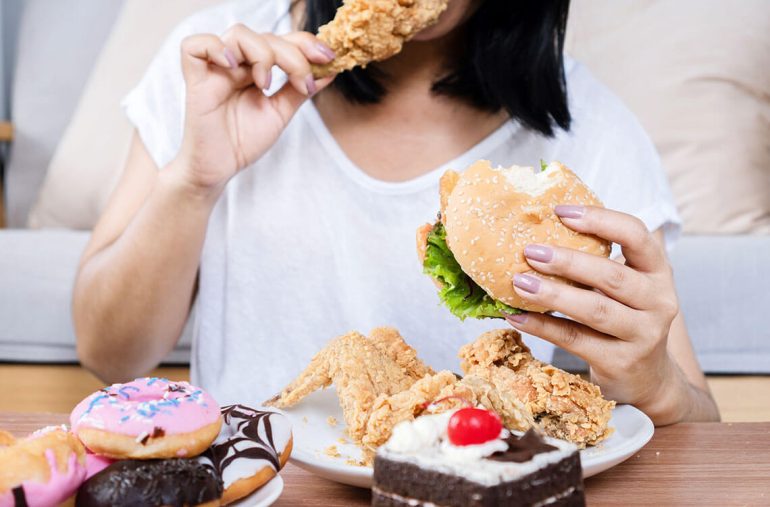
Deep-fried foods like French fries, fried chicken, and doughnuts are loaded with trans fats and unhealthy oils. These fats can raise LDL cholesterol while lowering “good” HDL cholesterol, making them one of the worst choices for heart health.
2. Processed Meats
Bacon, sausages, hot dogs, and deli meats are high in saturated fats and sodium. Regular consumption has been linked to increased cholesterol levels and a higher risk of cardiovascular disease.
3. Full-Fat Dairy Products
Whole milk, butter, cream, and high-fat cheeses contain significant amounts of saturated fat. Switching to low-fat or plant-based alternatives can help reduce your cholesterol intake.
4. Fast Food and Junk Food
Burgers, pizza, and other fast foods are often high in unhealthy fats, refined carbohydrates, and salt. These foods not only raise cholesterol but also contribute to weight gain and poor heart health.
5. Baked Goods and Pastries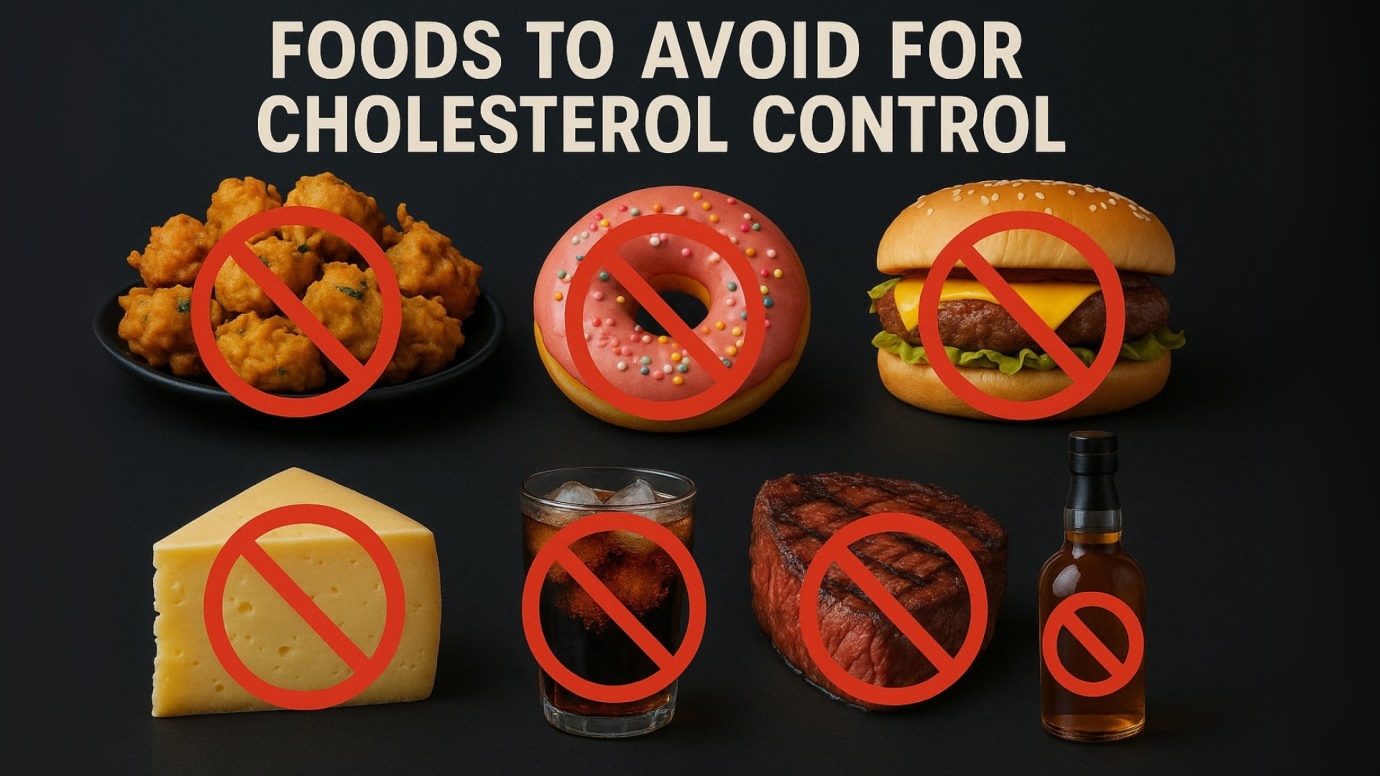
Cookies, cakes, pies, and pastries frequently contain trans fats and added sugars. Even small portions can negatively affect your cholesterol if eaten regularly.
6. Fatty Cuts of Red Meat
Beef, pork, and lamb—especially fatty cuts—are rich in saturated fat. While you don’t have to eliminate red meat completely, it’s best to limit portions and choose leaner cuts.
7. Processed and Packaged Snacks
Chips, crackers, and other packaged snacks often contain hidden trans fats and refined ingredients that can worsen cholesterol levels over time.
8. Sugary Foods and Drinks
Soft drinks, candy, and desserts may not contain cholesterol, but they can raise triglyceride levels and contribute to weight gain—both of which are harmful to heart health.
Final Thoughts
Improving your cholesterol levels doesn’t mean giving up all your favorite foods—it’s about making smarter choices. Focus on a balanced diet rich in fruits, vegetables, whole grains, and healthy fats. Small, consistent changes can lead to long-term benefits for your heart and overall well-being.