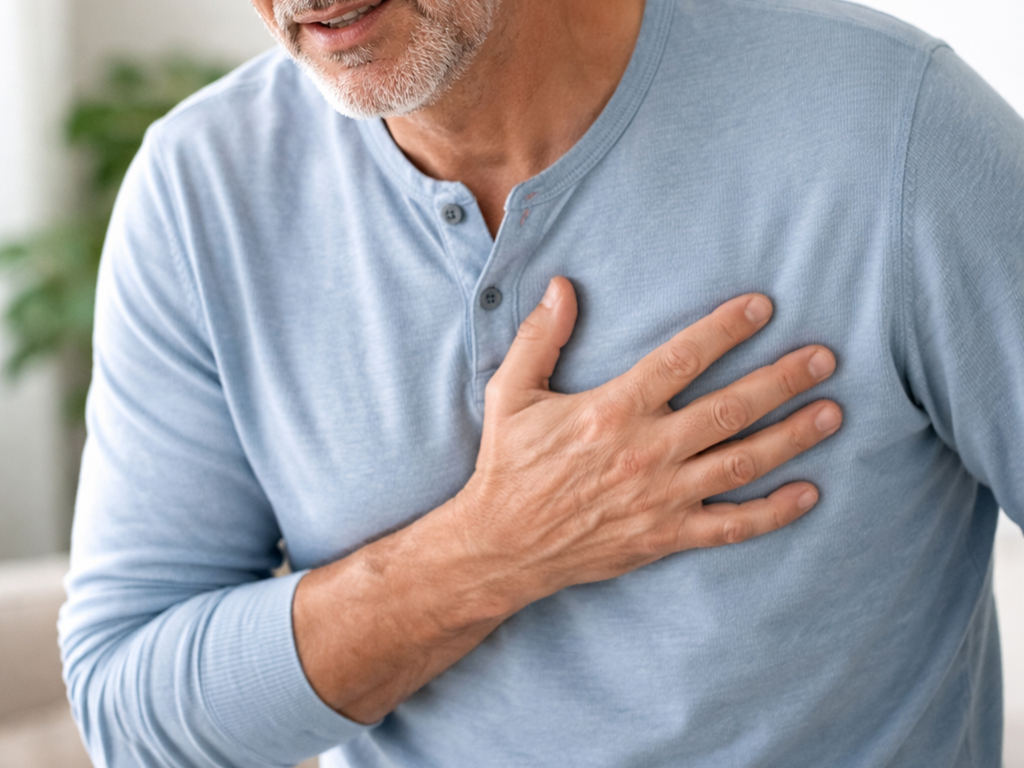
Think You’re Having a Heart Attack at Home? Here’s What to Do Immediately

Think You’re Having a Heart Attack? Here’s What to Do Right Away

Chapter 2

Theme:
Font Size:
24px

Not Every Heart Attack Looks the Same

This is one of the most important things to understand.

Some people experience obvious chest pressure.

Others may primarily notice shortness of breath, sweating, nausea, unusual fatigue, or discomfort in the back or jaw.

Some people may mistake symptoms for:

  • Indigestion

  • Heartburn

  • Anxiety

  • Muscle strain

  • A respiratory infection

  • Food poisoning

That is why the overall pattern matters.

If symptoms are new, concerning, persistent, or associated with several warning signs, don't assume you know the cause.

Heartburn or Heart Attack?

Chest discomfort can be particularly confusing because acid reflux can feel similar to heart-related pain.

Heartburn may cause a burning sensation behind the breastbone, particularly after eating or when lying down.

A heart attack, however, can also cause burning, pressure, squeezing, fullness, or discomfort that resembles indigestion.

There is no safe home test that can reliably distinguish the two.

When in doubt, seek urgent medical assessment.

It is better to have chest discomfort evaluated and discover that it was reflux than to dismiss a heart attack as indigestion.

What You Should Tell Emergency Dispatchers

When you call emergency services, provide clear information.

Tell them:

  • Your location

  • Your symptoms

  • When the symptoms started

  • Whether they are getting worse

  • Whether you have chest pain or pressure

  • Whether you have difficulty breathing

  • Whether you are alone

  • Any important medical conditions

  • Medications you take

  • Known allergies

If the symptoms began at a particular time, remember that time.

The time symptoms started can be medically important when clinicians determine treatment.

Don't Waste Time With Home Remedies

During a suspected heart attack, avoid relying on remedies such as:

  • Drinking large amounts of water

  • Herbal teas

  • Garlic mixtures

  • Vinegar

  • Coffee

  • Alcohol

  • Massage

  • Coughing techniques promoted online

  • Exercise

  • Cold showers

  • Trying to induce vomiting

None of these should replace emergency treatment.

Some may even delay appropriate care.

A heart attack is fundamentally a problem involving blood flow to the heart. It requires medical evaluation and, when necessary, treatment to restore or improve blood flow.

What Happens at the Hospital?

Once you reach medical care, clinicians will rapidly assess what's happening.

Testing may include:

Electrocardiogram (ECG)

An ECG records the heart's electrical activity and can help identify certain patterns associated with an acute heart attack.

Blood Tests

Doctors may measure cardiac biomarkers, particularly troponin, which can rise when heart muscle has been damaged.

Imaging

Depending on the situation, doctors may use chest imaging or other tests to evaluate the heart, lungs, blood vessels, or other possible causes of symptoms.

Coronary Angiography

In some cases, doctors may examine the coronary arteries directly using a catheter.

If a significant blockage is found, treatment may include opening the artery with a balloon and placing a stent.

The exact approach depends on the type of heart attack, the patient's condition, and the findings of the medical team.

What Increases the Risk of a Heart Attack?

Several factors can increase cardiovascular risk.

These include:

  • High blood pressure

  • High LDL cholesterol

  • Diabetes

  • Smoking

  • Obesity

  • Physical inactivity

  • Older age

  • Family history of cardiovascular disease

  • Certain chronic inflammatory conditions

  • Excessive alcohol consumption

  • Previous heart or vascular disease

Some risk factors cannot be changed, such as age and genetics.

Others can be addressed through medical treatment and lifestyle changes.

Don't Ignore Warning Signs Before the Emergency

Sometimes the body gives warning signals before a major cardiovascular event.

These can include recurring chest pressure during physical activity, unusual shortness of breath, reduced exercise tolerance, or discomfort that repeatedly appears with exertion and improves with rest.

Such symptoms can be associated with angina, although there are other possible causes.

If you notice a recurring pattern of chest discomfort or unexplained breathlessness, arrange a medical evaluation rather than waiting for a more serious episode.

Cơn đau tim thường đến rất bất ngờ

What You Can Do Before an Emergency Happens

The best time to prepare for a heart emergency is before one occurs.

Know your local emergency number.

Keep important medications and medical information accessible.

If you have been prescribed medications for heart disease, understand exactly how and when you are supposed to take them.

Learn basic CPR.

Consider learning how to use an AED.

If you live with someone who has cardiovascular risk factors, make sure family members know what symptoms should prompt an emergency call.

Preparation can eliminate precious hesitation during a stressful situation.

The Most Important Message

There is no guaranteed 10-second maneuver that can stop a heart attack at home.

The most important immediate actions are much simpler:

Recognize potentially serious symptoms.

Call emergency medical services immediately.

Stop physical activity and rest safely.

Follow the dispatcher's instructions.

Use prescribed emergency medication only as directed.

If the person becomes unresponsive and is not breathing normally, begin CPR and use an AED if available.

And perhaps most importantly:

Don't wait for the pain to become unbearable before asking for help.

A heart attack can sometimes begin with mild or unusual symptoms. Early medical assessment gives healthcare professionals the best opportunity to determine what is happening and provide appropriate treatment.

If you or someone around you is experiencing possible heart-attack symptoms right now, treat it as an emergency and contact your local emergency medical service immediately.

News in the same category

Think You’re Having a Heart Attack at Home? Here’s What to Do Immediately

2 Part