:max_bytes(150000):strip_icc():format(webp)/Health-GettyImages-2205828800-5b93543675214461b51bb871f50d053c.jpg)
Trauma or injury is the most common cause of a black toenail. The dark discoloration occurs when bleeding or bruising develops beneath the nail, a condition known as a subungual hematoma. When blood becomes trapped under the toenail, it gradually darkens as it dries and clots, causing the nail to appear black, dark red, purple, or brown.
Although many black toenails are harmless and resolve on their own, some cases may indicate a more serious underlying condition. Understanding the possible causes can help you determine when medical care is needed.
1. Blunt Force Injury

Direct trauma to the toenail—such as stubbing your toe, kicking a hard object, or dropping something heavy on your foot—can lead to a black toenail. This type of injury causes bleeding beneath the nail plate, resulting in visible discoloration as the nail heals.
In most cases, the pain and dark color gradually improve as the nail grows out over time. However, if pressure builds up under the nail, it may cause significant discomfort.
You should contact a healthcare provider if you experience intense pain, throbbing, or pressure, as these symptoms may require medical treatment to relieve the buildup of blood.
2. Runner’s Toe

Repetitive stress from sports activities—especially running—can also cause black toenails. This condition, commonly called runner’s toe, often affects the second or third toenail but can occur on any toe.
Runner’s toe is typically caused by:
-
Wearing shoes that are too tight, which compress the nail
-
Wearing shoes that are too loose, allowing the foot to slide forward
-
Long toenails that repeatedly strike the inside of the shoe
Downhill running increases the risk, as the toes repeatedly hit the front of the shoe. Over time, this repeated impact can cause bleeding between the nail bed and nail plate, leading to discoloration.
3. Malignant Melanoma (Subungual Melanoma)
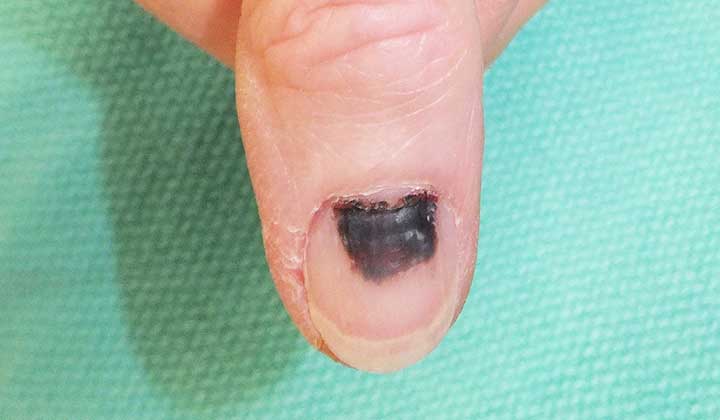
A less common but serious cause of a black toenail is subungual melanoma, a rare form of skin cancer that develops beneath the nail. Unlike injury-related discoloration, this condition may appear as a dark stripe or line running vertically along the length of the nail.
Subungual melanoma may not be painful and can easily be mistaken for a bruise. Early diagnosis is critical, as melanoma can spread quickly if left untreated.
You should see a healthcare provider promptly if:
-
The dark area does not grow out with the nail
-
There is no history of injury
-
The discoloration changes in size, shape, or color
Less Common Causes of Black Toenails
In some cases, black toenails may be caused by:
-
Fungal or bacterial infections
-
Chronic ingrown toenails
-
Underlying medical conditions such as diabetes, kidney disease, anemia, or heart disease
These conditions may affect nail growth, circulation, or healing, increasing the risk of discoloration and nail changes.
What a Black Toenail Looks and Feels Like
Healthy toenails are typically smooth, strong, and evenly colored. A black toenail caused by injury may be accompanied by:
-
Bleeding beneath the nail
-
Dark discoloration
-
Pain or tenderness
-
Swelling or bruising
-
A brittle, loose, or lifting nail
Symptoms can range from mild discomfort to significant pain, depending on the severity of the injury.
How Black Toenails Are Diagnosed
A healthcare provider will examine your toenails and ask about your symptoms, recent injuries, footwear, and activity level. They may also ask about medical conditions or habits that could affect nail health.
If needed, diagnostic tests may include:
-
Blood tests to check for infections or systemic conditions
-
Laboratory analysis of nail samples
-
X-rays to assess for fractures or bone damage beneath the nail
These tests help rule out serious conditions and guide appropriate treatment.
Treatment for Black Toenails Caused by Injury
Minor black toenails caused by injury or runner’s toe can usually be treated at home with:
-
Rest and reduced activity
-
Ice to reduce swelling
-
Elevation of the foot
-
Gentle compression
-
Over-the-counter pain relievers
For more severe cases, a healthcare provider may perform trephination, a procedure that involves creating a small hole in the nail to drain trapped blood and relieve pressure.
In most cases, the body gradually reabsorbs the blood, and the damaged nail grows out over six to nine months, depending on nail growth speed.
Possible Complications
In some cases, part or all of the toenail may loosen and fall off. If the nail matrix—the area responsible for nail growth—is damaged, permanent nail changes may occur. Rarely, the nail may not grow back at all.
Prompt care reduces the risk of infection and long-term damage.
When to See a Healthcare Provider
You may manage a black toenail at home if the cause is known and the discoloration affects less than half of the nail. However, seek medical care if:
-
More than 50% of the nail is dark
-
The discoloration appears as a vertical stripe
-
Bleeding continues or worsens
-
Pain is severe or persistent
-
There are signs of infection, such as redness, pus, or fever
Darkening of the cuticle area may indicate Hutchinson’s sign, which requires immediate medical evaluation due to its association with melanoma.
How to Prevent Toenail Injuries
While accidents can’t always be avoided, you can reduce your risk by:
-
Keeping toenails trimmed straight across
-
Practicing good foot hygiene
-
Wearing well-fitted shoes, especially during sports
-
Using protective footwear during physical labor or home projects
-
Replacing worn-out athletic shoes regularly
Quick Summary
Black toenails are most often caused by trauma or repetitive sports-related injuries such as runner’s toe. Less commonly, infections, systemic illnesses, or melanoma may be responsible.
Minor cases usually heal with rest and basic care, while severe pain, extensive discoloration, or unexplained nail changes should be evaluated by a healthcare provider. Early attention helps ensure proper healing and prevents complications.