You pull your jeans out of the wash expecting that crisp, structured denim look - but instead, you get strange ripples, twisted seams, or uneven textures. It’s a common frustration, and it’s not random. These distortions are the result of how denim fabric behaves under mechanical stress, water, heat, and drying conditions.
Let’s break down what’s really happening at the material and process level.

1. Denim Structure: Why It’s Prone to Distortion
Most jeans are made from Denim, typically a twill weave. In this structure, threads run diagonally, creating durability—but also directional tension.
Key point:
Denim doesn’t shrink uniformly. The warp (vertical threads) and weft (horizontal threads) respond differently to water and heat.
When exposed to washing:
- Fibers absorb water and swell
- Tension between threads changes
- Uneven contraction occurs during drying
This mismatch leads to visible ripples, especially along seams.
2. Seam Torque (The Main Culprit)
That twisted-leg or wavy seam effect has a technical name: seam torque.
It happens because:
- Fabric panels are cut along specific grain directions
- Twill weave naturally wants to “rotate” when relaxed
- Washing releases manufacturing tension
As a result, seams shift slightly, creating that spiral or ripple look along the legs.
This is especially common in:
- Slim-fit or skinny jeans
- Lower-cost denim with less stabilization treatment

3. Shrinkage and Uneven Drying
Cotton fibers shrink when exposed to heat. If drying is uneven, some areas contract more than others.
What causes uneven shrinkage:
- Overloading the washing machine
- High spin speeds creating fabric bunching
- Tumble drying at high heat
When one section dries faster, it “locks” into shape while other parts are still adjusting—leading to ripples.
4. Fiber Blend Matters
Not all jeans are 100% cotton. Many include elastane or polyester for stretch.
Blended denim behaves differently:
- Elastic fibers don’t shrink like cotton
- Cotton contracts, elastane resists
- This creates tension imbalance
That imbalance shows up as puckering, especially around:
- Knees
- Thighs
- Back seams
5. Washing Habits That Make It Worse
Some everyday habits amplify the problem:
Aggressive washing cycles
- High agitation distorts fiber alignment
Hot water
- Accelerates shrinkage and fiber stress
Overuse of detergent
- Can stiffen fibers and affect flexibility
Skipping proper reshaping
- Letting jeans dry in a twisted form “sets” the distortion
6. Mechanical Stress During Spin Cycle
The spin cycle applies centrifugal force, pressing fabric against the drum. If jeans are tangled:
- Seams get compressed unevenly
- Fabric folds under pressure
- Creases become permanent after drying
This is why jeans sometimes come out looking “warped” rather than just wrinkled.
7. Heat: The Final Lock-In Stage
Heat is what makes the ripples stay.
During tumble drying:
- Fibers soften under heat
- Then re-harden as they cool
- Whatever shape they’re in gets fixed
If jeans are twisted or uneven at that moment, the ripples become semi-permanent.
How to Prevent Ripples and Wrinkles
You don’t need complicated fixes - just better process control.
1. Wash inside out
Reduces surface stress and friction.
2. Use cold water
Minimizes shrinkage and fiber distortion.
3. Avoid overloading
Gives jeans space to move evenly.
4. Skip high heat drying
Air dry or use low heat settings.
5. Reshape before drying
Straighten seams and legs while damp.
6. Don’t overwash
Denim doesn’t need frequent washing - less exposure = less distortion.
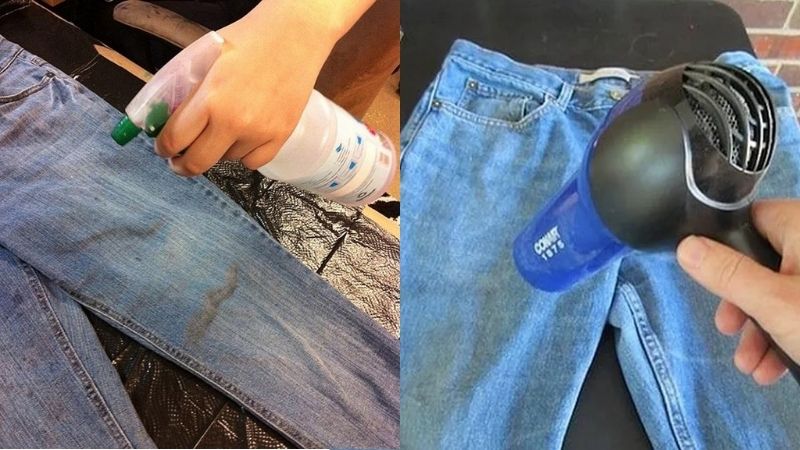
Can You Fix Already Rippled Jeans?
Partially, yes.
Try this:
- Lightly dampen the jeans
- Stretch and smooth the fabric manually
- Air dry flat or hang straight
For stubborn cases, low-heat ironing with steam can relax fibers enough to reduce ripples.
Final Take
Those weird ripples aren’t a defect - they’re physics. Denim is a structured fabric under tension, and washing disrupts that equilibrium. Add water, motion, and heat, and you get distortion.
The good news: once you understand the mechanics, you can control the outcome.
Jeans don’t just get wrinkled - they respond to how you treat them. And small adjustments in washing and drying can keep them looking clean, sharp, and structured for much longer.