Critical Warning: 10 Early Breast Cancer Signs Every Woman Needs to Know Now


Breast cancer is one of the most common cancers affecting women worldwide. The key factor that dramatically improves survival rates is early detection. When identified at an early stage, treatment outcomes are significantly better.
Understanding the warning signs is not about fear — it is about awareness and timely action.
Below are 10 early signs that should never be ignored.
1. A New Lump in the Breast or Underarm
The most common early sign is a new lump or thickened area in the breast or armpit.
Characteristics may include:
-
Hard or firm texture
-
Irregular edges
-
Usually painless (but not always)
Not all lumps are cancerous, but any new mass that persists beyond one menstrual cycle should be evaluated by a healthcare professional.
2. Changes in Breast Size or Shape
A noticeable alteration in size or contour, especially if it affects only one breast, may signal underlying tissue changes.
Look for:
-
Sudden asymmetry
-
Visible swelling
-
Distortion in natural shape
Subtle changes often appear before pain develops.
3. Skin Dimpling or Puckering
Skin that looks like an orange peel (called peau d’orange) can indicate lymphatic blockage.
Other visible changes include:
-
Indentation
-
Wrinkling
-
Pulling inward
These signs require immediate medical assessment.
4. Nipple Retraction or Inversion
If the nipple suddenly turns inward when it previously pointed outward, it may suggest underlying tissue pulling.
Pay attention to:
-
Sudden change (not lifelong inversion)
-
Accompanying lump
-
Skin tightness
5. Unusual Nipple Discharge
Clear, bloody, or yellow discharge that occurs without squeezing should be investigated.
Particularly concerning if:
-
It affects only one breast
-
It occurs spontaneously
-
It is persistent
6. Persistent Breast Pain in One Area
While breast pain is common and often hormone-related, localized pain that does not resolve should not be dismissed.
Cancer-related pain:
-
May feel sharp or burning
-
Often remains in one spot
-
Does not fluctuate with menstrual cycle
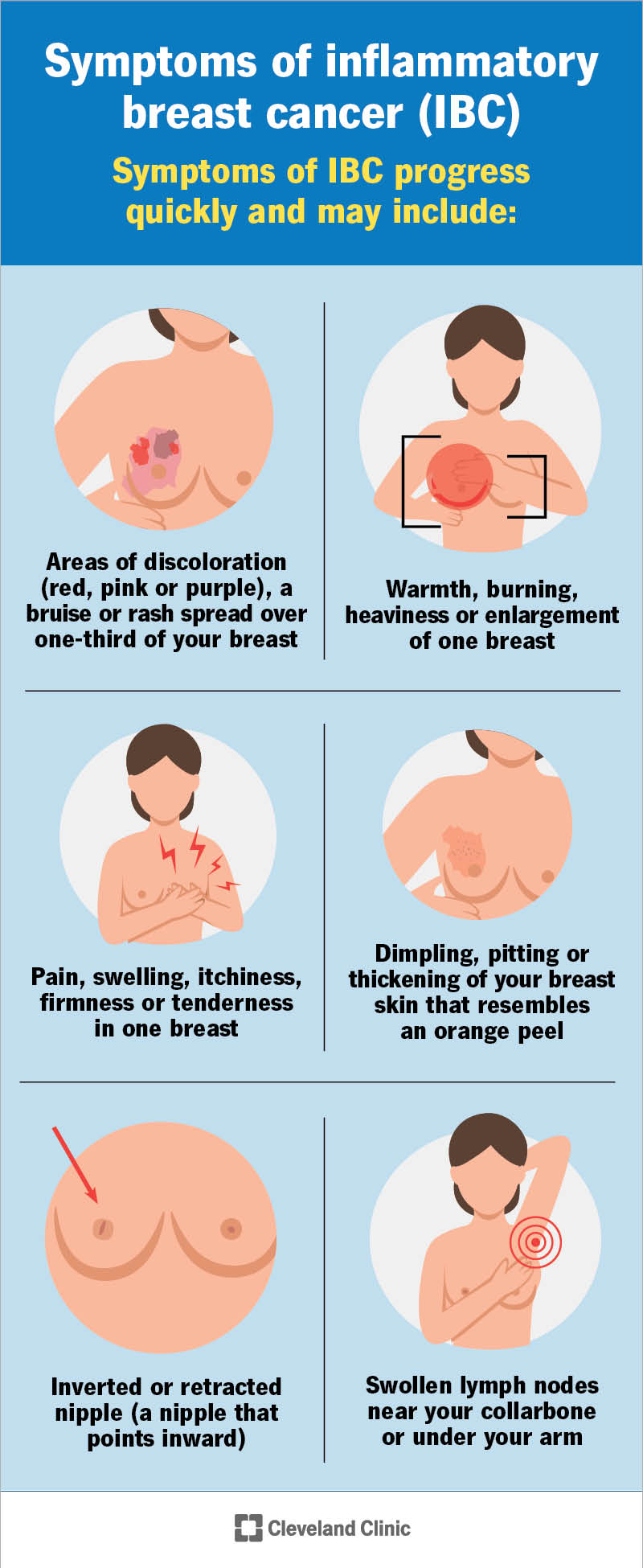


7. Redness or Thickening of the Skin
Inflammatory breast cancer may present as:
-
Redness
-
Warmth
-
Swelling
-
Thickened skin
This form can progress rapidly and may not always involve a distinct lump.
8. Swelling of Part or All of the Breast
Even without a palpable lump, swelling can indicate abnormal growth or fluid accumulation.
If one breast appears visibly enlarged or feels heavier, medical evaluation is essential.
9. Enlarged Lymph Nodes
Breast cancer can spread to lymph nodes before a lump is detectable.
Watch for:
-
Swelling in the armpit
-
Swelling near the collarbone
-
Firm or tender nodes
10. Changes That Persist Beyond Normal Hormonal Cycles
Hormonal changes can cause temporary breast tenderness or swelling.
However, warning signs typically:
-
Do not disappear after menstruation
-
Worsen over time
-
Occur independently of cycle timing
Persistence is key.
When to See a Doctor
Seek medical evaluation if you notice:
-
A lump lasting more than two weeks
-
Skin changes
-
Nipple discharge
-
Persistent localized pain
Do not wait for symptoms to worsen.
Early diagnostic tools include:
-
Clinical breast examination
-
Mammography
-
Ultrasound
-
Biopsy (if needed)
Why Early Detection Matters
When breast cancer is detected at a localized stage, the five-year survival rate is significantly higher compared to advanced stages.
Routine screening recommendations vary by age and risk factors, but many guidelines suggest:
-
Annual or biennial mammograms starting between ages 40–50
-
Earlier screening for high-risk individuals
Consult your healthcare provider for personalized recommendations.
Risk Factors to Be Aware Of
-
Family history of breast cancer
-
Genetic mutations (BRCA1/BRCA2)
-
Early menstruation or late menopause
-
Obesity
-
Alcohol consumption
-
Hormone replacement therapy
Having risk factors does not mean cancer is inevitable — but awareness improves prevention and monitoring.
The Role of Self-Examination
Breast self-awareness is more important than rigid monthly routines.
Know what is normal for your body.
Perform checks:
-
After your menstrual cycle
-
In front of a mirror
-
Lying down and standing
Report any unusual findings promptly.
Important Reminder
Not all breast changes mean cancer. Many are benign conditions such as cysts or fibroadenomas.
However, ignoring symptoms delays diagnosis.
Awareness leads to action. Action leads to earlier treatment. Earlier treatment saves lives.
Final Thoughts
Breast cancer does not always begin with dramatic symptoms. It often starts with subtle changes.
Understanding the early signs empowers women to seek timely care and advocate for their health.
If you or someone you know notices any of these symptoms, consult a qualified healthcare professional immediately.
Knowledge is not panic — it is protection.
If you want, I can also create:
-
A medically referenced 2000-word article
-
A YouTube educational script
-
A Facebook awareness post
-
Or a women’s health blog version optimized for SEO
Tell me the platform and tone you need.