4 Dangerous Signs of Tomatoes – Do NOT Buy Them or Risk Your Family’s Health
When buying tomatoes, if you notice the following signs, take my advice: No matter how cheap, don’t buy them!
Ripe, round, and vibrant red tomatoes are visually appealing to everyone. Whether in salads, juices, or sauces, tomatoes are the star of every kitchen. But don’t be fooled—not all tomatoes are safe to eat!
Some tomatoes may look perfect but hide serious health risks, from mild food poisoning and stomach pain to severe liver and kidney damage if consumed. Take my honest advice: pay attention to these 4 dangerous signs when choosing tomatoes, and don’t let bad food harm your health!
4 Dangerous Signs of Tomatoes
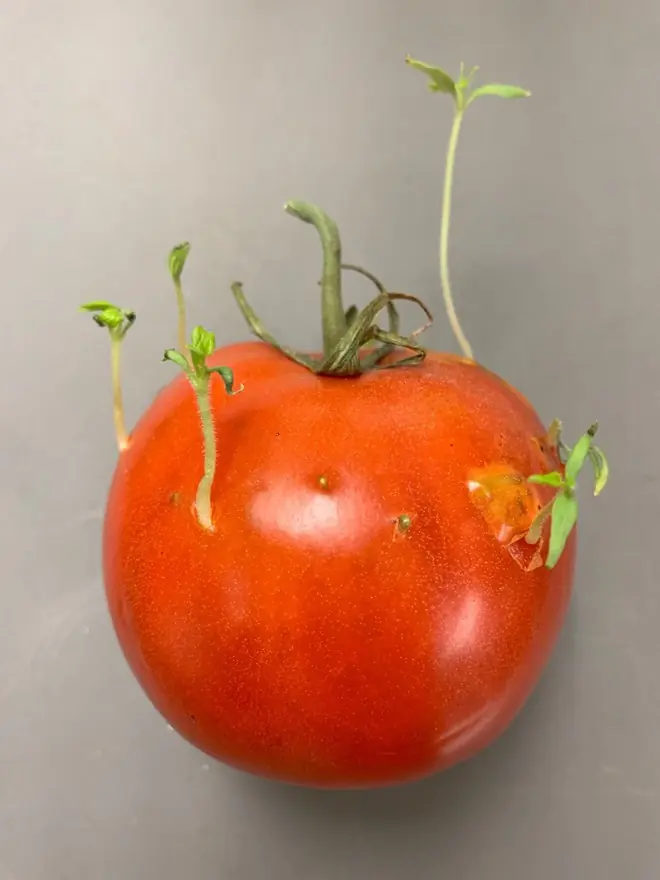
1. Sprouted Tomatoes – Solanine Poisoning Warning
Have you ever seen tiny green sprouts growing from a tomato? Don’t ignore them! Unlike sprouting sweet potatoes, this is a dangerous warning sign!
When a tomato starts sprouting, it produces solanine—a natural alkaloid toxin that concentrates in the sprouts and green skin. According to Healthline, solanine poisoning can cause nausea, vomiting, stomach pain, and even seizures if consumed in large amounts.
Even though solanine levels in tomatoes are lower than in potatoes, it’s still best to throw out sprouted tomatoes immediately. Don’t try to cut off the sprouted part and eat the rest—toxins may have already spread into the flesh!
2. Black Spots on Tomatoes – Hidden Mold and Fungi
Do you see black spots on the skin or inside the tomato? Don’t buy them, no matter how cheap! These spots are often caused by mold or bacterial contamination.
Studies from PubMed reveal that black spots are commonly caused by the Alternaria fungus, which produces mycotoxins. Eating these contaminated tomatoes can lead to stomach pain, diarrhea, and even long-term liver and kidney damage due to toxin accumulation.
Some people think they can cut away the black spots and eat the rest, but that’s a big mistake! Mold spreads deeper than you can see, and toxins remain even if the surface looks fine. Don’t risk it—throw them out!
3. Bruised, Rotten, or Mushy Tomatoes – Bacteria Are Hiding
If a tomato is bruised, soft, leaking juice, or has rotten spots, do NOT buy or eat it—even if it’s on sale!
When a tomato’s skin is damaged, harmful bacteria like Salmonella or E. coli can easily contaminate the flesh. According to Canada.ca, these bacteria cause food poisoning, leading to vomiting, diarrhea, and even high fever in people with weak immune systems.
Additionally, rotten tomatoes develop a sour, unpleasant smell—a sign of uncontrolled fermentation and spoilage. If you think washing will make it safe, think again! Bacteria can penetrate deep into the flesh, so the best option is to discard it immediately.
4. Strange or Sour Smell – Internal Spoilage
Fresh tomatoes should have a mild, pleasant aroma. But if a tomato smells overly sour, alcoholic, or has a strange chemical odor, beware! This is a clear sign of internal spoilage, even if the outside looks fine.
According to WebMD, spoiled foods can develop natural alcohol or toxic byproducts during fermentation, which can cause stomach pain, bloating, or mild poisoning when consumed.
Don’t try to salvage it—throw it away immediately! Your health is more important than wasting a tomato.
Tips for Choosing Safe, Fresh Tomatoes
To avoid harmful tomatoes and ensure safe, delicious meals, follow these essential tips:
🔹 Check the skin and texture: Choose firm, smooth tomatoes without cracks, black spots, or bruises. Avoid wrinkled or damaged ones, as they spoil faster.
🔹 Smell before buying: Fresh tomatoes have a light, natural fragrance. If they smell sour, fermented, or unusual, don’t buy them!
🔹 Choose the right ripeness: Pick evenly red tomatoes with no green patches. Half-ripe tomatoes can be left to ripen at home, but don’t eat them too early to avoid stomach discomfort.
🔹 Check the stem and calyx: Fresh tomatoes have a green, attached stem. If the stem is dry, missing, or detached, the tomato may be old or spoiled inside.
🔹 Store properly:
✔ Avoid refrigerating below 5°C (41°F), as extreme cold affects texture and flavor.
✔ Store at room temperature in a cool, dry place and use within 1-2 weeks.
✔ If cut, wrap the leftover piece in plastic wrap and store in the fridge for no more than 2 days.
🔹 Prevent cross-contamination: Keep tomatoes away from raw meat and seafood to avoid bacterial transfer. Wash thoroughly under running water and soak in saltwater for 5-10 minutes before eating.
🔹 Buy from trusted sources: Get tomatoes from supermarkets, organic stores, or reputable markets. Avoid suspiciously cheap tomatoes with unclear origins. If a deal seems too good to be true, inspect carefully!
Final Warning: Don’t Be Careless with Tomatoes!
Tomatoes are delicious and nutritious, but not all of them are safe. If you see any of these 4 warning signs, don’t hesitate to discard them—your health is not worth the risk!
Mild poisoning can cause stomach pain for days, while severe cases can damage your liver and kidneys, costing you more in medical bills. Be cautious, inspect carefully, and prioritize safety for you and your family!