A Step Many Think Makes Chicken “Clean” Actually Does the Opposite: Experts Everywhere Say Stop Immediately
Many households still follow this step when preparing chicken without realizing it can be harmful.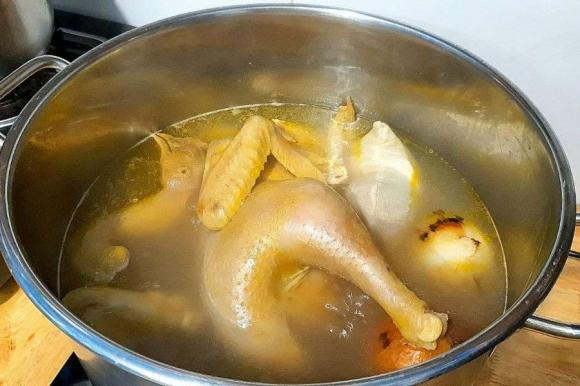
In everyday life, many habits are formed for “peace of mind” or to “make things clean,” yet in reality they can have the opposite effect. In the family kitchen, there is one very common practice that many people have maintained for years, despite repeated warnings from food safety experts to stop as soon as possible. That practice is washing raw chicken before cooking.
In many Vietnamese families, chicken bought from the market is usually rinsed thoroughly under running water to “wash away slime” or “reduce odor” before cooking. This habit is seen as an essential step, because rinsing makes the cook feel more confident that the meat is clean.
However, according to food safety experts, this seemingly careful step is actually one of the most common mistakes when handling poultry. Washing raw chicken under running water does not remove bacteria; instead, it unintentionally allows them to spread throughout the kitchen.
Experts unanimously warn against washing raw chicken
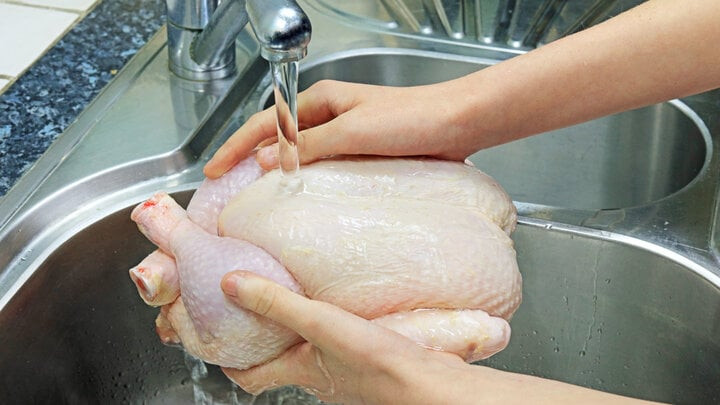
The U.S. Department of Agriculture’s Food Safety and Inspection Service (USDA/FSIS) has repeatedly stated that raw chicken should not be washed before cooking. According to the agency, bacteria commonly found on raw poultry, such as Salmonella and Campylobacter, cannot be eliminated by ordinary clean water. On the contrary, strong water flow can splash bacteria onto the sink, countertops, knives, cutting boards, and surrounding areas, increasing the risk of cross-contamination.
Research and guidelines from the Centre for Food Safety in Hong Kong (China) point to the same phenomenon. Their professional materials note that when raw poultry is washed under running water, bacteria can spread through tiny droplets into the surrounding kitchen area, contaminating surfaces that appear clean without the cook realizing it. This view has been cited by multiple outlets such as Sohu, Sina, and The Paper in articles on household food safety.
In Vietnam, nutrition and food safety experts also agree with these international recommendations. Many articles on medical and health websites emphasize that washing raw chicken mainly provides a visual “sense of cleanliness,” while the true determinant of food safety lies in proper cooking.
What should be done instead to stay clean and safe?
According to health authorities and experts, instead of washing chicken under running water, home cooks should adopt safer handling methods. After purchase, chicken can be patted dry with disposable paper towels, then cooked immediately or stored properly in the refrigerator. Most importantly, hands should be washed thoroughly with soap after handling raw meat, and knives, cutting boards, sinks, and kitchen surfaces should be cleaned carefully.
During cooking, chicken must be cooked thoroughly at the appropriate temperature, as high heat is what kills bacteria—not rinsing with water. By changing this small habit, the risk of bacteria spreading around the kitchen can be significantly reduced.
Many experts note that food safety does not always come from complicated procedures, but often begins with eliminating habits that seem beneficial but have been scientifically proven unnecessary. In this case, stopping the practice of washing raw chicken is a simple yet important step to protect the health of the entire family.