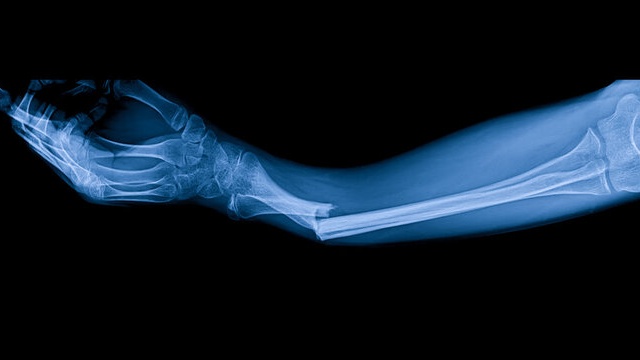
For many people, breaking a bone feels almost like a rite of passage. A fall from a bicycle, a sports injury, a clumsy slip on a wet floor — fractures are so common that most individuals experience at least one in their lifetime. Yet there is a surprising group of people who reach adulthood — sometimes even old age — without ever breaking a single bone.
This reality often sparks a strange and almost playful theory: why do some people seem nearly immune to fractures, while others appear accident-prone? Is it pure luck? Strong genetics? A cautious personality? Or is there a deeper biological and psychological explanation?
The answer, as with most human traits, lies in a combination of factors — not magic, but science, behavior, and circumstance working together.
The Fascination with the “Unbroken”
People who have never fractured a bone often describe it as something they hardly think about — until someone points it out. Suddenly, it feels unusual. In conversations, friends may react with surprise: “You’ve never broken a bone?” The statement almost carries a mythic quality.
But fractures are not distributed randomly across the population. Certain individuals genuinely have lower fracture risk due to measurable biological and behavioral differences.
Rather than being mysterious, the “unbroken” phenomenon is usually the result of multiple protective factors aligning.
1. Genetics: Built from Stronger Foundations
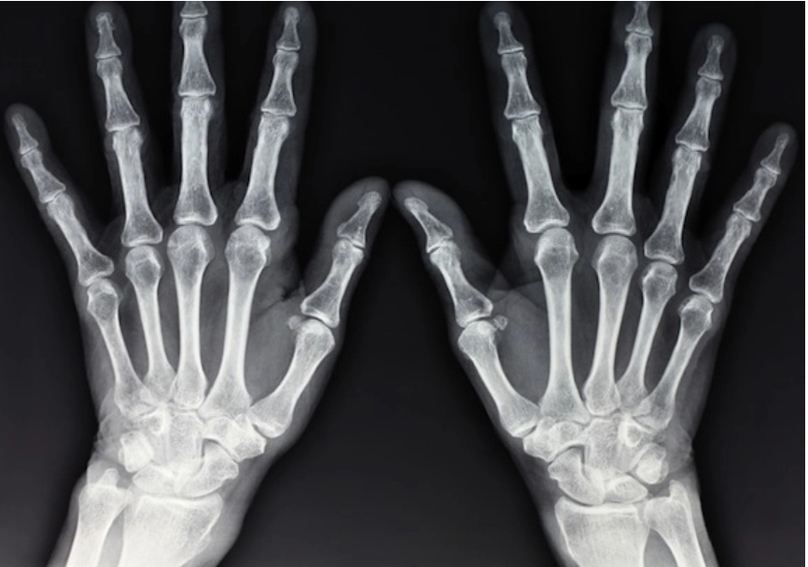
One of the most significant determinants of bone strength is genetics. Bone mineral density (BMD) — the measure of how much mineral content (primarily calcium and phosphorus) is present in bone tissue — is strongly influenced by inherited traits.
People with higher bone mineral density tend to have:
-
Thicker cortical bone (the hard outer layer)
-
Better collagen structure
-
Stronger bone architecture
Genes involved in collagen production, such as variants related to the COL1A1 gene, influence how resilient bone tissue is under stress. Collagen forms the structural framework of bones, and stronger collagen fibers contribute to better fracture resistance.
Additionally, the balance between osteoblasts (cells that build bone) and osteoclasts (cells that break down bone) differs slightly among individuals. Some people naturally maintain stronger bone remodeling patterns throughout life.
In simple terms: some individuals are biologically built with stronger skeletal foundations.
2. Lifestyle and Physical Activity: Strength Is Reinforced
While genetics provide the blueprint, lifestyle determines how that blueprint is maintained.
Weight-bearing exercise plays a critical role in strengthening bones. Activities such as:
-
Walking
-
Running
-
Resistance training
-
Jumping sports
stimulate bone remodeling. When bones experience mechanical stress, the body responds by increasing bone density.
Interestingly, moderate physical activity strengthens bones, but extreme high-risk sports can increase fracture likelihood. Therefore, someone who maintains regular exercise without excessive risk-taking may develop strong bones while avoiding injury.
Sedentary lifestyles, on the other hand, may weaken bones over time, increasing fracture susceptibility.
3. Risk Behavior and Personality Traits
Beyond biology, personality can influence injury risk.
Some individuals naturally:
-
Avoid high-risk activities
-
Assess danger carefully
-
Move cautiously in unfamiliar environments
-
Wear protective gear consistently
Risk perception plays a major role in accident prevention. Those with heightened situational awareness may subconsciously avoid dangerous scenarios — slippery surfaces, unstable ladders, reckless sports participation.
On the opposite end, individuals who are impulsive or overconfident may place themselves in situations with higher injury probability.
Interestingly, psychological traits such as patience, caution, and environmental awareness can act as protective factors against fractures.
4. Reaction Time and Cognitive Function
Quick reflexes and strong motor coordination can prevent falls.
When someone trips, their ability to react rapidly — adjusting posture, catching balance, bracing impact — may determine whether a fall leads to a fracture.
Good neuromuscular coordination reduces fall severity. This is especially relevant in children and older adults, where balance plays a key role.
The brain and musculoskeletal system work together constantly. Individuals with efficient reaction times may avoid the types of impacts that cause broken bones.
5. Nutrition: Feeding the Skeleton
Bone strength depends heavily on adequate nutrient intake.
Key nutrients include:
-
Calcium, essential for mineralization
-
Vitamin D, necessary for calcium absorption
-
Magnesium, supporting bone structure
-
Protein, crucial for collagen formation
-
Vitamin K, involved in bone metabolism
Individuals who consistently maintain balanced diets rich in these nutrients are more likely to preserve strong bones throughout life.
Malnutrition, restrictive diets, or chronic deficiencies can weaken skeletal integrity over time.
Thus, someone who has never broken a bone may unknowingly benefit from lifelong adequate nutrition.
6. Hormonal Influence
Hormones regulate bone density.
Estrogen, in particular, protects bone tissue. When estrogen declines during menopause, women face increased fracture risk. Similarly, testosterone supports bone mass in men.
Individuals with stable hormonal balance tend to maintain better bone density.
Age is also a factor. Younger adults typically have stronger bones, while bone density naturally decreases with aging.
Someone who has never broken a bone at age 25 may not necessarily remain fracture-free at age 75. Bone strength changes over time.
7. Body Composition and Mechanics
Body structure influences fracture risk.
For example:
-
People with good muscle mass provide more cushioning and joint stability.
-
Strong muscles absorb impact force, reducing strain on bones.
-
Healthy body weight supports bone density through mechanical loading.
Muscle strength often acts as an invisible shield for skeletal health.

So, Is It Just Luck?
Luck certainly plays a role. Random accidents happen. But fracture risk is rarely determined by luck alone.
The “never broken a bone” phenomenon is usually the result of:
-
Favorable genetics
-
Consistent bone-supportive nutrition
-
Regular but balanced physical activity
-
Cautious behavior
-
Good coordination
-
Stable hormonal health
When these factors combine, fracture probability decreases significantly.
Important Perspective
It is also worth noting that not breaking a bone does not necessarily mean superior health. Some fractures occur during unavoidable accidents. Others happen in perfectly healthy individuals due to high-impact trauma.
Conversely, experiencing a fracture does not imply weakness or poor lifestyle choices.
Bone health exists along a spectrum influenced by multiple variables.
Final Thoughts
The theory surrounding people who have never broken a bone may sound mysterious, but it is grounded in biology and behavior rather than fate.
Strong genetics, smart habits, balanced nutrition, physical conditioning, and cautious decision-making collectively reduce fracture risk. While some individuals may appear “immune,” their resilience is typically built through a complex interaction of protective factors.
Ultimately, bone health is not about avoiding accidents entirely — it is about maintaining strength, stability, and awareness over time.
And for those who have never broken a bone? It may not be magic — just a fortunate alignment of science and sensible living.