If Your Tongue Is White, Your Body May Be Warning You About These Health Problems
Most people rarely pay attention to their tongue — until something changes. One common change that often causes concern is a white-coated tongue.
Doctors say a white tongue is usually caused by a buildup of bacteria, dead cells, and debris on the surface of the tongue. In many cases, it is harmless and temporary. However, sometimes it may signal an underlying health issue that should not be ignored.
Here’s what experts say a white tongue could mean and when you should consider seeking medical advice.
What Is a White Tongue?
A white tongue occurs when part or all of the tongue develops a whitish coating or patches. It may appear:
- Thick or thin
- Dry or fuzzy
- Patchy or evenly coated
Some people also experience:
- Bad breath
- Dry mouth
- Burning sensations
- Changes in taste
According to doctors, the appearance of the tongue can sometimes provide clues about overall health. (webmd.com)
1. Poor Oral Hygiene
One of the most common causes of a white tongue is inadequate oral care.
When bacteria, food particles, and dead cells accumulate on the tongue, they can create a white coating. Skipping brushing, flossing, or tongue cleaning may worsen the problem.
Doctors recommend:
- Brushing twice daily
- Cleaning the tongue gently
- Drinking enough water
- Visiting a dentist regularly
In many cases, improving oral hygiene helps the white coating disappear. (clevelandclinic.org)
2. Dehydration or Dry Mouth
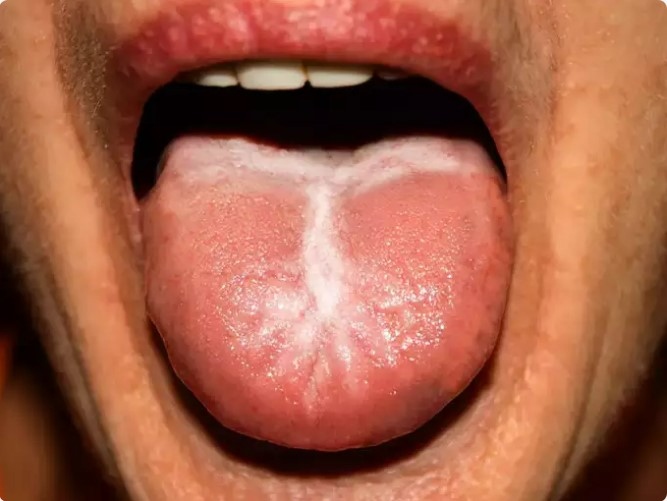
A dry mouth can also lead to a white tongue.
When saliva production decreases, bacteria and debris may build up more easily. Dry mouth may result from:
- Not drinking enough water
- Certain medications
- Smoking
- Sleeping with the mouth open
Experts say staying hydrated may help improve both dry mouth and tongue appearance. (healthline.com)
3. Oral Thrush
Sometimes a white tongue may be caused by oral thrush — a fungal infection caused by an overgrowth of Candida yeast.
Oral thrush may cause:
- Thick white patches
- Pain or burning
- Difficulty swallowing
- Redness underneath the white coating
This condition is more common in:
- Older adults
- People with diabetes
- Individuals using inhaled steroids
- People with weakened immune systems
Doctors often treat oral thrush with antifungal medications. (mayoclinic.org)
4. Smoking and Tobacco Use
Smoking may irritate the tongue and increase the buildup of keratin on its surface, creating a pale or white appearance.
Tobacco use is also linked to:
- Bad breath
- Gum disease
- Increased oral infection risk
Health experts say quitting smoking may improve oral health significantly over time. (webmd.com)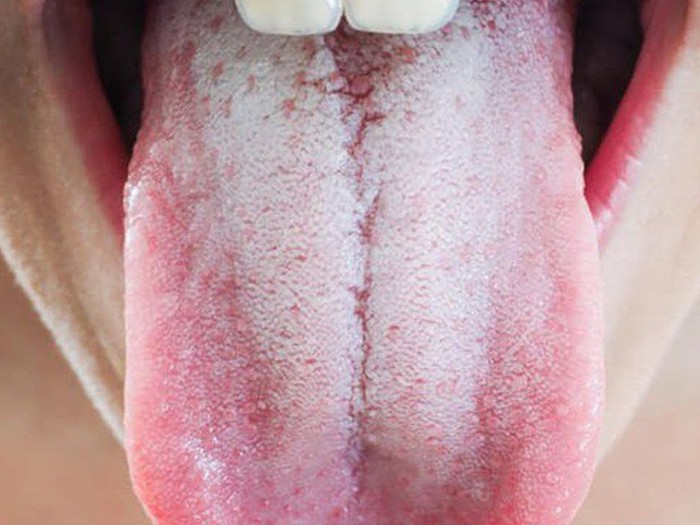
5. Leukoplakia
Leukoplakia is a condition that causes thick white patches inside the mouth or on the tongue.
These patches cannot usually be scraped off easily. The condition is often associated with:
- Smoking
- Chronic irritation
- Heavy alcohol use
Although leukoplakia is usually noncancerous, doctors warn that some cases may become precancerous and should be evaluated by a healthcare professional. (mayoclinic.org)
6. Geographic Tongue
Some people develop irregular smooth red patches with white borders on the tongue, a condition called geographic tongue.
While usually harmless, it may sometimes cause sensitivity or discomfort when eating spicy foods.
Doctors do not fully understand the exact cause, but the condition is generally considered benign. (healthline.com)
When Should You See a Doctor?
A white tongue is often harmless, but experts recommend seeking medical advice if:
- The coating lasts longer than two weeks
- You experience pain or burning
- You have difficulty eating or swallowing
- White patches cannot be scraped off
- The tongue changes continue worsening
Persistent mouth changes should always be checked by a healthcare professional or dentist. (clevelandclinic.org)
How to Help Keep Your Tongue Healthy
Doctors recommend several simple habits to support oral health:
- Brush your teeth regularly
- Clean your tongue gently
- Stay hydrated
- Limit smoking and alcohol
- Eat a balanced diet
- Schedule routine dental checkups
These small habits may help reduce bacteria buildup and improve overall mouth health.
Final Thoughts
A white tongue is usually not dangerous, but it can sometimes signal dehydration, poor oral hygiene, fungal infections, or other underlying conditions.
Paying attention to changes in your mouth may help you recognize potential health problems early. If symptoms persist or worsen, consulting a healthcare professional is the safest step.
Sources
- WebMD – White Tongue Causes and Treatments
- Cleveland Clinic – White Tongue
- Mayo Clinic – Oral Thrush
- Healthline – White Tongue