Doctors Said My Husband Had Less than a Year to Live – What Our Daughter Did at Her Wedding Left Us Speechless
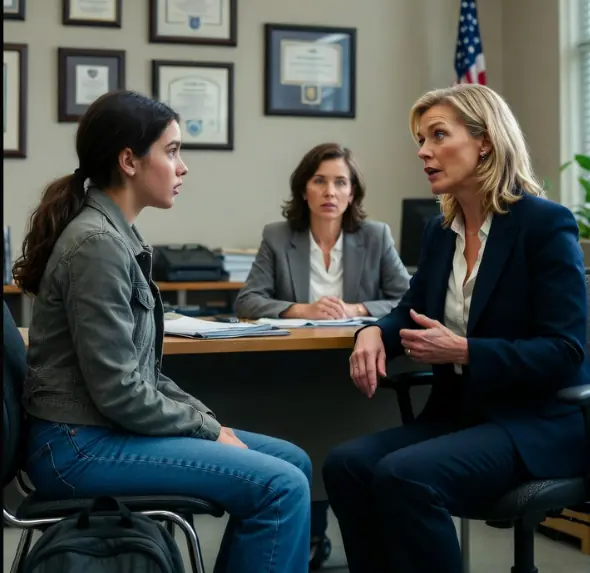
When the doctor said the words, I remember staring at the diplomas on the wall behind him, as if one of them might contradict what he was telling us.
“Less than a year,” he repeated gently. “Perhaps a little more if the treatments respond well. But you should prepare.”
Prepare.
I wanted to ask him how anyone prepares for the slow disappearance of the person who has shared their entire adult life. How do you prepare to watch the man who carried your newborn daughter in trembling arms become someone who struggles to carry a glass of water?
But I didn’t ask. I just reached for my husband’s hand.
Thomas squeezed my fingers, the same way he had on our wedding day thirty years earlier—firm, reassuring, as if he were the strong one in the room.
“I guess we better make it a good year, huh?” he said, managing a crooked smile.
The doctor gave a small nod, but his eyes were sad.
The Diagnosis
The diagnosis came just two months after our daughter, Emily, got engaged. She had called us one evening, her voice bubbling over the phone.
“Dad! Mom! He proposed! He actually proposed!”
Thomas had laughed so loudly that I had to pull the phone away from my ear.
“About time,” he’d said. “I was beginning to think I’d have to propose to him myself.”
Emily had always been close to her father. From the moment she learned to walk, she followed him around like a tiny shadow. He taught her how to ride a bike, how to change a tire, how to tell when someone was lying by watching their eyes. He also taught her how to laugh at herself when she fell, and how to stand back up without waiting for someone else to lift her.
When she asked him to walk her down the aisle, he didn’t even pretend to hesitate.
“Of course,” he said. “I’ve been practicing that walk since you were born.”
We thought we had at least another year and a half before the wedding. Plenty of time.
Then the fatigue started.
Thomas had always been energetic—he was the type who built a deck in our backyard “just because the weather’s nice.” But suddenly, he was tired all the time. Bruises appeared on his arms. He brushed it off.
“Getting older,” he joked.
But I saw the way he winced when he thought I wasn’t looking.
The tests came quickly after that. Blood work. Scans. More tests. And then the appointment with the specialist that changed everything.
A rare, aggressive illness. Advanced. Difficult to treat.
Less than a year.
Telling Emily
Telling our daughter was the hardest conversation of my life.
We invited her over for dinner. I cooked her favorite meal—lemon chicken with roasted potatoes—even though my hands shook so badly I nearly dropped the pan.
She walked in with that same bright smile she had worn since she was a child, hugging us both.
“What’s going on?” she asked, sensing something in the air.
Thomas didn’t let me speak. He always protected me from the hardest parts.
“Kiddo,” he said, motioning for her to sit. “We got some news.”
I watched her face as he explained. I watched confusion turn to disbelief, disbelief to horror.
“No,” she whispered. “No, that’s not possible. They can treat it, right? There’s something they can do.”
“There are treatments,” he said gently. “We’ll try them. But we also have to be realistic.”
Tears streamed down her face. She crossed the room and wrapped her arms around him so tightly I worried she’d hurt him.
“You’re walking me down that aisle,” she said fiercely. “You promised.”
He stroked her hair. “I’ll do everything I can.”
That night, after she left, Thomas and I sat in the living room long after midnight.
“What if I can’t make it?” he asked quietly.
“You will,” I said immediately, even though fear coiled in my stomach. “You have to.”
The Race Against Time
The next months were a strange blend of hospital visits and wedding planning.
Chemotherapy began. Some days Thomas felt strong enough to joke with the nurses. Other days, he could barely get out of bed.
Emily threw herself into planning with an intensity that bordered on desperation. She moved the wedding date up by six months, choosing a late summer ceremony instead of the following spring.
“I don’t care about peonies,” she told me one afternoon as we flipped through bridal magazines. “I care about Dad being there.”
She chose a venue only fifteen minutes from our house, so Thomas wouldn’t have to travel far. She picked a simple outdoor ceremony under a wide oak tree, with white chairs and string lights.
Thomas insisted on attending every planning meeting he could.
“I have opinions about cake,” he declared once, making Emily laugh.
Despite everything, there were still moments of joy. Moments when we almost forgot the clock ticking in the background.
But the illness was relentless.
Thomas lost weight. His hair thinned. His once steady hands trembled. I began to wake up at night just to check that he was still breathing.
Six months after the diagnosis, the doctor adjusted his timeline.
“Things are progressing faster than we hoped,” he said carefully.
Thomas didn’t tell Emily about that appointment. He didn’t want to burden her further.
But I saw it in his eyes. The fear that he might not make it to her wedding.
The Promise
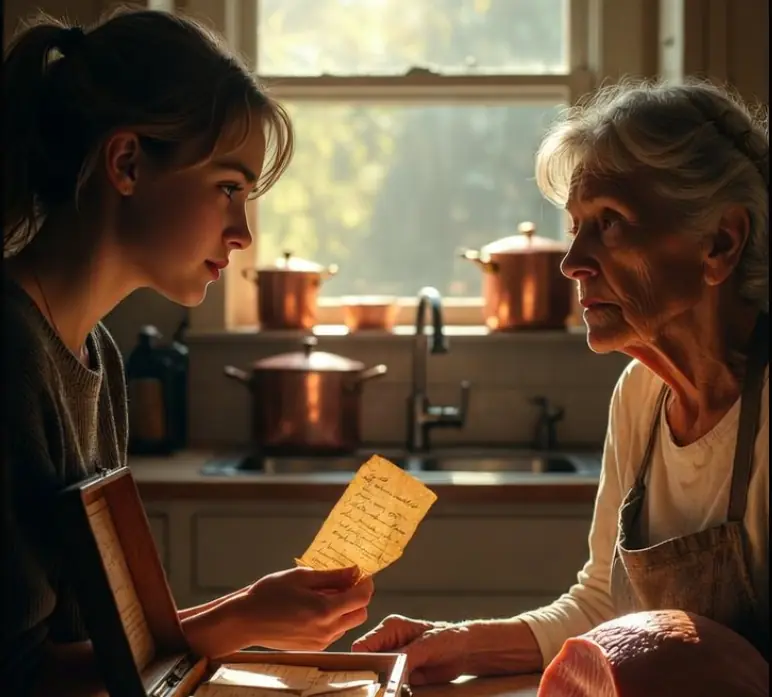
One evening, about two months before the ceremony, I found Thomas sitting alone in the garage, staring at an old wooden box.
It was the memory box we’d made when Emily was born—filled with hospital bracelets, baby photos, her first drawing of our family.
“What are you doing?” I asked softly.
“Making sure I remember,” he said.
He opened the box and pulled out a photograph of him holding Emily as a toddler, both of them covered in mud.
“She insisted on jumping in that puddle,” he said, smiling faintly. “Wouldn’t let go of my hand.”
He closed the box and looked at me.
“If I can’t walk her down that aisle,” he said, his voice cracking, “I need you to promise me something.”
“Don’t say that.”
“Promise me.”
I swallowed hard. “What?”
“Tell her that I was there. That I never left her. Even if she couldn’t see me.”
I knelt beside him, taking his fragile hands in mine.
“She knows,” I said. “She’s always known.”
The Wedding Day
Against the odds, Thomas made it to the wedding day.
It was a warm August afternoon. The sky was a perfect shade of blue, as if the world had decided to give us one flawless day.
Thomas wore a tailored navy suit that hung a little looser than it once would have. Emily had chosen it herself, insisting on something “strong and classic, like you.”
When he looked in the mirror, I saw a flicker of the man I’d married—determined, proud.
“You ready?” I asked.
He nodded. “I’ve been ready since 1995.”
The ceremony was scheduled for four o’clock. Guests filled the white chairs, murmuring softly. The string lights glowed faintly even in daylight.
I walked down the aisle first, escorted by my brother. Then it was time.
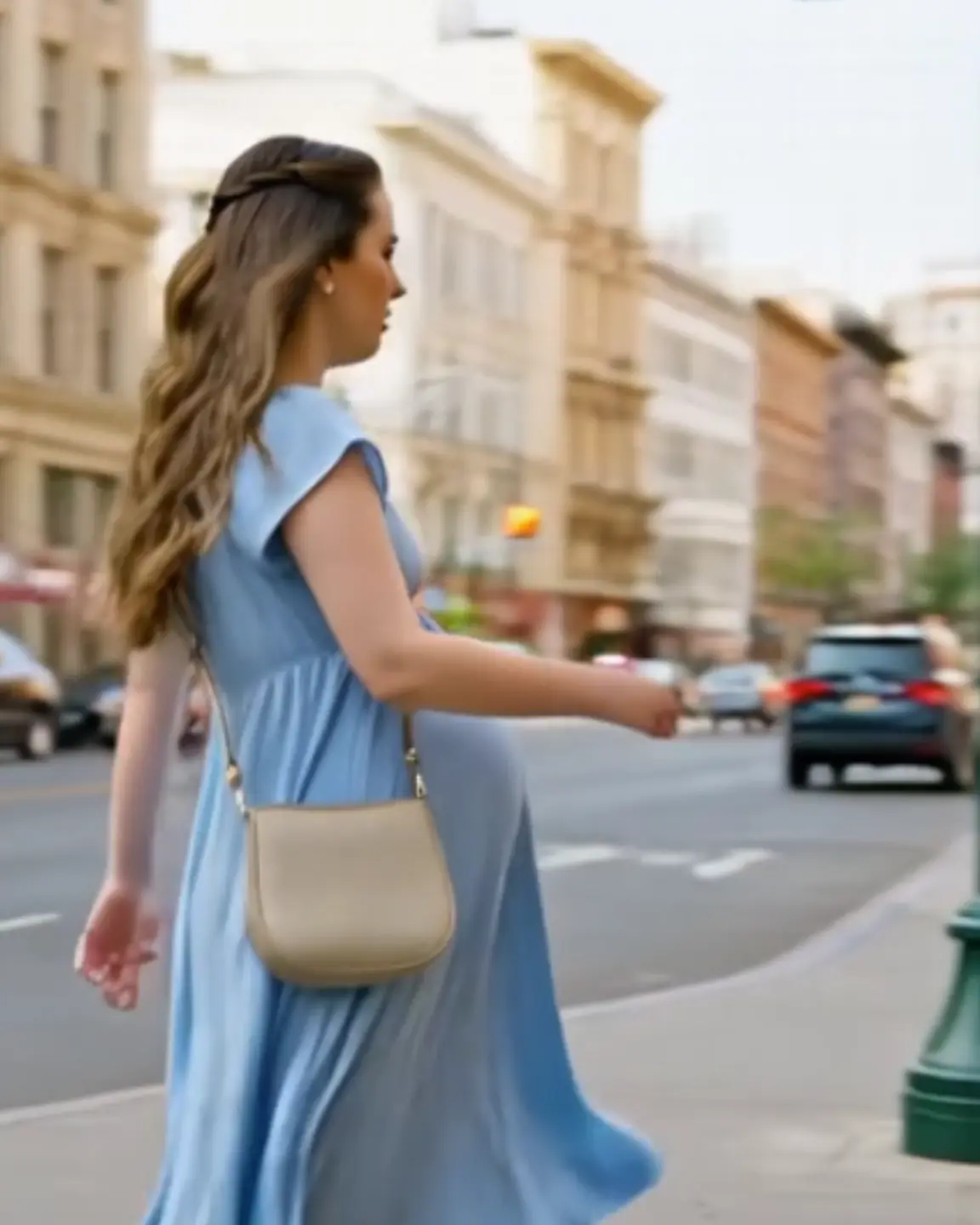
Emily appeared at the far end of the path, radiant in a simple lace gown. But she wasn’t alone.
Thomas stood beside her.
For a moment, I couldn’t breathe.
He held her arm carefully, his steps slow but steady. The guests rose, many of them wiping away tears.
As they began their walk, Emily leaned her head slightly toward him. He whispered something that made her smile.
Every step felt monumental. Every second, a gift.
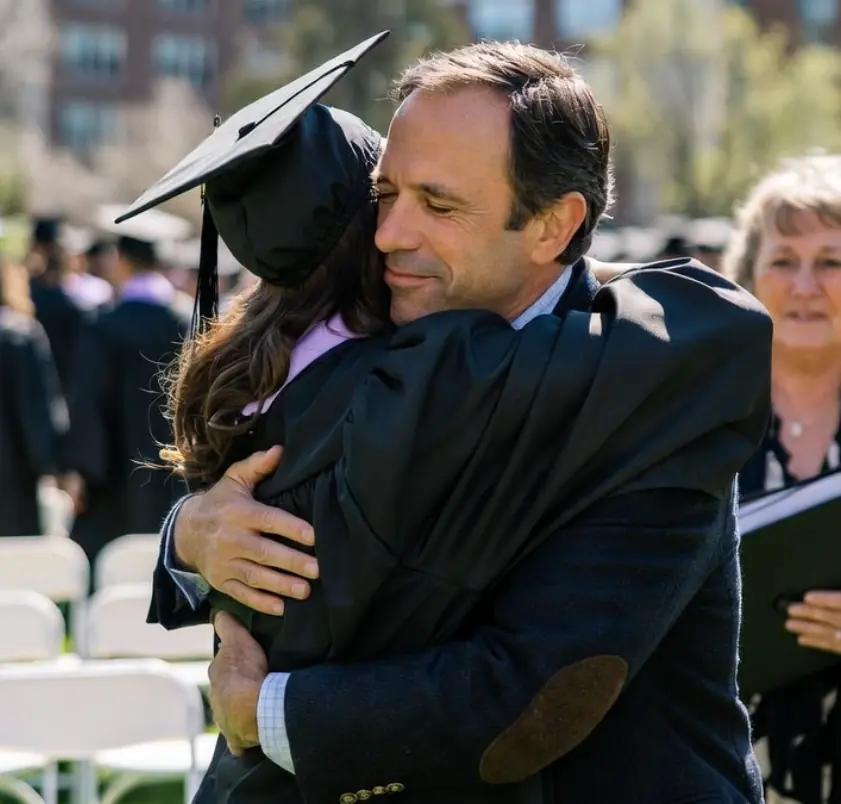
When they reached the altar, Thomas kissed her cheek and placed her hand in her fiancé’s.
“Take care of my girl,” he said firmly.
“I will,” the young man replied, his voice thick with emotion.
Thomas sat beside me for the ceremony, his hand in mine.
When Emily and her husband exchanged vows, I saw Thomas close his eyes briefly, as if committing the moment to memory.
We made it, I thought.
We made it.
The Reception
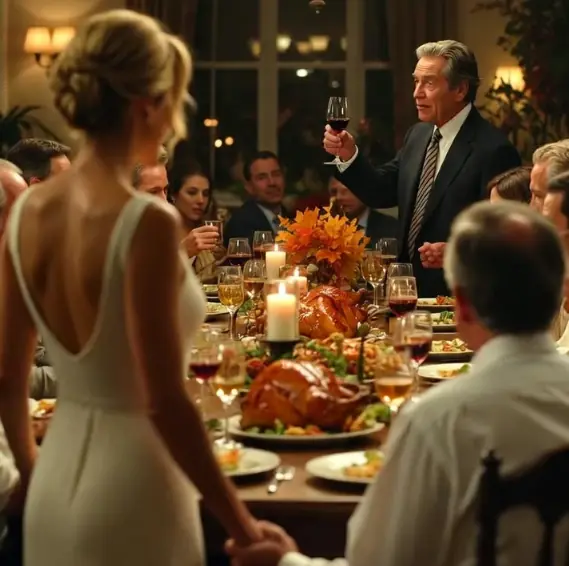
After the ceremony, the reception began in a nearby hall decorated with white roses and soft candlelight.
Thomas was exhausted, but he refused to leave.
“I’m staying for the father-daughter dance,” he insisted.
Emily had chosen a song they both loved. When the music began, the room grew quiet.
Thomas stood slowly. I held my breath as he walked to the dance floor.
Emily met him halfway.
They moved gently, swaying more than dancing. His hand rested lightly at her back. Her head leaned against his shoulder.
There wasn’t a dry eye in the room.
Halfway through the song, Thomas whispered something to her. She nodded, tears slipping down her cheeks.
When the music ended, the room erupted in applause.
I thought that was the moment that would stay with me forever.
I was wrong.
What She Did
After dinner, Emily took the microphone.
“I have one more surprise,” she said, her voice steady but emotional. “This one is for my dad.”
Thomas looked confused.
She gestured toward the far corner of the hall. The lights dimmed, and a projector flickered on.
A video began to play.
It started with old home footage—Thomas teaching her to ride a bike, cheering at her school plays, dancing with her in our kitchen.
Then the screen shifted to something new.
Clips of Thomas over the past few months. Sitting in hospital chairs. Laughing weakly at bad jokes. Holding Emily’s hand during chemo appointments.
But then came something none of us expected.
The screen showed Thomas sitting in a chair in our living room, dressed in the same navy suit he wore that day.
He looked directly into the camera.
“Hey, kiddo,” he said.
A collective gasp rippled through the room.
Emily covered her mouth.
“When you’re watching this,” he continued, “you’re probably at your wedding. And if I’m sitting there embarrassing you with my dance moves, well, that’s good. That means I made it.”
Soft laughter mixed with tears.
“But if I didn’t,” he said gently, “I need you to know something.”
I felt my heart stop.
“You have been the greatest joy of my life. From the moment I held you, I knew my purpose was to love you and prepare you for the world. Today, you’re starting a new chapter. And whether I’m standing beside you or watching from somewhere else, I am so unbelievably proud of you.”
The camera shifted slightly. I recognized the day—it was one of his weaker days, about a month earlier.
“I won’t get to see every milestone,” he continued. “But I want you to carry my voice with you. When you doubt yourself, remember I believe in you. When you feel alone, remember you never are.”
Emily sobbed openly now. Guests reached for tissues.
“And one more thing,” Thomas said, a familiar spark in his eyes. “I’ve always wanted one more dance with you.”
The screen faded to black.
For a moment, there was silence.
Then the music began again—the same song from their father-daughter dance.
Emily turned toward Thomas, trembling.
“Dad?” she whispered.
Thomas was crying, but he was smiling.
“You did this?” he asked.
She nodded.
“I asked you to record it a few weeks ago,” she said. “Just in case. I didn’t tell you why. I needed to know… that no matter what happens… you’ll always be there.”
He stood slowly, despite his exhaustion.
“Well,” he said softly, “I guess we better dance again.”
The room erupted in applause as they stepped onto the dance floor once more.
This time, there was something different in the air. Not just sorrow. Not just fear.
There was defiance.
They danced longer than before. Slower. More deliberately.
And when the song ended, Thomas pulled Emily into a tight embrace.
“I love you, kiddo,” he said.
“I love you more,” she replied.
The Aftermath
Thomas’s health declined rapidly after the wedding.
Within three months, he was confined mostly to bed. The treatments were no longer working.
But something had changed.
He seemed lighter. At peace.
“I saw her happy,” he told me one evening. “That’s all I needed.”
Emily visited almost every day. She brought photos from the wedding, printed and framed. She played the video message again, this time just for us.
One night, as the three of us sat together, Thomas reached for her hand.
“No regrets,” he said.
“None,” she agreed, though tears filled her eyes.
He passed away quietly two weeks later, with both of us beside him.
What Remains
Grief is strange. It comes in waves. Sometimes it’s a gentle ache. Other times, it crashes over you without warning.
But whenever the pain feels unbearable, I think about that dance.
About the way Emily turned fear into something beautiful. About the courage it took for her to ask her father to record a message for a future she wasn’t sure he’d see.
She didn’t just plan a wedding.
She built a bridge between what was and what would be.
A few months after Thomas’s passing, Emily invited me over for dinner. She and her husband had moved into a small house not far from ours.
After we ate, she took out her phone.
“There’s something I want to show you,” she said.
It was a new video.
She had edited together the wedding footage with her father’s recorded message. At the end, she added a final clip—Thomas dancing with her that second time, surrounded by cheering guests.
She posted it online with a simple caption: “For every parent who fights to stay, and every child who finds a way to hold on.”
The video spread far beyond what we expected. Messages poured in from strangers sharing their own stories of love and loss.
Emily turned to me.
“Dad thought he wouldn’t be there,” she said softly. “But he was. He is.”
And she was right.
He was there in her laughter. In the way she tilts her head when she’s thinking. In the strength she shows when life feels unfair.
Doctors may measure life in months.
But love doesn’t follow those rules.
On the anniversary of the wedding, Emily and I returned to the oak tree where she’d said her vows. The string lights were gone, but the branches stretched wide above us.
She slipped her hand into mine.
“Mom,” she said, “do you think he knows?”
I looked up at the sky filtering through the leaves.
“I don’t just think he knows,” I said. “I think he’s proud.”
We stood there quietly, the memory of music lingering in the air.
Doctors had told us we had less than a year.
They were right, in a way.
But what they couldn’t measure was the way a single day—one walk down an aisle, one dance, one recorded message—could echo far beyond a lifetime.
And every time I close my eyes, I see them on that dance floor.
My husband and my daughter.
Moving slowly. Holding tightly.
Speechless.
And together.