Those two small indentations on the lower back — often called “back dimples” — tend to spark curiosity. Some people associate them with attractiveness. Others wonder if they have a medical meaning. And many simply want to know: why do some people have them while others don’t?
These dimples are completely natural anatomical features. In medical terms, they are known as “Dimples of Venus” in women and sometimes “Dimples of Apollo” in men. Despite the poetic names, they are not mystical or rare — they are simply part of human skeletal structure.
Let’s explore what they are, why they appear, and whether they have any health significance.
What Are Lower Back Dimples?
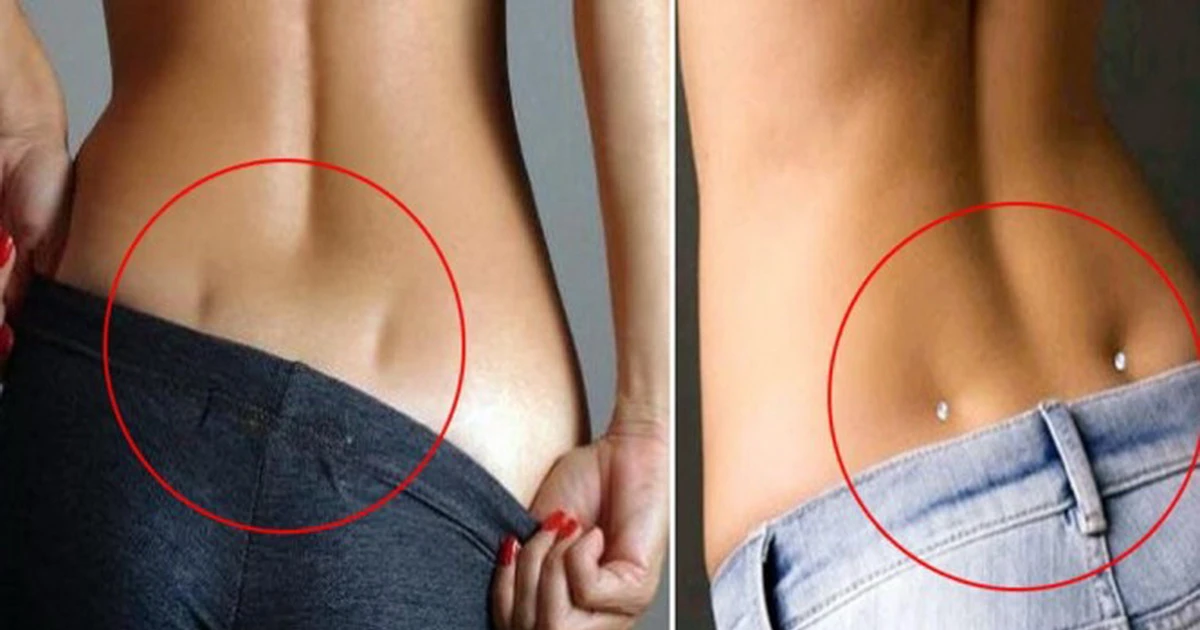
Lower back dimples are small, symmetrical indentations located just above the buttocks, near the top of the pelvis. They sit over an area called the posterior superior iliac spine (PSIS) — a bony prominence of the pelvis.
In simple terms, these dimples form where the skin is tightly connected to the underlying pelvic bone through short ligaments. If the anatomy in that area allows the skin to anchor closely to the bone, a visible indentation appears.
If not, the surface looks smooth.
That’s it. No secret meaning. Just structure.

Are Back Dimples Genetic?
Yes — largely.
The presence of lower back dimples is influenced by inherited bone structure and ligament placement. You cannot “develop” them through exercise, massage, or posture changes.
Some individuals have a pelvic shape that makes the PSIS more pronounced. When combined with lower body fat in that region, the dimples are more visible.
Others may have the same bone structure but a thicker layer of tissue over the area, making the indentations less noticeable.
In short: they are determined mostly by anatomy and genetics.
Do They Indicate Good Health?
There is a popular belief that lower back dimples signal good circulation, fertility, or superior physical fitness. However, there is no scientific evidence that simply having back dimples directly indicates better health.
That said, they are often more visible in individuals with:
-
Lower body fat percentages
-
Well-defined pelvic structure
-
Toned lower back muscles
Because of this, they are sometimes associated with physical fitness — but they are not a medical marker of wellness.
You can be perfectly healthy without them.
You can also have them and still need regular health care.
Are Back Dimples Related to Fertility?
This is another common myth.
While some cultures historically associated the “Dimples of Venus” with beauty and fertility, there is no medical evidence linking them directly to reproductive ability.
They sit near the sacral region of the spine, but their presence does not influence reproductive organs or hormonal function.
They are aesthetic — not functional.
Can Exercise Create Back Dimples?
Exercise can enhance muscle tone in the lower back and gluteal area. Strength training may make natural dimples more defined if they are already present.
However, exercise cannot create back dimples if your underlying pelvic anatomy does not support them.
You cannot “train” your ligaments to attach differently to your bone.
If you see online programs promising to create them, understand that muscle definition may improve — but skeletal structure will not change.
Do Back Dimples Ever Indicate a Medical Issue?
In adults, typical symmetrical lower back dimples are harmless and purely anatomical.
However, it’s important to distinguish these from sacral dimples in infants, which are small indentations near the base of a newborn’s spine. In rare cases, those may require medical evaluation.
For adults, standard “Dimples of Venus” are not associated with spinal defects or health problems.
If a dimple appears suddenly, becomes painful, or shows signs of infection, that would require medical attention — but that situation is unrelated to the normal anatomical dimples most people refer to.

Why Are They Considered Attractive?
Cultural perception plays a large role.
Lower back dimples highlight the natural curve between the waist and hips. They often accentuate symmetry and pelvic shape, which many cultures associate with aesthetics and physical form.
Over time, media and art have reinforced their association with attractiveness, especially in women.
But beauty standards vary across cultures and generations.
Back dimples are simply one of many normal human variations.
Do They Affect Posture or Strength?
No.
Lower back dimples do not influence spinal alignment, posture quality, or physical strength.
Posture is determined by muscle balance, spinal structure, and movement habits — not by the presence or absence of dimples.
Can Weight Changes Affect Their Visibility?
Yes.
Because visibility depends partly on tissue thickness, changes in body fat can make dimples more or less noticeable.
-
Weight loss may make them more visible.
-
Weight gain may soften or obscure them.
However, their underlying structural attachment remains the same.
The Bottom Line
Having two dimples on your lower back means one simple thing:
Your skin is anchored to your pelvic bone in a way that creates visible indentations.
They are genetic.
They are harmless.
They are not a medical condition.
They are not a guarantee of health.
They are not a measure of worth.
They are simply part of normal anatomical variation.
Human bodies come in countless shapes, structures, and features. Back dimples are just one small detail in that diversity.
And like many natural traits, they are neither something to chase nor something to worry about — just something some people have.
Nothing more. Nothing less.