Yellow stains in the toilet bowl are a common household problem that many people face. Over time, minerals in hard water, limescale, and bacteria can build up inside the toilet, leaving behind unsightly yellow or brownish marks. These stains may make the toilet look dirty even when it has been cleaned regularly.
The good news is that stubborn yellow stains can usually be removed with simple cleaning methods and common household ingredients. By understanding what causes these stains and how to treat them effectively, you can restore the cleanliness and freshness of your toilet bowl without relying on harsh chemicals.
Below are practical tips and easy cleaning tricks that can help remove stubborn toilet stains quickly and safely.
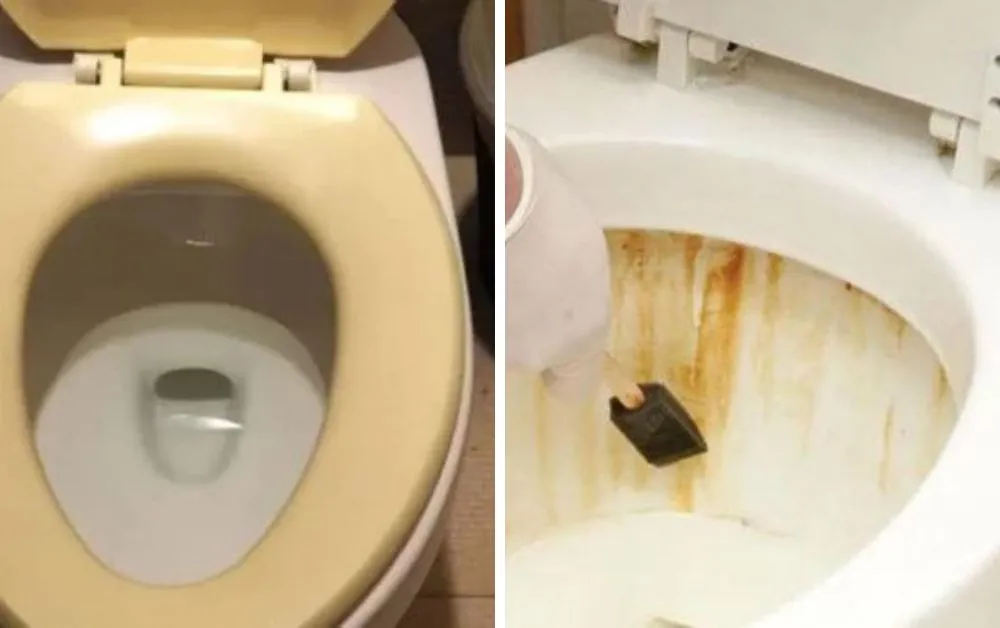
Why Yellow Stains Form in Toilet Bowls
Before trying to remove the stains, it helps to understand why they appear in the first place.
The most common causes include:
Hard water minerals
Water in many areas contains minerals such as calcium and magnesium. Over time, these minerals accumulate on the toilet surface and form deposits known as limescale.
Iron in water
If your water supply contains iron, it may leave yellow or brown stains inside the toilet bowl.
Bacterial buildup
Certain bacteria can react with minerals in the water and produce yellowish rings along the waterline.
Infrequent cleaning
When toilets are not cleaned regularly, mineral deposits and bacteria have more time to accumulate.
Knowing the cause can help you choose the most effective cleaning method.
1. Baking Soda and Vinegar Method
One of the most popular natural cleaning methods involves baking soda and white vinegar.
Why it works
Baking soda acts as a mild abrasive that helps scrub away stains, while vinegar dissolves mineral deposits and disinfects the surface.
How to use it
-
Sprinkle about one cup of baking soda inside the toilet bowl.
-
Slowly pour one to two cups of white vinegar over the baking soda.
-
Allow the mixture to fizz and react for about 10–15 minutes.
-
Use a toilet brush to scrub the stained areas thoroughly.
-
Flush the toilet to rinse away the residue.
This method works well for light to moderate stains.
2. Lemon Juice for Natural Cleaning
Lemon juice contains natural acids that can help break down mineral buildup.
Steps
-
Squeeze fresh lemon juice directly onto the stained areas.
-
Let it sit for 15–20 minutes.
-
Scrub the bowl with a toilet brush.
-
Flush to remove the loosened deposits.
The added benefit of lemon juice is its fresh scent, which helps eliminate unpleasant odors.

3. Use a Pumice Stone for Tough Stains
For stains that have hardened over time, a pumice stone can be effective.
Pumice is a porous volcanic stone that can gently remove mineral deposits without scratching porcelain when used correctly.
Instructions
-
Wet the pumice stone thoroughly before use.
-
Gently rub the stained areas while keeping the stone and surface wet.
-
Continue until the stains begin to disappear.
Always test a small area first to ensure safe use.
4. Hot Water and Dish Soap
Sometimes grease-like residues and bacteria combine with minerals to create stubborn stains.
A simple combination of hot water and dish soap can help loosen buildup.
Steps
-
Pour a small amount of dish soap into the toilet bowl.
-
Add hot (not boiling) water.
-
Let it sit for 10 minutes.
-
Scrub with a toilet brush.
This method helps break down residues before stronger cleaning steps are applied.
5. Hydrogen Peroxide Solution
Hydrogen peroxide is known for its mild bleaching and disinfecting properties.
How to use it
-
Pour half a cup of hydrogen peroxide into the toilet bowl.
-
Let it sit for about 30 minutes.
-
Scrub gently and flush.
This method may help lighten yellow discoloration caused by bacteria.
6. Toilet Tablets or Commercial Cleaners
If natural methods do not fully remove the stains, specially designed toilet cleaning products may be helpful.
Many products contain ingredients that dissolve limescale and mineral buildup quickly.
When using commercial cleaners, always:
-
Follow the instructions on the label
-
Ensure proper ventilation
-
Avoid mixing different cleaning chemicals

Preventing Yellow Stains in the Future
Prevention is the best way to keep your toilet bowl clean.
Here are some simple habits that can help reduce future stains.
Clean the toilet regularly
Cleaning the toilet once or twice a week prevents mineral deposits from building up.
Use a toilet brush daily if needed
A quick brush after heavy use can prevent stains from forming.
Install a water softener
If hard water is the main cause, a water softener system can reduce mineral buildup.
Flush regularly
Regular flushing helps prevent residue from settling in the bowl.
Safety Tips When Cleaning
When cleaning your toilet bowl, remember these important safety tips:
-
Wear cleaning gloves if using strong products
-
Avoid mixing vinegar with bleach or other chemicals
-
Ensure proper ventilation in the bathroom
-
Store cleaning products away from children
These precautions help keep the cleaning process safe.
Final Thoughts
Yellow stains in the toilet bowl can be frustrating, but they are usually caused by simple mineral buildup or bacterial residue. With the right cleaning techniques - such as using baking soda, vinegar, lemon juice, or gentle scrubbing tools - you can effectively remove stubborn stains and restore the toilet’s appearance.
Regular maintenance and preventive cleaning can also stop stains from returning.
Sometimes, the most effective cleaning solutions are simple household ingredients combined with consistent care. With just a few easy tricks, you can keep your toilet bowl fresh, clean, and free from unsightly stains.