If You Get Goosebumps on Your Arms: What It Really Means (Backed by Science)
Getting goosebumps on your arms is usually harmless—but it’s also a fascinating built-in response from your nervous system. While most people associate it with cold weather or strong emotions, science shows there’s more going on beneath the skin.
🧠 What goosebumps actually are

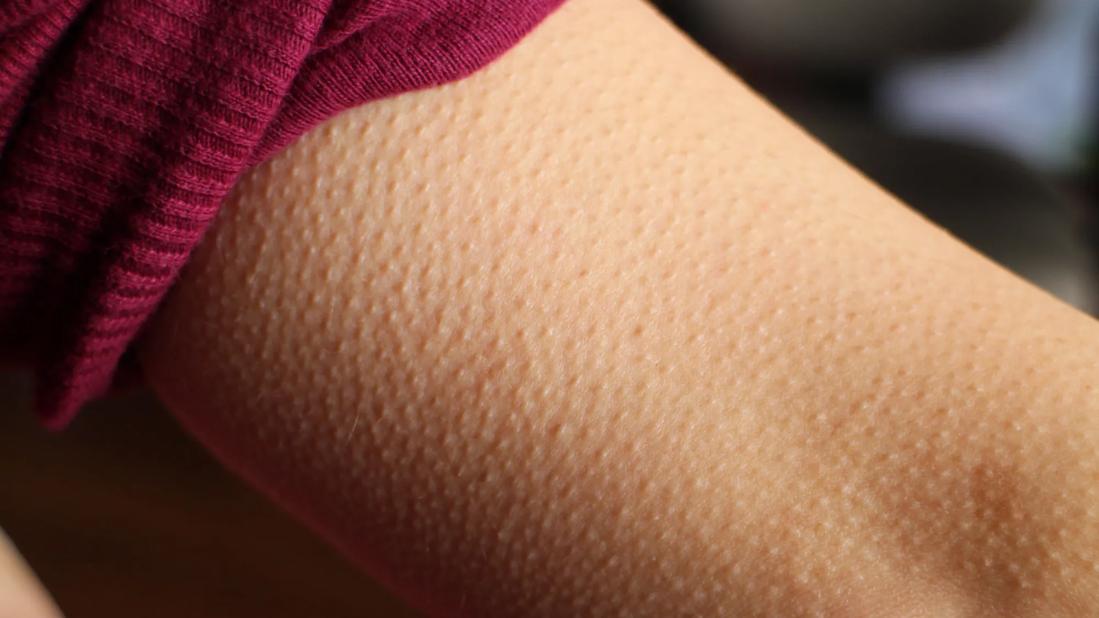
Goosebumps (also called piloerection) happen when tiny muscles at the base of hair follicles contract, causing hairs to stand upright and creating small bumps on the skin.
This reflex is controlled by the autonomic nervous system, specifically the sympathetic nervous system—the part responsible for “fight or flight” responses.
📚 Source: American Academy of Dermatology (AAD), Mayo Clinic
❄️ 1. A response to cold
The most common cause is exposure to cold temperatures.
When your body senses cold, it triggers goosebumps to trap a thin layer of air around the skin. In animals, this helps retain heat. In humans, it’s mostly a leftover evolutionary response.
📚 Source: National Institutes of Health (NIH), Britannica Medical Reference
😨 2. Emotional triggers (fear, awe, excitement)
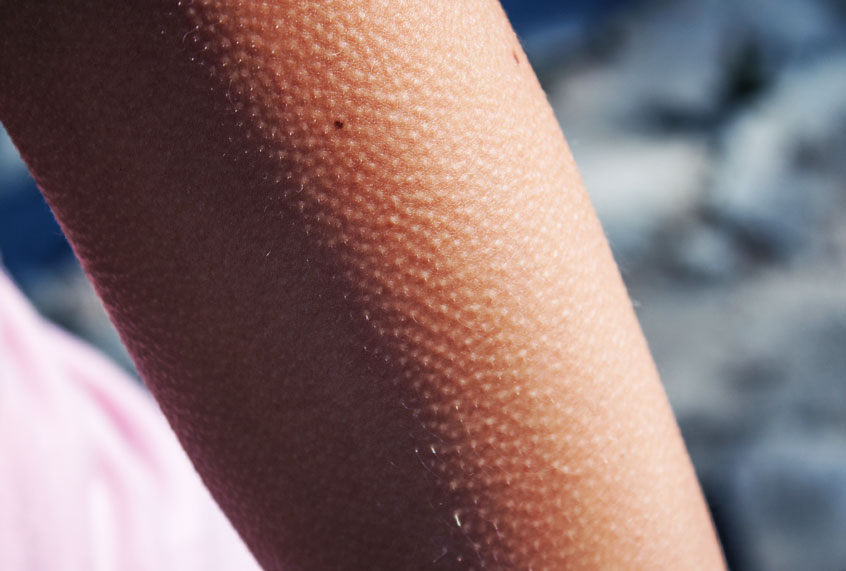
Goosebumps can also appear when you experience strong emotions such as:
- Fear or shock
- Deep emotional music
- Awe or inspiration
- Nostalgia
This happens because emotional stimuli activate the brain’s hypothalamus, which triggers the fight-or-flight system.
📚 Source: Harvard Medical School, Frontiers in Psychology (2020 study on emotional piloerection)
🎵 3. “Frisson” — the musical chill effect
Many people experience goosebumps when listening to powerful music. This is known as frisson, a pleasurable physiological response linked to dopamine release in the brain.
Neuroscience studies using brain imaging show activation in reward pathways similar to those triggered by food or excitement.
📚 Source: McGill University Neuroscience Research, Nature Neuroscience journal
⚠️ 4. Rare medical associations
In some cases, abnormal or frequent goosebumps may be linked to:
- Seizure activity (rare neurological cases)
- Anxiety disorders or panic attacks
- Drug or medication effects
- Hormonal or autonomic nervous system disorders
However, these cases are uncommon, and goosebumps alone are not a diagnostic symptom.
📚 Source: Cleveland Clinic, National Institute of Neurological Disorders and Stroke (NINDS)
🧬 Why humans still get goosebumps
From an evolutionary perspective, goosebumps are a vestigial reflex—a leftover from our ancestors who had thicker body hair. Raising hair would make them appear larger to predators or help retain warmth.
In modern humans, the function is mostly symbolic rather than practical.
📚 Source: Smithsonian Institution, Encyclopedia of Evolutionary Biology
✅ Final takeaway
If you get goosebumps on your arms, it is usually:
- A normal response to cold
- A reaction to strong emotions
- A harmless nervous system reflex
Only in rare cases does it indicate a medical issue. In most situations, it’s simply your body reacting exactly as it’s designed to.