For ordinary cleaning, running potable water and gentle physical rubbing are practical first steps. For reducing the risk of aquatic-plant parasites, thorough cooking is the more dependable recommendation in the CDC guidance.
6. Why Peeling Before Washing Can Increase the Risk
One of the most common preparation mistakes is removing the skin before washing the whole vegetable.
It may seem logical to peel a water chestnut first because the skin is the part that looks dirty. But using a knife on an unwashed surface can transfer contamination to the edible interior.
The blade touches the outside, passes through the skin, and then moves across the white flesh. If microorganisms are present on the surface, they may be carried inward during this process.
The same principle applies to potatoes, melons, cucumbers, and other produce with an outer layer that is removed before eating.
The FDA specifically recommends rinsing produce before peeling or cutting it, even when the peel will be discarded.
A safer sequence is therefore:
-
Wash the whole water chestnut first.
-
Remove visible dirt under running water.
-
Dry the surface with a clean towel.
-
Peel it using a clean knife or peeler.
-
Place the peeled flesh on a clean cutting board.
-
Keep the peeled pieces away from the discarded skins.
-
Cook them promptly or refrigerate them in a clean, covered container.
The difference may appear minor, but it helps prevent contamination from moving from the outside of the vegetable to the part people actually eat.
Keep the Peels Away From the Peeled Flesh
After peeling, do not place the clean white pieces back into the same bowl that held the muddy whole vegetables.
Use separate containers for unpeeled produce, discarded skins, and ready-to-cook pieces. If the same cutting board must be used, wash it thoroughly before placing peeled water chestnuts on it.
The knife should also be cleaned before it is used on the edible flesh if it has been in contact with a dirty surface.
This is especially important when preparing a large quantity. A person may peel dozens of water chestnuts quickly and become less careful as the work continues. Keeping the preparation area organized makes safe handling easier.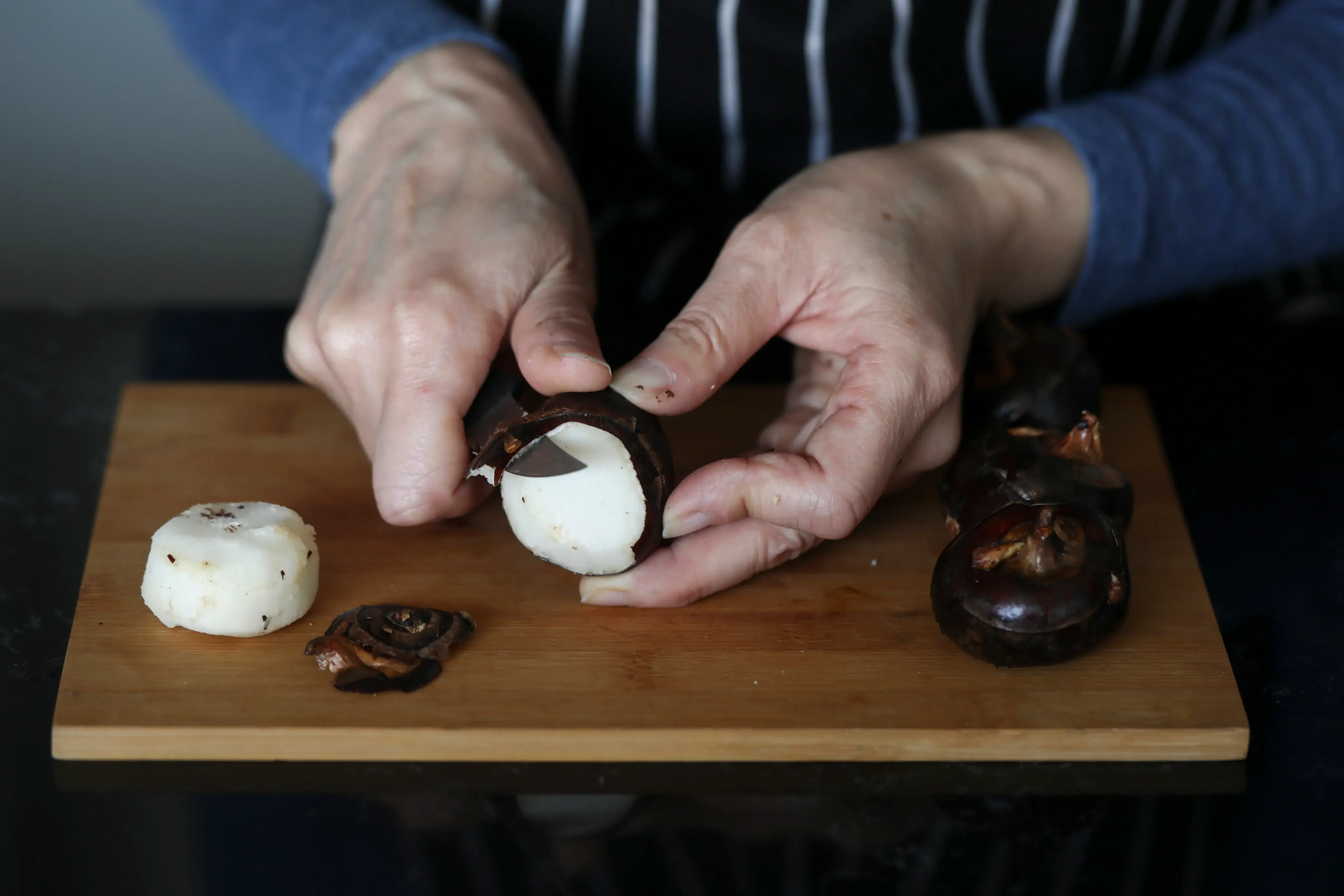
7. Why Cooking Is the Safest Choice When the Source Is Uncertain
Water chestnuts are often eaten cooked, and this is a useful food-safety advantage.
Cooking thoroughly can destroy many harmful microorganisms that may be present on fresh produce. In the specific case of Fasciolopsis buski, the CDC advises avoiding raw or undercooked freshwater plants in areas where the parasite is a concern. It identifies thorough cooking, including boiling, as a way to prevent infection.
This is why cooked water chestnuts are generally a more cautious choice when the growing environment or source cannot be confidently verified.
They can be boiled, steamed, added to soups, or cooked in stir-fries. The exact cooking time depends on the size of the pieces and the recipe, but the goal is to cook them thoroughly rather than simply warm the outside.
Does a Quick Stir-Fry Always Count?
Not necessarily.
A stir-fry can cook water chestnuts thoroughly, but the result depends on the preparation. Thin slices cooked through in a hot pan are different from large whole pieces that are only briefly warmed.
If parasite exposure is a realistic concern, do not assume that a few seconds in a pan are sufficient. Follow a cooking method that heats the pieces thoroughly, or boil them as recommended in the CDC guidance for freshwater plants.
Water chestnuts are popular in stir-fries partly because they retain their crunch. This does not mean they must remain raw in the center. Properly cooked pieces can still have a crisp texture.
Can Canned Water Chestnuts Be Safer?
Canned water chestnuts are generally processed commercially, often through washing, preparation, and heat treatment as part of manufacturing. They can be a convenient alternative to fresh produce, especially when the source of fresh aquatic vegetables is uncertain.
However, consumers should still check the packaging, expiration date, and condition of the can. Avoid cans that are swollen, leaking, badly dented around the seams, or otherwise damaged.
Once opened, transfer unused contents to a clean container and follow the storage instructions on the label.
Canned products may contain added salt, so people monitoring sodium intake should compare labels. They may also have a slightly different texture from fresh water chestnuts, although they remain useful in soups, stir-fries, and other cooked dishes.
8. Choosing Water Chestnuts at the Market: What Should You Look For?
Safe preparation begins before the food reaches the kitchen.
Choosing a reliable seller and selecting produce in good condition can reduce the likelihood of buying water chestnuts that have been damaged, spoiled, or stored poorly.
When shopping for fresh water chestnuts, consider the following points.
Look for Firm, Intact Produce
Choose water chestnuts that feel firm and appear intact. Avoid those with extensive soft areas, deep cracks, leaking liquid, or obvious signs of decay.
A little surface dirt is not necessarily a sign that the vegetable is unsafe. Freshly harvested aquatic produce may carry soil. What matters is whether it can be cleaned properly and whether it has been handled and stored in a hygienic way.
By contrast, a strong unpleasant odor, slimy surface, or widespread softening may indicate spoilage. Such products should be avoided.
Consider How the Produce Is Displayed
Fresh produce should be displayed in a clean area, protected from obvious contamination. Avoid products stored directly beside raw meat, seafood, or other items that may leak onto them.
If peeled or cut water chestnuts are being sold, they deserve particular attention because the edible interior is already exposed. They should be kept appropriately refrigerated and protected from handling by customers.
A clean display and suitable storage conditions are useful signs, although they cannot prove that a product is completely free of microorganisms.
Ask About the Source When Possible
For produce that is commonly grown in wet fields, the growing environment matters.
A seller who can identify the farm, supplier, or origin may provide more useful information than one who cannot explain where the product came from. Reliable suppliers are more likely to have consistent handling and storage practices.
This does not mean that a small market seller is automatically unsafe. It means that buyers should consider the condition of the product, the cleanliness of the display, and the seller's handling practices together.
Be Careful With Wild-Harvested Aquatic Plants
Wild aquatic plants may come from ponds, streams, or wetlands where water quality is unknown. These environments can be affected by sewage, livestock waste, agricultural runoff, and other forms of pollution.
A plant harvested from an uncontrolled water source should not be treated as equivalent to produce from a farm that follows food-safety practices.
If the origin is uncertain, cooking thoroughly is a more cautious choice than eating the plant raw.
9. Storage Matters: What Happens After You Bring Them Home?
Even good-quality water chestnuts can become unsafe if they are stored carelessly.
Fresh produce continues to change after harvesting. Moisture loss, physical damage, and microbial growth can affect its quality. Once the skin has been removed or the vegetable has been cut, the exposed flesh is more vulnerable to contamination from hands, utensils, and surrounding surfaces.
For that reason, storage should be treated as part of food preparation rather than an afterthought.