Tiny White Bumps on Your Face? Here’s What They Are—And How to Treat Milia Naturally and Safely at Home
By Kianna Schaefer / August 20, 2025
Have you ever looked in the mirror and noticed tiny white bumps clustered around your eyes, cheeks, or forehead?
They might look like little whiteheads, but they don’t pop like acne. They sit just under the surface—smooth, firm, and stubbornly unmoved no matter what cream or cleanser you use.
These small cysts are called milia (pronounced mill-ee-uh), and while they’re common—and harmless—they can be frustrating to live with, especially as we age and our skin becomes more sensitive.
The good news? You don’t always need a dermatologist to treat milia. With the right care and natural methods, it’s often possible to reduce their appearance safely from home.
Let’s take a closer look at what causes these bumps, why they tend to appear more often with age, and what you can do to manage them gently and effectively.
What Exactly Is Milia?
Milia are small, white bumps that form when keratin—a protein found in skin, hair, and nails—gets trapped beneath the surface of the skin.
Instead of shedding dead skin cells naturally, your skin traps them in tiny pockets. Over time, these harden into firm little cysts just beneath the surface.
These bumps aren’t painful or dangerous, and they’re not acne. But they can make the skin appear rough or uneven, and for many people, they’re a cosmetic concern—especially when they show up on the face.
Common Causes of Milia
Milia can affect people of all ages, but older adults may be more prone to them due to slower cell turnover and long-term skin damage.
Possible causes include:
-
Dead skin cells that fail to shed properly
-
Sun damage (long-term exposure thickens skin and increases buildup)
-
Skin trauma or injury (burns, abrasions, rashes)
-
Use of heavy or oil-based creams, especially around the eyes
-
Long-term use of steroid creams
-
Side effects of certain autoimmune or genetic conditions
Sometimes milia appear without an obvious cause and may simply reflect how the skin ages and regenerates over time.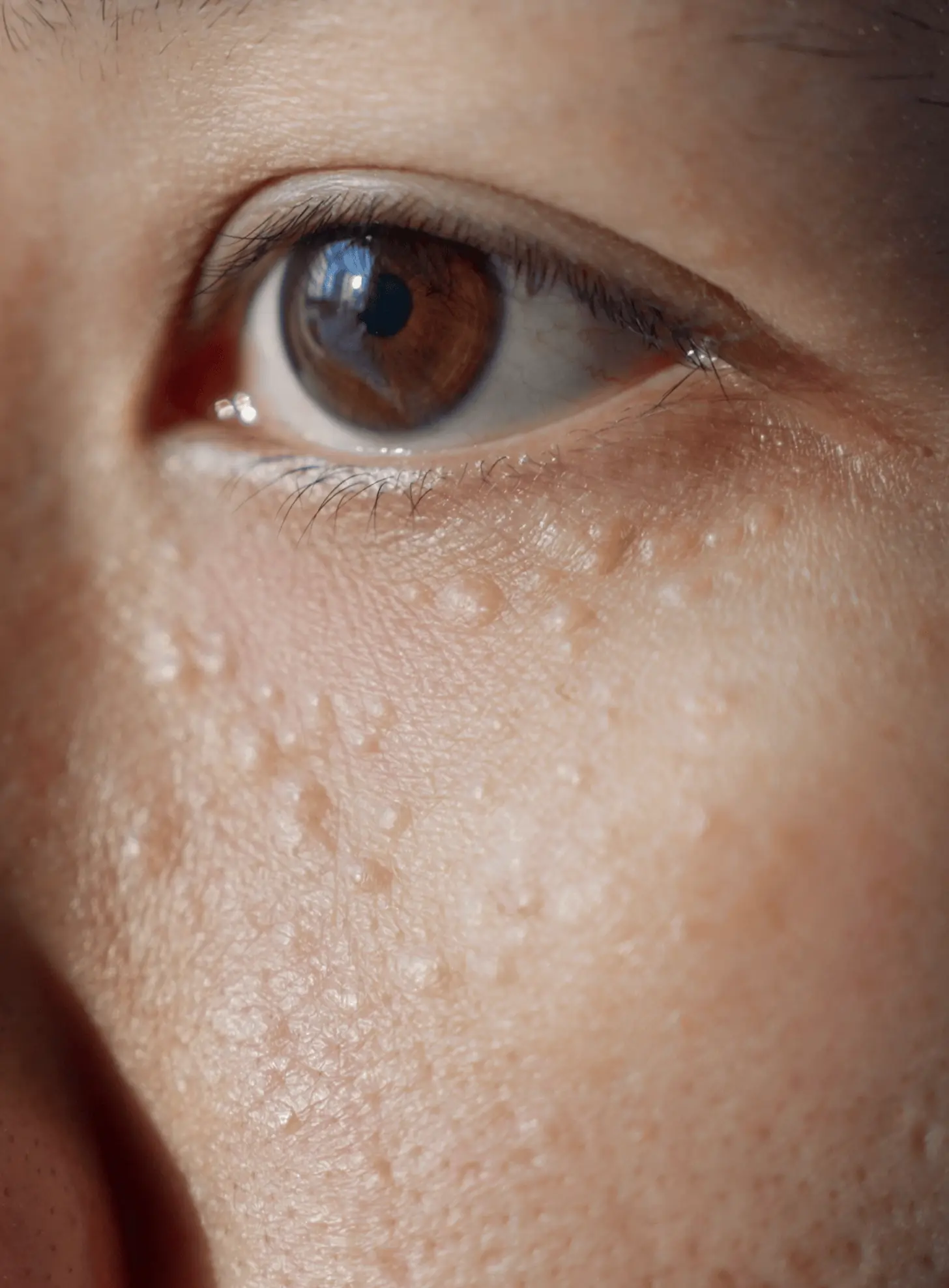
Where Do Milia Show Up?
Milia can appear anywhere on the body, but they are most commonly found on:
-
Under the eyes
-
Upper cheeks
-
Forehead and temples
-
Nose
-
Chin
-
Chest or upper torso
-
Arms and legs
Occasionally they may appear inside the mouth or on intimate areas.
For older adults, milia around the eyes and cheeks are especially common because the skin there is thinner and more delicate.
Should You Be Concerned?
In most cases, milia are completely harmless. They don’t itch, hurt, or spread through contact.
However, they can sometimes be confused with other skin conditions. If you’re unsure what the bumps are, or if they change in size, color, or become inflamed, it’s best to have them checked by a healthcare professional.
What Not to Do: Don’t Squeeze Them
Milia may look like pimples, but they behave differently.
Trying to squeeze or scrape them out can lead to:
-
Scarring
-
Infection
-
Skin discoloration
-
Delayed healing
The keratin inside milia is trapped beneath a layer of skin, not in a pore, which makes home extraction difficult and unsafe.
Gentle, Natural Ways to Treat Milia at Home
If the bumps aren’t painful or spreading, you may improve them with consistent skincare.
1. Cleanse Gently Every Day
Use a mild, fragrance-free cleanser with warm water morning and evening.
Avoid harsh scrubbing. Massage gently with your fingertips and pat dry with a soft towel.
For mature skin, choose cleansers labeled gentle, hydrating, or non-comedogenic.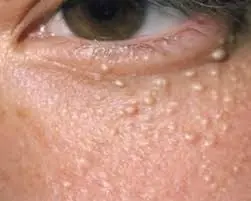
2. Use Gentle Exfoliation (1–2 Times a Week)
As we age, skin cell turnover slows.
Use a mild exfoliant containing lactic acid or glycolic acid once or twice weekly.
A simple homemade option:
-
1 tablespoon ground oats
-
1 tablespoon honey
Massage gently on damp skin for 2–3 minutes, then rinse with warm water.
3. Try Steam Therapy
Facial steam may help loosen trapped keratin.
How to do it:
-
Boil water and pour into a bowl
-
Hold your face about 10–12 inches above the water
-
Place a towel over your head to trap steam
-
Steam for 5–7 minutes
Do this once a week and apply a light moisturizer afterward.
4. Avoid Heavy Eye Creams
Rich, oily eye creams may clog delicate skin and contribute to milia.
Choose lighter, non-comedogenic products with ingredients such as:
-
Hyaluronic acid
-
Niacinamide
-
Ceramides
These hydrate without blocking pores.
5. Use Sunscreen Daily
Sun damage thickens the skin and slows healing.
Apply a broad-spectrum SPF 30 or higher every morning, even on cloudy days.
Choose formulas designed for sensitive skin.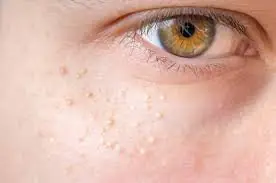
When to See a Dermatologist
If milia persist or bother you, a dermatologist can remove them safely.
Common treatments include:
-
Sterile needle extraction
-
Cryotherapy (freezing)
-
Topical retinoids such as adapalene or tretinoin
-
Oral antibiotics for rare severe cases like milia en plaque
Always consult a professional before trying advanced treatments.
Milia in Babies
Milia are also common in newborns, usually appearing on the nose or cheeks.
They typically disappear naturally within a few weeks. Baby skin should not be treated with adult skincare products.
Final Thoughts
Milia are small but can be frustrating, especially when they appear on the face. Fortunately, they are harmless and often manageable with gentle skincare habits.
Healthy skin doesn’t require perfection—only patience, care, and consistency.