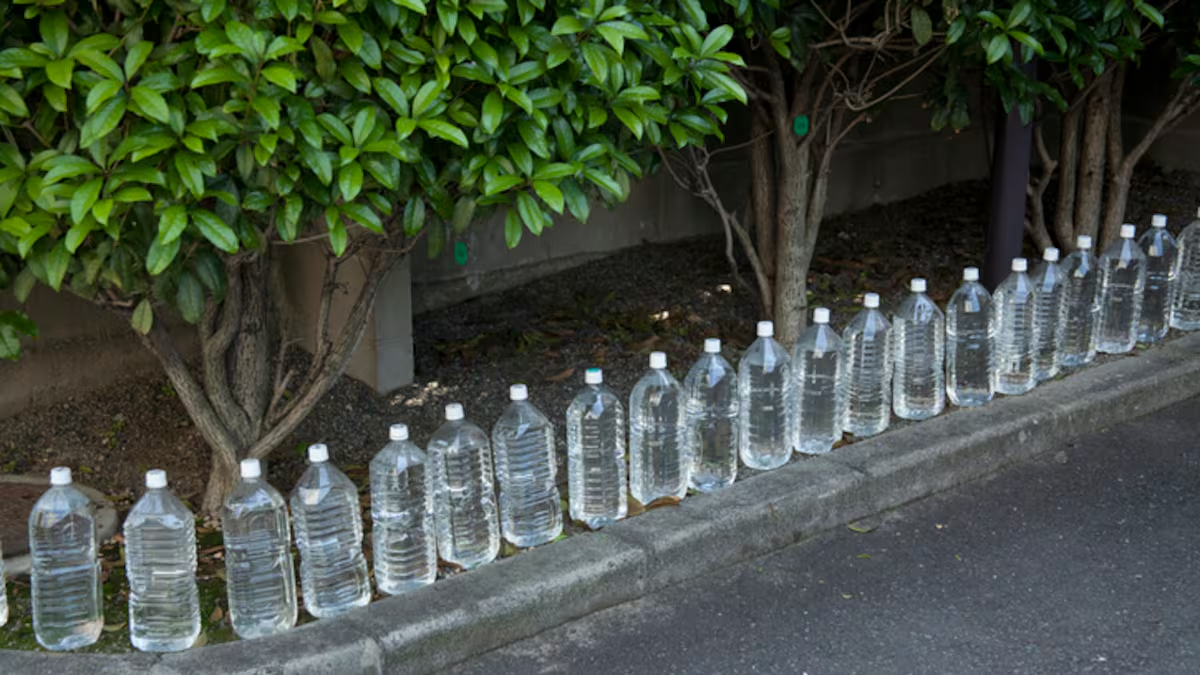
If you ever walk through certain neighborhoods in Japan, you might notice something unusual placed near gates, fences, gardens, or house entrances: clear plastic bottles filled with water. At first glance, these bottles might seem random or forgotten, but in many cases they are intentionally placed there by homeowners.
This practice has puzzled many visitors and internet users for years. Why would people place bottles of water around their homes instead of keeping them in the refrigerator or storing them indoors? The answer lies in a mixture of urban legend, cultural habits, and practical beliefs that have developed over time in Japan.
Let’s explore the story behind this interesting phenomenon.
The Belief That Water Bottles Can Repel Cats
One of the most common explanations is that the bottles are meant to keep stray cats away from the property.
In some Japanese neighborhoods, stray cats or outdoor cats sometimes wander into gardens, yards, or around houses. These cats may dig in flower beds, knock over plants, or leave waste in certain areas. To prevent this, some homeowners began placing bottles filled with water around the perimeter of their property.
The idea behind this method is that sunlight reflecting through the water bottles creates unusual light patterns. These reflections may confuse or scare cats, making them uncomfortable and encouraging them to stay away.
Over time, this technique became known informally as “neko yoke,” which roughly translates to “cat repellent.”
Does the Method Actually Work?
Although the practice became popular in certain areas, many animal behavior experts say there is little scientific evidence that water bottles actually repel cats.
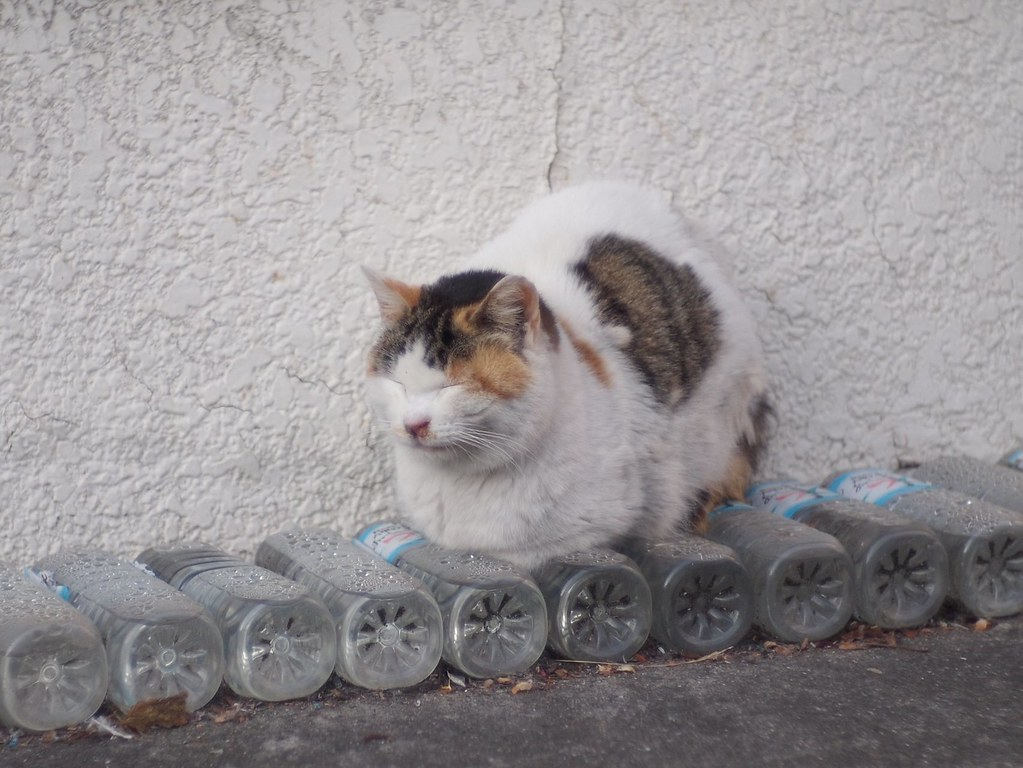
Cats are intelligent animals that quickly adapt to their environment. In many cases, they may simply ignore the bottles once they realize there is no real threat.
Because of this, the effectiveness of the water bottle method remains widely debated. Some homeowners claim it works for them, while others say it has no noticeable effect at all.
Nevertheless, the tradition has persisted for decades, partly because it is simple, inexpensive, and harmless.
A Trend That Spread Through Communities
Like many everyday habits, the practice of placing water bottles outside homes spread through word of mouth.
In the 1980s and 1990s, the idea became particularly popular in parts of Japan. People would see bottles placed in front of a neighbor’s home and assume it served a useful purpose. As a result, they started doing the same thing.
Soon, it became a familiar sight in some residential areas, with rows of water bottles lined up along fences, sidewalks, or garden edges.
In many cases, the practice continued simply because it became part of local habit or community tradition, even if people were unsure whether it truly worked.
Cultural Influence and Shared Beliefs
Japan has a long history of cultural practices that combine practical solutions with symbolic or traditional beliefs.
Small everyday rituals often play a role in maintaining harmony with the environment and the community. Even when a method may not be scientifically proven, people may continue using it if it feels helpful or has become culturally familiar.
Placing water bottles around the home can also reflect the Japanese tendency toward low-cost, non-harmful solutions to small everyday problems.
Instead of using chemical repellents or traps, homeowners may prefer something simple that does not harm animals.
Other Possible Explanations
While the “cat repellent” explanation is the most widely known, some people have suggested other reasons why water bottles might appear around homes.
Visual Markers
In some cases, bottles may act as simple visual markers to prevent people or bicycles from accidentally entering certain spaces, such as small garden areas or narrow pathways.
Recycling Habits
Japan has a strong culture of recycling and reuse. Some households temporarily store bottles outside before recycling day, which may also contribute to the appearance of bottles around homes.
Local Superstitions
Occasionally, the practice may also connect to minor local beliefs about protection or cleanliness, though these interpretations are less common.
A Symbol of Urban Curiosity
Today, the sight of water bottles around Japanese homes has become something of a curious urban phenomenon. Visitors often photograph the bottles and share them online, asking why they are there.
The answer usually leads back to the same explanation: a simple attempt to keep cats away.
Even though modern pest control methods are more effective, the water bottle tradition continues in some places because it has become a familiar part of neighborhood life.
Modern Alternatives for Animal Control
In recent years, more effective and humane methods for keeping animals away from gardens have become available. These include:
-
Motion-activated sprinklers
-
Ultrasonic animal deterrent devices
-
Garden fencing
-
Natural scent repellents
These tools are often more reliable than the water bottle method, but they may also cost more money.
For many homeowners, the appeal of the bottle trick remains its simplicity and zero cost.

Final Thoughts
The practice of placing water bottles around homes in Japan is an interesting example of how simple ideas can spread through communities and become everyday traditions.
Originally believed to repel cats by reflecting light, the method became widely known even though scientific evidence supporting it is limited. Still, it continues to appear in some neighborhoods because it is harmless, inexpensive, and easy to try.
This small detail of daily life highlights how cultural habits, practical concerns, and shared beliefs often combine to create unique traditions.
Sometimes, even a simple bottle of water placed beside a garden fence can tell a fascinating story about community behavior, urban myths, and everyday creativity in solving small problems.