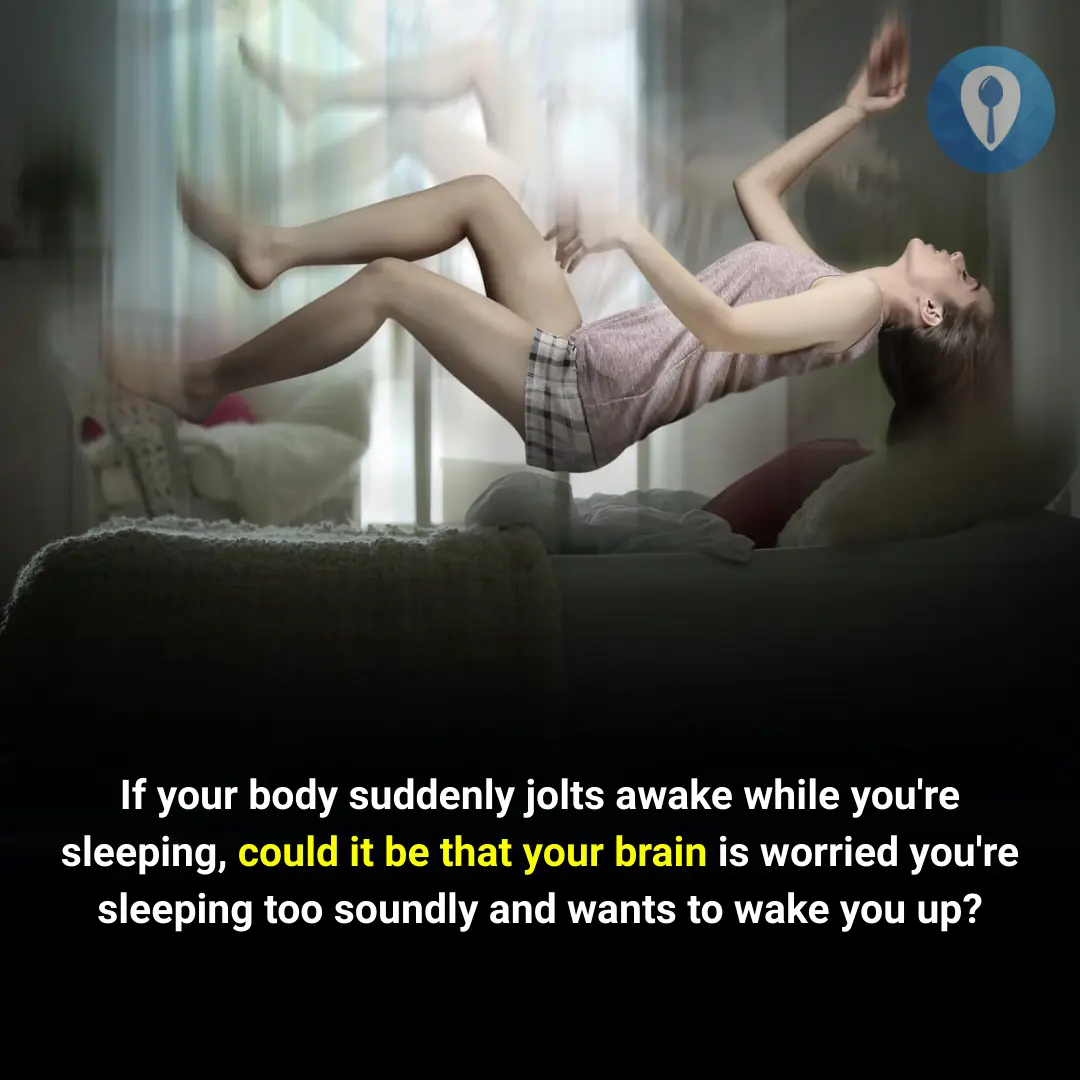
Have you ever experienced this feeling:
“In the quiet of the night, just as we are slowly drifting off to sleep, the body suddenly jerks involuntarily, as if shocked by electricity, often accompanied by a sensation of falling or stumbling, instantly waking us up.”
Some people say, “This means your body is being lifted upward.” Others claim, “It’s your body signaling a calcium deficiency.” Still others say, “Your brain is afraid you’ve died and is checking whether you’re still alive.”
Are any of these claims true? What actually causes this sudden “jerking” sensation when we fall asleep?
Don’t panic! This is actually a common physiological phenomenon.


In fact, this sudden body jerk during sleep is called a sleep jerk, also known as hypnic jerk or sleep myoclonus.
Sleep myoclonus refers to involuntary muscle contractions that usually appear as a sudden jerk of the body just as a person is about to fall asleep.
Available data show that about 70% of people have experienced this phenomenon. It’s like a small “prank” the body occasionally plays during sleep and is considered a type of sleep disturbance.
Occasional mild jerks are a normal physiological response that occurs when falling asleep, similar to eyelid twitching or hiccups, and comparable to muscle spasms caused by tension. If you are otherwise healthy, there is no need to worry too much, and medication is generally not required.

Four factors that may also cause sleep jerks
1. Nervous system activity and reduced brain control
During sleep, most cortical nerves are in an inhibited state, but some nerves remain relatively active. They may occasionally send weak motor signals, causing the limbs to jerk. In addition, as we fall asleep, the brain’s control weakens, and its inhibitory effect on motor neurons becomes insufficient, leading to a loss of movement suppression in the limbs and resulting in muscle jerks.
Simply put, while the brain is resting, some “naughty little nerves” remain active and accidentally send the wrong signals, causing the body to suddenly twitch.
2. Overwork
High work pressure, long hours of overtime, and poor sleep quality can lead to excessive physical fatigue, triggering sleep myoclonus.
When the body remains in a prolonged state of fatigue, the nervous system becomes tense as well. Like a rubber band stretched too tight for too long, it may suddenly “snap back” when we relax during sleep, causing a sudden jerk. For example, office workers who frequently work overtime and lack adequate rest are more likely to experience this.
3. Calcium deficiency
Low levels of calcium ions in the blood can increase the excitability of muscles and nerves, leading to muscle spasms and jerks. The likelihood of sleep jerks is relatively higher when calcium is deficient. This condition is more common in children during growth stages, when blood calcium levels may be lower than normal, making muscles and nerves more “restless” and prone to spasms.
For people with calcium deficiency, symptoms may be relieved by consuming more calcium-rich foods such as milk and soy products, increasing outdoor activities, and getting more sunlight to promote calcium absorption.
4. Brain-related issues
If you frequently experience sudden jerks during sleep and also develop symptoms such as headaches, dizziness, or nausea upon waking, this may indicate a brain-related problem, such as tumors, neurodegenerative diseases, stroke aftereffects, traumatic brain injury sequelae, or other conditions.
In such cases, your body may be sending a distress signal. You should go to the hospital for a brain CT or MRI to identify the issue and receive timely treatment.
There is no need to be overly anxious about occasional sleep jerks. They are simply a normal physiological response, like a small hiccup in daily life. Stay calm and don’t let them affect your sleep or mood.
However, if the jerks occur frequently and are accompanied by symptoms such as headaches, dizziness, or other discomfort upon waking, you should see a doctor at a specialized department as soon as possible. The doctor will conduct a detailed examination and diagnosis based on your specific condition to determine the cause and provide appropriate treatment.