For decades, scientists have explored whether blood type does more than determine compatibility for transfusions. Beyond its critical role in emergency medicine, researchers have questioned whether the ABO blood group system might also influence susceptibility to certain diseases — including cancer.
The idea is not new. Several large epidemiological studies have investigated whether individuals with specific blood types may have slightly higher or lower risks for certain cancers. However, it is essential to approach this topic carefully: blood type alone does not cause cancer, nor does it guarantee protection from it. Cancer is a multifactorial disease shaped by genetics, environment, lifestyle, age, immune function, and random cellular mutations.
Still, emerging research suggests there may be measurable associations worth understanding.
Understanding Blood Types
Human blood types are classified according to the ABO system: A, B, AB, and O. These categories are determined by specific antigens — proteins and sugars — found on the surface of red blood cells. In addition, each blood type can be Rh-positive or Rh-negative.
Importantly, ABO antigens are not limited to blood cells. They are also expressed on the surface of various tissues throughout the body, including epithelial cells lining organs such as the stomach, pancreas, and lungs. This broader presence has led researchers to consider whether these antigens may influence inflammation, immune response, and cellular signaling — all of which are involved in cancer development.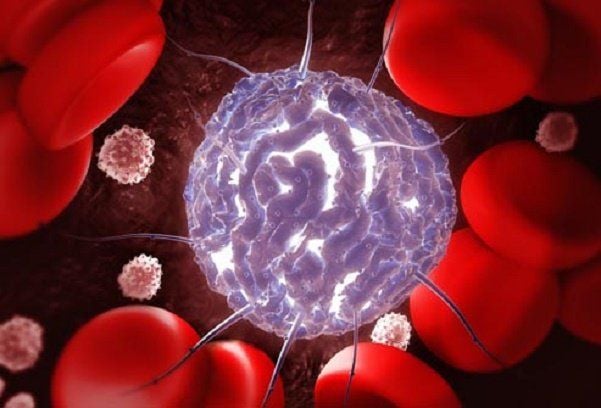
What Research Suggests
Several large population-based studies have identified statistical associations between blood type and the risk of certain cancers.
Pancreatic Cancer
One of the most frequently cited findings involves pancreatic cancer. Some studies have reported that individuals with blood types A, B, or AB may have a slightly higher risk compared to those with blood type O. Researchers believe this may be related to inflammatory pathways or differences in immune recognition influenced by ABO antigens.
Stomach (Gastric) Cancer
Blood type A has been associated in some research with a modestly increased risk of gastric cancer. One hypothesis suggests that certain blood group antigens may interact differently with Helicobacter pylori, a bacterium strongly linked to stomach cancer.
Ovarian Cancer
Research findings here are mixed. Some studies suggest blood type A may be associated with slightly higher risk, while others indicate potential associations with blood type AB. However, conclusions remain inconsistent.
Colorectal and Breast Cancer
Evidence connecting blood type with colorectal or breast cancer risk is less clear. Some studies have suggested minor associations, but many have found no statistically significant difference between blood groups.
Blood Type O and Lower Risk
Among the ABO groups, blood type O has sometimes been associated with a slightly lower risk for certain cancers, particularly pancreatic cancer. Researchers speculate that individuals with blood type O may have lower levels of certain clotting factors and inflammatory markers, which could theoretically influence cancer development pathways.
However, it is crucial to emphasize that “lower risk” does not mean “no risk.” Individuals with blood type O can and do develop cancer. The differences observed in studies are typically modest and represent population-level trends rather than individual predictions.
Possible Biological Mechanisms
Scientists are investigating several potential mechanisms to explain observed associations:
-
Inflammation
Chronic inflammation plays a role in cancer development. ABO antigens may influence inflammatory responses and immune system signaling. -
Immune Surveillance
Differences in antigen expression could alter how effectively the immune system identifies and eliminates abnormal cells. -
Microbial Interactions
Blood group antigens may affect how pathogens attach to and interact with cells. This is particularly relevant in stomach cancer research involving Helicobacter pylori. -
Blood Clotting and Circulation
Certain blood types are associated with variations in clotting factors, which may indirectly influence tumor growth and metastasis.
Limitations of Current Research
While statistical associations exist, researchers caution against overinterpreting the findings. Many studies are observational, meaning they can identify correlations but cannot prove causation.
Additionally:
-
Lifestyle factors such as smoking, diet, alcohol use, and physical activity often play a much larger role in cancer risk.
-
Genetic predisposition can significantly outweigh blood type influence.
-
Environmental exposures vary widely across populations studied.
Therefore, blood type should be viewed as one small piece within a much larger and more complex puzzle.
Should Blood Type Influence Screening or Prevention?
At present, medical guidelines do not recommend altering cancer screening protocols based solely on blood type. Screening decisions are primarily guided by age, family history, personal medical history, and known risk factors.
For example:
-
Colonoscopy screening recommendations depend on age and family history.
-
Mammograms are based on age and individual risk assessment.
-
Pancreatic cancer screening is typically reserved for high-risk genetic groups.
Blood type alone is not considered a sufficient determinant for specialized screening.
What Matters More Than Blood Type
While blood type is genetically determined and cannot be changed, many established cancer risk factors are modifiable.
Evidence consistently shows that individuals can significantly reduce overall cancer risk by:
-
Avoiding tobacco use
-
Maintaining a healthy body weight
-
Engaging in regular physical activity
-
Limiting alcohol consumption
-
Eating a diet rich in fruits, vegetables, and whole grains
-
Protecting skin from excessive sun exposure
-
Receiving recommended vaccinations (such as HPV and hepatitis B)
These lifestyle factors have far stronger scientific support than blood type associations.
Final Thoughts
Medical experts continue to examine the relationship between blood type and cancer risk, and research suggests there may be modest statistical associations for certain cancers. Blood type O has sometimes been linked with slightly lower risk for specific cancers, while types A, B, and AB may show small increases in certain contexts.
However, these differences are relatively small and should not cause unnecessary concern or false reassurance. Cancer remains a complex, multifactorial disease influenced by genetics, environment, and long-term lifestyle patterns.
Ultimately, while blood type may contribute to our biological profile, it does not define our health destiny. Prevention strategies rooted in healthy living, regular screening, and early detection remain the most powerful tools for reducing cancer risk across all blood groups.