Story 03/02/2026 21:28

Olga was sorting through paperwork at her desk when her secretary, Lena, peeked into the office with a frightened look

Olga was sorting through paperwork at her desk when her secretary, Lena, peeked into the office with a frightened look


Olga was sorting through papers on her desk when Lena, her secretary, peeked into the office with a frightened look.
“Olga Viktorovna, there’s… a woman here to see you,” Lena said, hesitating. “She says she’s your… relative. And she’s being very insistent.”
Olga looked up from the documents. The reception area of her advertising agency was usually busy with clients and partners—but relatives? A bad feeling tightened in her chest.
“What does she look like?”
“About sixty. Beige trench coat, big bag. She said she’s been traveling for a long time.”
Mother-in-law. Olga pressed her lips together. Valentina Petrovna had never shown up at her workplace before. In five years of marriage they’d developed a fragile balance: polite smiles at family gatherings, routine Sunday calls, rare visits. But over the last six months, something had shifted.
Ever since Olga had been promoted to art director and her salary had nearly tripled, Misha had started visiting his mother more often. At first, it was harmless—fixing a leaking tap, bringing groceries. Then came requests for money. Small at first: medicine, utility bills. Olga didn’t object; Valentina Petrovna’s pension was modest.
But her appetite grew. Two weeks ago Misha asked for thirty thousand rubles—his mother “needed to replace the refrigerator.” Olga gave the money, though she felt uneasy: the old fridge had worked perfectly; she’d seen it herself a month earlier. Later it turned out the money had gone toward a new fur coat. “Mom was just embarrassed to admit the truth,” Misha explained. “She feels awkward asking for herself.”
Last week she “urgently needed” twenty thousand for “roof repairs” at her dacha. For the first time, Olga said no. Misha sulked. They fought. He didn’t speak to her for three days—and then he took the money from his own paycheck, even though they’d agreed to save for a vacation.
And now his mother was here. In Olga’s office. In front of employees and clients.
“Show her in,” Olga said wearily.
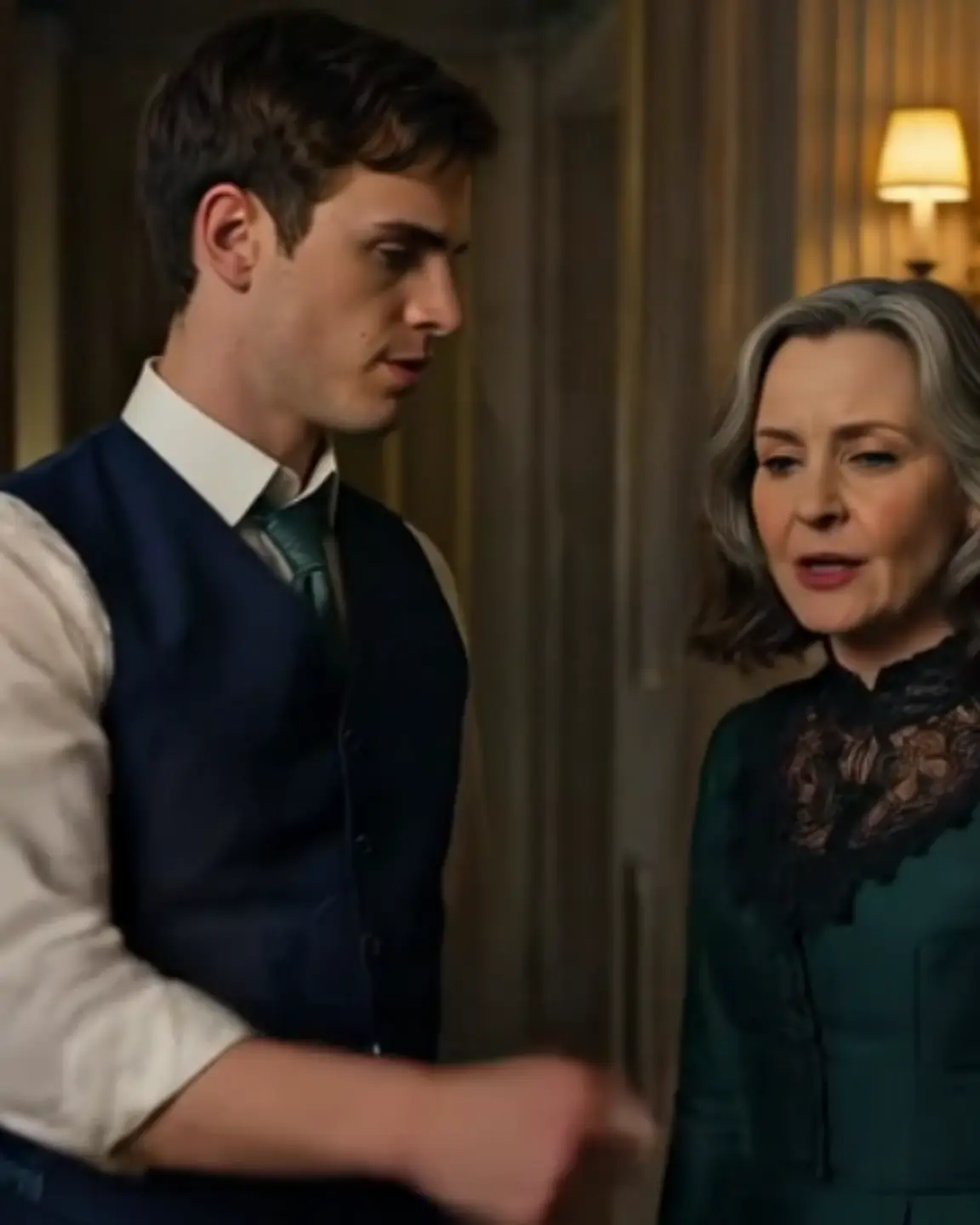
Valentina Petrovna entered like a queen lowering herself to visit a commoner’s hut. She swept the office with a judging gaze—modern furniture, panoramic windows, fresh flowers on the sill—and her mouth tightened into a thin line.
“So this is how you’ve set yourself up,” she drawled instead of greeting her. “I thought it’d be a regular office. Turns out you’ve got a whole private room. With a secretary.”
“Hello, Valentina Petrovna,” Olga said, standing but not moving toward her. “Did something happen? Is Misha okay?”
“Misha is not okay at all,” her mother-in-law said as she dropped into the visitor’s chair without waiting to be invited. “Because of you, by the way.”
Irritation rose inside Olga, but she kept her face calm.
“What do you mean?”
“You do realize he’s suffering?” Valentina Petrovna said dramatically. “A mother asks for help and his wife refuses to give money. He’s stuck between two fires—my poor boy.”
“Valentina Petrovna, let’s discuss this at home, calmly—”
“I don’t want to at home!” her mother-in-law cut in, raising her voice. “At home you work on him, convincing him not to help his own mother! But here—we’ll see what you’re really like!”
Muffled voices sounded behind the door—someone had paused, having heard the shouting. In the reflection of the glass partition, Olga saw silhouettes of employees frozen in place, pretending to be busy.
“Please lower your voice,” Olga said, moving around her desk and pulling the door almost shut. “People are working.”
“Working!” Valentina Petrovna snorted. “Earning money! And what does my Misha get? Running errands for you, I bet!”
“That’s between Misha and me.”
“How can it be ‘between you’ when my son is suffering?” Valentina Petrovna dug into her bag, pulled out a crumpled handkerchief, and pressed it to her eyes—though they were completely dry. “I’m his mother. I can feel how hard this is for him. He came to me yesterday, and he looked… exhausted. And it’s all because of you!”
Olga remembered the previous evening. Misha had indeed gone to his mother’s and returned late, silent and gloomy. When she asked what was wrong, he’d answered in short phrases and disappeared into the bedroom. Olga had assumed he was still angry about her refusal.
“Valentina Petrovna, if you’re having financial difficulties, we can talk and figure out a solution. But not here, and not right now.”
“And when, then?” her mother-in-law’s voice climbed higher. “You’re always at work! Or somewhere else! And when you finally come home, you start working on Misha right away! I heard you telling him I’m asking for too much!”
“I never said that.”
“You did! Misha told me himself!” Valentina Petrovna sprang up from the chair. “He said you think I’m using him! How disgusting. A mother—using her own son!”
The door cracked open. Lena peeked in cautiously.
“Olga Viktorovna, sorry, but you have a meeting with the clients from Northern Alliance in ten minutes. They’re already in the conference room.”
“Thank you, Lena. I’ll be there shortly.”
Valentina Petrovna caught the secretary’s gaze and immediately turned on her.
“Do you see, young lady?” she cried. “Do you see how she treats family? Work matters more to her! And a sick, old woman—her husband’s mother—can just wait!”
Lena looked helplessly at Olga, unsure what to say.
“It’s fine, Lena, thank you,” Olga said with a small nod, and Lena hurried away.
But Valentina Petrovna was already in full performance mode. She flung the door wide open, marched into reception—where managers and designers sat at their desks—and dialed her son’s number. Or at least pretended to.
“Mishenka, you promised you’d help!” she shouted so loudly it sounded like she was calling another country. “Talk to your wife—she refuses to give me money!”
Everyone in the reception area froze. Someone turned red with embarrassment; someone else looked away, pretending not to hear. Valentina Petrovna swept a triumphant look across the silent room.
“This is how she treats family!” she continued, now addressing the room. “She lives in luxury, and an old woman should starve! My pension is pennies! And I raised Mishenka all by myself—alone! His father died when he was still in school! I worked myself to the bone at the factory! I denied myself everything!”
Olga walked out slowly. A cold fury spread through her—not because her mother-in-law asked for help. Helping parents is normal. But this spectacle, this manipulation, this deliberate public humiliation…
Valentina Petrovna was counting on Olga to feel ashamed, to panic, to agree to anything just to stop the embarrassment. A classic tactic: corner someone in front of witnesses so they can’t resist without risking looking even worse.
But Olga hadn’t spent five years in advertising for nothing. She knew how manipulation worked. And she knew how to shut it down.
“Valentina Petrovna,” Olga said in an even, clear voice—loud enough for everyone to hear. “Let me remind you of the facts. Over the last three months, Misha and I have given you one hundred and twenty thousand rubles. That’s in addition to groceries Misha brings you every week. You say your pension is small—but it’s twenty-two thousand. I saw the statement when we helped you apply for benefits. Your utility bills are eight thousand. You have no loans and no debts. That leaves fourteen thousand—plus our one hundred and twenty thousand over three months, which is another forty thousand a month. That’s fifty-four thousand rubles every month. That’s about the average salary in our city.”
Valentina Petrovna opened her mouth, but Olga didn’t let her speak.
“So where does the money go? Two weeks ago Misha gave you thirty thousand for a refrigerator. The refrigerator turned into a new fur coat. Last week: twenty thousand for an ‘urgent roof repair.’ But when I called your neighbor, Antonina Semyonovna, she was surprised—there were no repairs at all. The roof is fine. But you did brag to her about a new smartphone that cost eighteen thousand.”
Valentina Petrovna’s face turned crimson.
“You… you’re spying on me?! Calling my neighbors?!”
“I verified the information before giving you money,” Olga said, taking a step forward. “You came here to shame me in front of my colleagues. You expected me to get scared and hand over cash just to make you stop. That’s manipulation. That’s blackmail.”
“How dare you! I’m your husband’s mother!”
“And that’s exactly why it hurts to say this,” Olga replied, her voice hardening. “You are not in need. You’re healthy—I know that because Misha took you for a full medical checkup a month ago and everything was fine. You have an apartment, a pension, benefits. But it’s not enough for you. You want more because you can get it. Because Misha can’t refuse his mother. And you take advantage of that.”
“Mishenka gives it to me himself! He does!”
“He gives it to you because you trained him—over years—to feel guilty,” Olga said, still not raising her voice, but making every word land. “You constantly remind him you raised him alone. That you sacrificed everything. That he owes you. And he truly believes he does. But he owes you love and care—not money to fund your whims.”
“I won’t let you talk to me like that!” Valentina Petrovna shrieked. “You poisoned my son! He never behaved this way before! He was always a good, caring boy! And now—because of you—he snaps at me! He refuses his own mother!”
“Valentina Petrovna, Misha isn’t snapping at you,” Olga said steadily. “He’s trying—maybe for the first time in his life—to set boundaries. And I will support him in that.”
Olga turned to her stunned coworkers.
“Sorry for the spectacle. This will be over in a moment.”
Then she looked back at her mother-in-law.
“You wanted a public conversation? Fine. Here are my conditions. We will keep helping you—but differently. Once a month Misha will bring you groceries worth ten thousand rubles. If there’s a real emergency—illness, an actual breakdown, something urgent—we’ll help, but only after we verify the situation. No more spontaneous ‘I need money right now.’ No more manipulation. No more guilt games.”
“You don’t have the right to tell me what to do!”
“I do,” Olga said calmly. “Because this is our money. Our family. Our rules. You can accept these terms—and we keep a normal relationship. Or you can refuse—and then you’ll get nothing at all, except essential help in a genuine crisis.”
Valentina Petrovna darted her eyes around, searching for support among strangers, but everyone looked away. She clearly hadn’t expected this. Her plan had failed. Instead of a frightened daughter-in-law who would agree to anything, she’d met a firm, calculated woman who wasn’t afraid to tell the truth in public.
“I… I’ll complain to Misha!” Valentina Petrovna sobbed—and this time the tears were real, tears of powerless rage. “He’ll hear how you spoke to me!”
“Go ahead,” Olga nodded. “Tonight I’ll tell him everything myself. I’ll show him the security camera footage from this office. Misha is a smart man. He’ll understand.”
“He’ll choose his mother! He always chooses his mother!”
“Maybe,” Olga shrugged. “That’s his right. But if he chooses a mother who manipulates and lies, then I may choose a different life. A life without manipulation and lies.”
Those words hit like cold water. Valentina Petrovna finally realized she’d gone too far. That her daughter-in-law wasn’t bluffing. That Olga truly could leave—and then Misha would be alone, torn apart by guilt and resentment.
“You… you don’t love him,” her mother-in-law hissed. “A loving woman wouldn’t give an ultimatum like that.”
“I love him, and that’s exactly why,” Olga said. “I don’t want him to spend his whole life hostage to someone else’s games—even if those games come from his own mother. I want him to be happy, not eternally guilty. I want him to help his parents out of love, not out of fear.”
Valentina Petrovna grabbed her bag and rushed toward the exit. At the door she turned back.
“You’ll regret this! All of you modern people will regret it when you’re old and realize your children don’t owe you anything!”
“Valentina Petrovna,” Olga called after her. “Children really don’t owe anything. But they do love and care—if they were taught that, if they weren’t broken with guilt. Think about that.”
Her mother-in-law slammed the door. For a few seconds, the reception area sank into dead silence.
Then Lena said quietly, “The Northern Alliance clients are still waiting…”
“Yes, of course,” Olga said, tugging her blazer straight and smoothing her hair. “Let’s go.”
She walked through reception, feeling her staff’s eyes on her—surprised, sympathetic, respectful. Someone even started clapping softly, and others picked it up.
Olga didn’t turn around. She headed for the conference room, and with every step the tension drained away. She’d done what she should have done long ago.
That evening Olga got home late. Misha sat at the kitchen table, his face dark. A cup of tea sat untouched in front of him.
“Mom called,” he said without looking up. “She was crying. She said you humiliated her in front of everyone. Said you called her a manipulator.”
Olga hung up her coat, walked into the kitchen, and sat across from him.
“She came to my office. She made a scene in front of my coworkers. She tried to force me to give her money in public so I couldn’t refuse.”
Misha lifted his head. Confusion flickered in his eyes.
“Mom wouldn’t do that…”
“Misha,” Olga said gently, taking his hand. “If you don’t believe me, I’ll show you the security footage.”
“You recorded my mother?”
“No. The cameras were there long before she showed up. I want you to hear the truth—not just her version.”
Olga pulled out her laptop and opened the file. Valentina Petrovna’s voice poured from the speakers: “Mishenka, you promised you’d help! Talk to your wife—she refuses to give me money!”
Misha listened. With each sentence his face grew darker. When Olga paused the video, he leaned back in his chair.
“I didn’t know,” he murmured. “She told me something completely different… that you talked calmly, that you threw her out…”
“Misha, your mother has been manipulating you since childhood,” Olga said, squeezing his fingers. “She trained you to feel guilty for living your own life. For marrying. For not devoting every free minute to her. I’m not saying she’s evil. She loves you. But her love… is toxic. It suffocates. It demands sacrifice.”
“What am I supposed to do?” Misha rubbed a hand over his face. “She’s my mother, I can’t just…”
“I’m not asking you to abandon her,” Olga said softly. “I’m asking you to set boundaries. We will help her. But not on demand, not with any amount she names. There are terms—the ones I told her today. Groceries once a month. Support in real emergencies after we verify what’s happening. No lies. No guilt games.”
“She won’t agree.”
“Then she won’t get anything,” Olga said firmly. “Misha, I love you. But I won’t live in a family where someone tries to humiliate and blackmail me. I want you to be happy. I want us to build our life—not exist under a constant storm of demands and accusations.”
Misha was silent for a long time. Then he nodded.
“Okay. I’ll call her tomorrow. I’ll tell her I agree to your terms.”
“Not mine,” Olga corrected him. “Ours. We’re a family. We make decisions together.”
He gave a faint smile.
“Ours.”
Valentina Petrovna didn’t call for a week. Then she called Misha, her voice cold and offended, demanding that Olga apologize. Misha refused. His mother hung up.
Another week later she accepted the conditions—because she realized that was all she would get. The alternative was no help at all.
Misha began bringing groceries once a month. The first time, Valentina Petrovna met him with a stone face, but gradually she thawed. Once she even asked how Olga was doing at work. It was progress.
Olga had no illusions: her mother-in-law wouldn’t change. At her age, with her character—she wouldn’t. But now there were rules between them. And space for normal, if cool and restrained, but still human relations.
One evening, as Olga and Misha sat on the couch, he suddenly said, “You know, I realized something. Mom really did sacrifice a lot for me. That’s true. But she demands that I sacrifice the same. My whole life. Endlessly. And that’s wrong.”
“Parents give so their children can be happy,” Olga said quietly. “Not so their children spend their whole lives paying back a debt.”
“I’m grateful to her. I love her. But I want to live my life. With you.”
Olga leaned into him.
“Then we’ll manage.”
And Valentina Petrovna remained dissatisfied. But at least she stopped manipulating—because she finally understood: it didn’t work anymore

News in the same category

News Post