Stop Sleeping Like This — It’s Quietly Damaging Your Spine More Than You Realize
The truth is simple:
Your sleeping posture matters just as much as your sitting posture.
And two common positions — shown in the image above — can slowly wear down your spine if you don’t correct them.
Here’s why these positions cause damage, what they do to your spine, and what you should do instead.
1. Sleeping with your neck twisted or elevated too high
When the pillow is too thick or you sleep with your head tilted upward, your neck bends unnaturally for hours.
This leads to:
• muscle tension around the shoulders
• pinched nerves
• morning stiffness
• headaches or jaw pain
• a misaligned cervical spine
The neck is supposed to remain neutral, not angled. When elevated too much, the curvature flattens and strains the muscles all night long.
Many people wake up with tight shoulders, thinking they “slept wrong,” but the real issue is chronic neck misalignment.
2. Side sleeping with the spine twisted
Sleeping on your side is generally healthy — but only if the spine stays straight from head to tailbone.
Many people twist their legs, rotate their pelvis, or roll halfway onto the stomach, causing the spine to curve unnaturally.
This twist can cause:
• lower back pain
• sciatic nerve pressure
• uneven hip strain
• joint stiffness
• discomfort when standing after waking up
Your spine is designed to rest in a straight line during sleep. Twisting forces your muscles to compensate all night, leaving them fatigued by morning.
3. Why these positions cause long-term spine issues
Your spine supports your body all day.
Nighttime is the only chance it gets to decompress, recover, and rehydrate the discs between your vertebrae.
When you sleep in misaligned positions:
• the discs compress unevenly
• nerves become irritated
• muscles tighten from holding awkward angles
• ligaments overstretch
Over months or years, this can contribute to:
• chronic neck pain
• recurring lower back pain
• nerve pinching and tingling
• poor posture
• faster disc degeneration
It’s not “one bad night.”
It’s the accumulation of micro-strain over time.
4. The correct way to sleep on your side
If you prefer side sleeping, here is how to do it safely:
Use the right pillow height
Your pillow should fill the space between your shoulder and head, keeping the neck level — not angled up or down.
Keep your spine straight
Your ears, shoulders, and hips should form one straight line.
Place a pillow between your knees
This keeps the pelvis aligned and prevents twisting of the lower back.
Avoid curling tightly into a fetal position
Too much curling rounds the spine and strains the neck.
With the right adjustments, side sleeping can be one of the healthiest positions for your spine.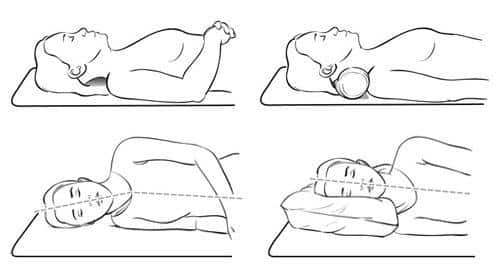
5. The best sleeping position for spine health
Many experts recommend sleeping on your back with proper support:
• A medium pillow under your head
• A small pillow under the knees to support natural lower back curvature
• Arms relaxed at your sides
This position distributes weight evenly and reduces pressure on the spine.
If back sleeping feels unnatural at first, start with short periods and gradually train your body.
6. Signs your sleep posture is harming your spine
Watch for these morning symptoms:
• stiff neck
• shoulder tightness
• lower back soreness
• numbness or tingling in hands/legs
• headaches
• difficulty standing up straight immediately after waking
These signs often point to poor nighttime alignment rather than daytime stress.
7. What to do if you struggle to maintain good posture in sleep
• Choose a supportive mattress (neither too soft nor too firm).
• Use pillows strategically to prevent rolling or twisting.
• Avoid sleeping on the stomach — the worst position for your spine.
• Stretch your hips and back before bed to reduce nighttime tension.
• Replace old pillows that have lost their shape.
Small adjustments can dramatically reduce pain and improve your overall sleep quality.
Bottom line
Your spine spends nearly one-third of your life in your sleeping posture — so the way you sleep matters more than most people realize.
Fixing your sleeping position won’t just prevent long-term damage; it can also improve your energy, posture, and day-to-day comfort.
Sleep is healing — but only when your spine is aligned.