The human skin is the body’s largest organ and often serves as a window into overall health. When unusual changes appear on the skin, such as tiny red dots, many people become concerned and wonder what these marks might mean. In most cases, small red spots are harmless and related to common skin conditions. However, in certain situations, they may indicate an underlying medical issue that deserves attention.
Understanding what these red dots are and why they appear can help people determine whether they are simply a cosmetic concern or something that requires medical advice.
Cherry Angiomas: A Common and Harmless Cause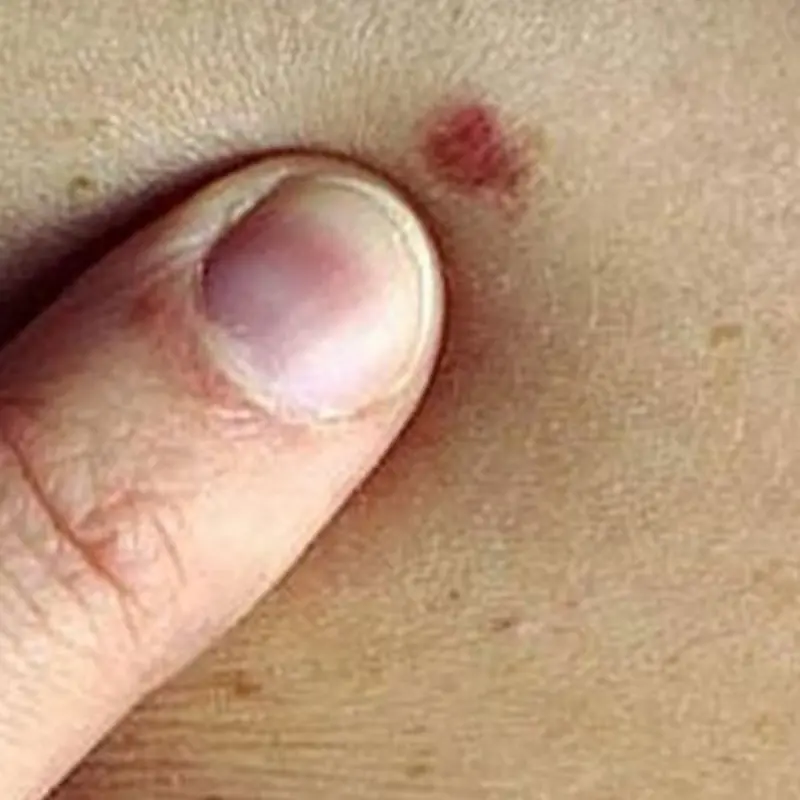
One of the most common causes of small red dots on the skin is a condition called cherry angioma. These spots appear as small, bright red bumps that form when tiny blood vessels cluster near the surface of the skin.
Cherry angiomas usually range from about 1 to 5 millimeters in size and may appear on areas such as the torso, arms, or legs. They often develop gradually with age and are especially common in adults over 30.
Although their sudden appearance can be alarming, cherry angiomas are considered benign and generally do not pose a health risk. Most people choose to leave them untreated unless they cause irritation or cosmetic concerns.
Petechiae: Tiny Spots Caused by Broken Capillaries
Another possible explanation for red dots on the skin is petechiae. These are very small, flat red or purple spots that appear when tiny blood vessels beneath the skin break and bleed slightly.
Unlike raised bumps such as cherry angiomas, petechiae are flat and cannot be felt when touching the skin. They often appear in clusters and may show up on the arms, legs, or other parts of the body.
Petechiae can have several causes, including infections, certain medications, vitamin deficiencies, or intense physical strain. In some rare cases, they may be linked to more serious medical conditions such as blood disorders or low platelet levels.
Because of this, persistent or unexplained petechiae should be evaluated by a healthcare professional.
Allergic Reactions and Skin Irritation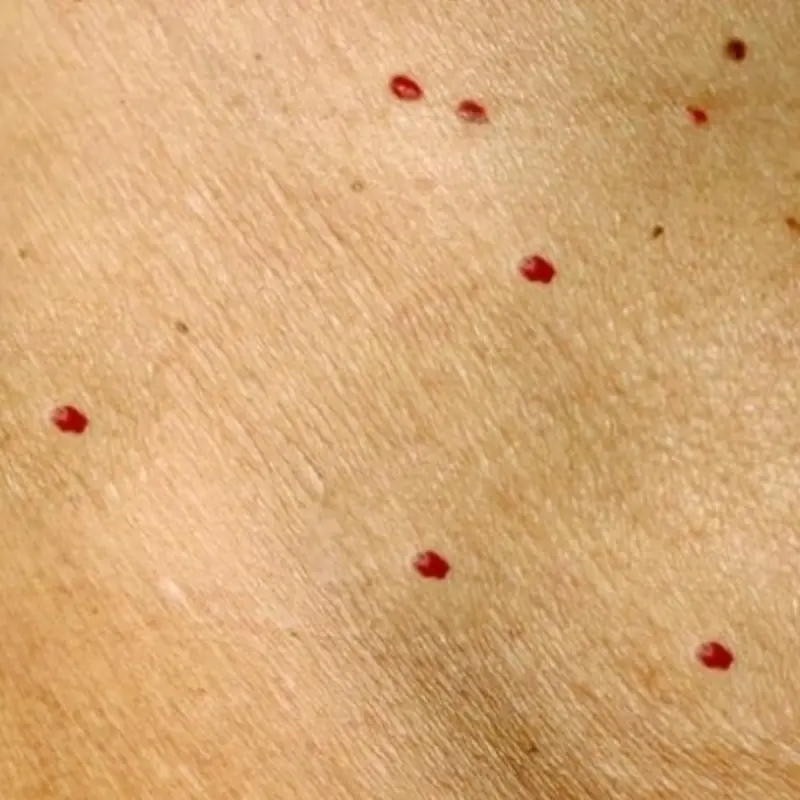
Not all red spots are related to blood vessels. Many are simply the result of skin irritation or allergic reactions.
Contact dermatitis, for example, occurs when the skin reacts to a substance such as cosmetics, plants, cleaning products, or certain metals. The reaction may cause red spots, itching, or a bumpy rash.
Similarly, allergic reactions to medications or foods can produce red patches or spots on the skin. These reactions are often accompanied by itching, swelling, or discomfort.
In most cases, these symptoms improve once the triggering substance is identified and avoided.
Heat Rash and Blocked Sweat Glands
Hot weather or intense physical activity can also cause red spots known as heat rash. This occurs when sweat glands become blocked, trapping sweat beneath the skin.
Heat rash typically appears in areas where sweat accumulates, such as the neck, chest, back, or underarms. The condition usually resolves on its own once the skin is cooled and allowed to breathe.
Wearing loose clothing and staying hydrated can help prevent heat rash during warm weather.
When Red Dots Could Signal a Health Issue
Although many red spots are harmless, there are situations where they may indicate an underlying health concern.
For example, clusters of petechiae may appear when platelet levels in the blood are low, preventing the body from clotting properly. In rare cases, this may be associated with conditions such as infections, immune disorders, or certain types of cancer.
Additionally, sudden changes in the appearance of skin spots—such as rapid growth, bleeding, or changes in color—should be evaluated by a medical professional.
Experts emphasize that while most red spots are benign, monitoring changes in the skin is an important part of maintaining overall health.
When to See a Doctor
Most small red spots are harmless and disappear without treatment. However, medical advice should be sought if:
-
The spots appear suddenly and spread quickly
-
They are accompanied by fever, fatigue, or unexplained bruising
-
They do not fade over time
-
They bleed, itch severely, or become painful
A dermatologist or healthcare provider can examine the skin and determine whether further testing is necessary.
Listening to Your Skin
Skin changes are often the body’s way of signaling that something is happening internally or externally. While many red spots are simply a natural part of aging or a temporary reaction to environmental factors, paying attention to new or unusual changes can help detect potential health issues early.
If you notice persistent or unexplained red dots on your skin, taking a closer look—and consulting a medical professional if necessary—can provide reassurance and help protect your overall well-being.