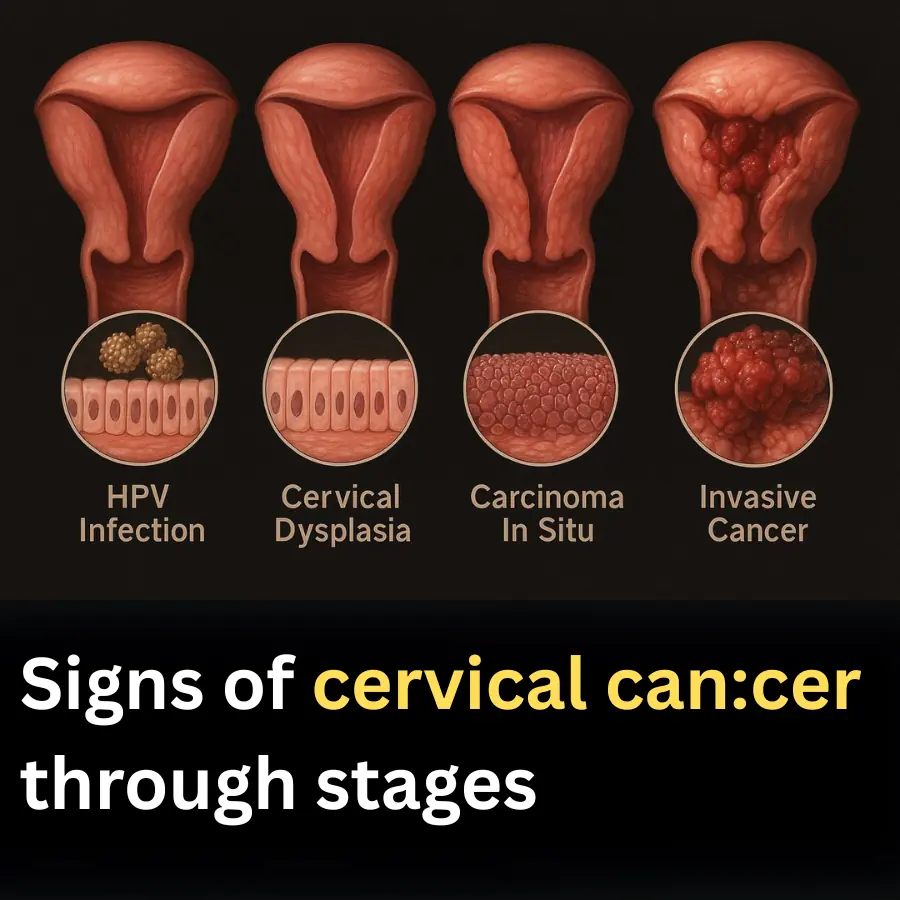
Cervical Cancer Symptoms and Stages
Cervical cancer often begins with vague and silent symptoms, making it difficult to detect early. When clear signs appear, cancer cells may have already spread to other organs. Although treatment can still be effective at this stage, interventions become more complex and costly. In severe cases, women may face the risk of complete removal of the uterus, ovaries, and surrounding lymph nodes, seriously affecting fertility.
Symptoms of Cervical Cancer
-
Pelvic pain or pain during sexual intercourse.
-
Abnormal vaginal bleeding: after sexual activity, between periods, post-menopause, or after gynecological exams.
-
Unusual vaginal discharge: grayish and foul-smelling.
-
Urinary discomfort or frequent urination.
-
Blood in urine or stool (indicating invasion into the bladder or rectum).
-
Irregular or prolonged menstrual periods.
-
Unexplained weight loss and fatigue.
If these symptoms occur, especially in combination, women should seek medical attention immediately. Early diagnosis is crucial, as similar symptoms can also occur in other conditions.
Types of Cervical Cancer
-
Squamous cell carcinoma
-
Arises from thin, flat cells on the cervix surface.
-
Most common type (80–85%), often caused by HPV infection.
-
-
Adenocarcinoma
-
Occurs in glandular cells in the upper cervix.
-
Accounts for 10–20% of cases.
-
-
Other types
-
Small cell carcinoma, adenosquamous carcinoma, lymphoma, melanoma.
-
Less common, not typically HPV-related, and harder to prevent.
-
Cervical Cancer Stages
-
Stage 0: Pre-cancerous changes; abnormal cells may develop into cancer.
-
Stage I: Cancer confined to the cervix.
-
Stage II: Cancer spreads beyond the cervix but not to pelvic lining or lower vagina.
-
Stage III: Cancer invades the lower vagina and pelvic lining.
-
Stage IV: Cancer metastasizes to other organs like intestines, bladder, or lungs.
Potential Complications
-
Infertility: Tumor invasion can impair conception. Radical treatment may require removal of the uterus and ovaries, leading to early menopause.
-
Psychological impact: Emotional distress, depression, and disruption of family life.
-
Abnormal bleeding: Tumor invasion of the vagina, bladder, or rectum can cause bleeding.
-
Kidney damage: Tumor pressure on the ureters can obstruct urine flow, causing kidney swelling and impaired function.
Preventive Advice
-
HPV vaccination is the most effective prevention.
-
Delay sexual activity until the reproductive system is fully developed.
-
Practice safe sex and limit the number of sexual partners.
-
Maintain genital hygiene, especially during menstruation and after sexual activity.
-
Seek medical attention promptly for any abnormal symptoms.