When my daughter-in-law forgot her cell phone in my home, it rang loudly, revealing a haunting image of my husband, who passed away five years prior. My hands shook as I opened the message, and my heart tightened as it brought every memory of my marriage into sharp focus in a way I had never anticipated.
The morning sun streamed through the lace curtains of my kitchen, illuminating the old oak table where I had shared countless breakfasts with Harold over the decades. Even after five years since his funeral, I continued to set out two coffee mugs, a habit difficult to break. At seventy years old, I’ve understood that grief doesn’t simply fade away; it is merely relocated within the heart.
While I washed the two mugs with my hands submerged in warm, soapy water, my thoughts were interrupted by a buzzing sound.
Initially, I believed it to be a trapped bee, one of those confused insects seeking warmth before winter, as they sometimes do in late September in rural Vermont. However, the buzzing noise persisted—mechanical and rhythmic. It was the phone vibrating against the wooden sideboard by the entrance.
“Hello?” I shouted, drying my hands on my apron. “Did someone forget something?”
Silence was my only answer.
Just twenty minutes earlier, my daughter-in-law Rachel had left my house after our usual Tuesday morning visit. While she came each week ostensibly to check on me, I suspected it was more to maintain appearances rather than genuine concern. Rachel has always presented as polished and perfect, the sort of woman who color-coordinated her grocery lists and never had a hair out of place.
The phone buzzed again.
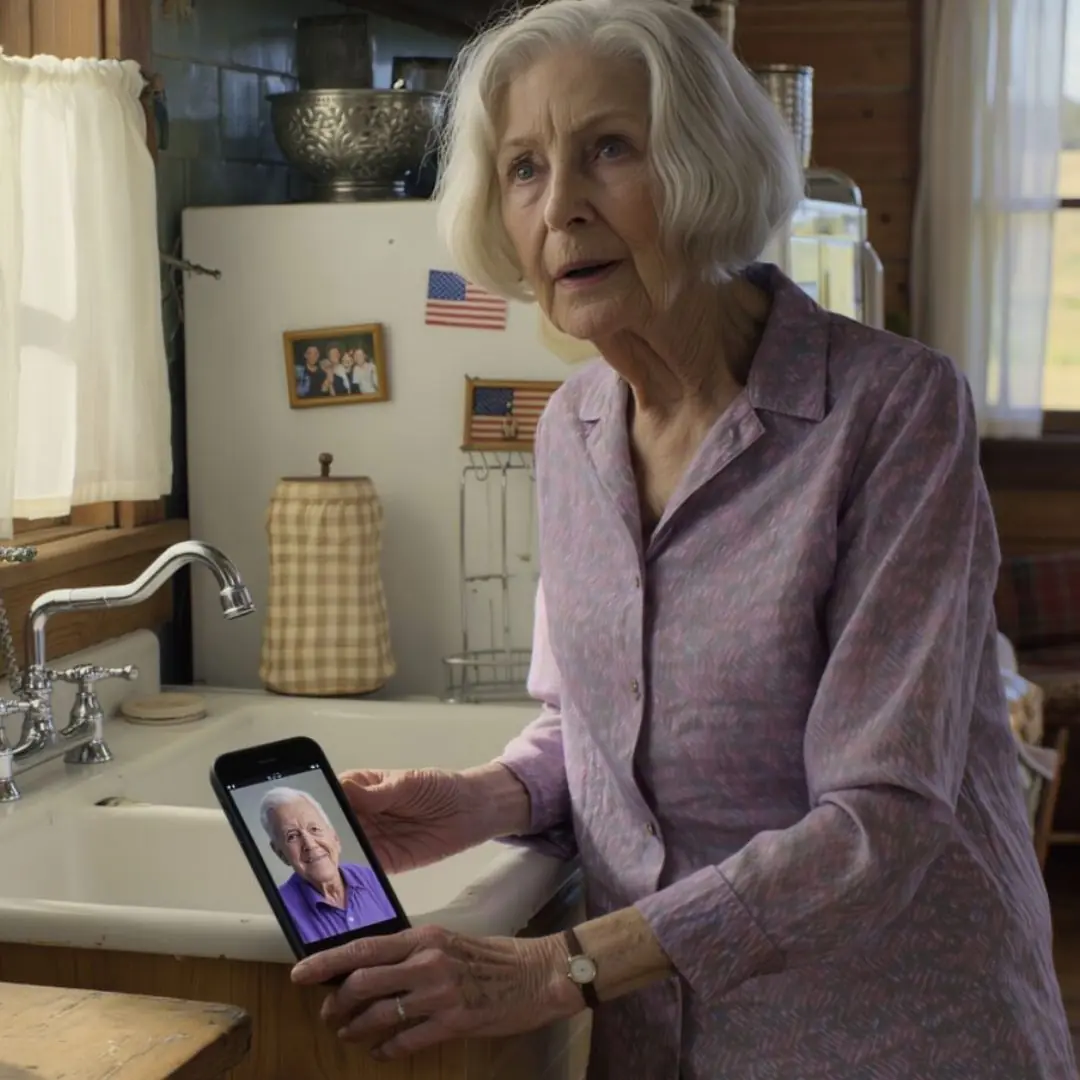
With mild protests from my knees, I shuffled towards the sideboard. There lay the phone, screen illuminated, the sight of it almost stopped my breath.
Harold’s face greeted me from the screen.
This was a photo I did not recognize; he was wearing a purple shirt I had never seen before, standing somewhere foreign to me, beaming with a happiness I hadn’t seen in years before his death. Attached to the image was an incoming text message.
My hand quaked as I reached for the phone.
I knew I shouldn’t be looking. Privacy had always been something I respected. But there was my husband’s image, younger and seemingly more alive than he had been during his last trying years.
A preview of the message appeared beneath his picture:
“Tuesday again, same time. I’m counting down the minutes until I can hold you.”
The room tilted slightly. I gripped the edge of the sideboard tightly, my heart racing as the words danced before my eyes, refusing to settle into coherence.
Tuesday again. Same time. Counting down the minutes.
This was not an old message; the timestamp read 9:47 a.m.—just moments ago. Someone was texting Rachel, someone who was using Harold’s photo, someone who rendezvoused with her on Tuesdays.
My mind surged with alarming possibilities, each more distressing than the last. Was it a prank? Some cruel joke? But what kind of morbid prankster would resort to using a deceased man’s likeness like that?
I should return the phone. I should inform Rachel she had forgotten it and have her come back for it.
Instead, curiosity led me to unlock the screen.
Rachel had never been particularly cautious about her phone’s security. I had seen her enter her passcode numerous times—her son Ethan’s birthday, August 15th—four digits that gave me access: 0815.
Without resistance, the phone opened.
Shaky fingers navigated to the messages section. The contact was simply saved as “T”—just a letter, nothing more. But the thread of messages spanned months, possibly years. I scrolled upward, watching dates flit past.
- “Can’t wait to see you tomorrow. Wear that purple dress I love.”
- “Thank you for last night. You make me feel alive again.”
- “Your husband suspects nothing. We’re safe.”
- “Your husband.”
Michael—my son, Rachel’s husband of fifteen years, father to my grandson and the teenager who had helped Harold rebuild the barn when he was just nineteen.
I fell heavily into the chair just by the entrance—the hand-carved oak piece Harold had crafted for me as a wedding gift, an object he had spent three painstaking months perfecting. The phone burned fiercely in my grip, searing my hands with secrets I had never wanted to unearth.
Those earlier messages had a different tone—planned, calculated exchanges.
“Same place as always. The farm is perfect. She never suspects. Make sure the old woman doesn’t see us. She’s sharper than she looks.”
The old woman—me.
They had been congregating here in my very home, right under my nose.
My heart raced as I scrolled further. Then it landed on a message that froze my world in place.
“I still have some of his clothes at the cabin. Should I get rid of them, or do you want to keep them as souvenirs?”
Harold’s clothes.
The reply from Rachel, dated three months post-Harold’s funeral, sent chills down my spine:
“Keep them. I enjoy sleeping in his shirts. They remind me of him. Of us. Of those afternoons when Maggie thought he was at his brother’s place.”
The phone slipped from my weakened fingers, clattering loudly onto the floor.
No. This couldn’t be reality. Harold and Rachel—my husband with my daughter-in-law. The notion was inconceivable, perverse, a violation of everything I had understood about my life, my marriage, my family. Yet, the evidence—undeniable—glistened on that screen.
It left me wondering—how long had it been going on? How long had Rachel and Harold been secretly meeting during those Tuesday afternoons when Harold claimed he was visiting his brother George in Burlington? He had passed away two years ago, taking any means for verification of his alibi to the grave with him.
With trembling hands, I picked up the phone, forcing myself to read on.
Photos—dozens of snapshots, carefully concealed within a separate folder I stumbled upon while exploring further. Harold and Rachel together; Harold’s arms draping around her waist, Rachel kissing his cheek, my own farmhouse visible in the backdrop of many of these images. My porch. My garden. My bedroom window.
They had been here together. In my house.
One photo showed them freely enjoying time in my barn, Rachel donned in one of Harold’s old flannel shirts, laughing at something just beyond the camera’s view. The time stamp read July 2019—five months before his heart attack, five months before I was seated beside his bedside, holding his hand, whispering words of love as he fought to breathe.
Had he thought of her in those final moments? Had he imagined Rachel instead of me in his last moments of consciousness?
A fresh message appeared, startling me.
“Did you forget your phone? Michael just called my cell asking if I’d seen you. I told him you were probably grocery shopping. Get your phone and call him back before he gets suspicious.”
The letter “T” again. The cryptic sender utilizing Harold’s photograph. But Harold was deceased.
So who was T?
As my mind scoured through possibilities, the dread mounted, my heart shattering piece by piece. Someone was perpetuating Harold’s clandestine affair with Rachel. Someone who knew about their liaison. Someone who had access to Harold’s photos, his attire, his secrets.
Suddenly, I heard a vehicle approaching—Rachel’s silver SUV, returning for her forgotten phone. I had only moments to decide upon my next steps: confront her now with nothing but shock and heartbreak, or remain silent until I gathered more information to comprehensively understand the extent of this betrayal.
The doorbell rang.
I glanced between the phone in my hands and the door before returning my gaze to the phone, where another message awaited.
“I love you. See you tonight. Same cabin. I’ll bring wine tonight.”
The cabin. More deception, more betrayal, more secrets.
I made my choice.
“Coming!” I called out, my voice steady in a way that surprised me. I slipped Rachel’s phone into my apron pocket and grabbed a dish towel, opening the door with a smile that didn’t quite reach my eyes.
“Rachel, dear, did you forget something?”
As she stood at the entrance, composed as ever, I noticed something new in her eyes—an element of calculation, a hint of wariness, the unmistakable look of someone burdened with secrets.
“My phone,” she smiled. “I’m so forgetful today. Is it here?”
“I haven’t seen it,” I reacted swiftly, surprising myself with the ease of my lie. “But come inside. Help me look.”
As she glided past me into the house, her familiar perfume trailed behind her—an aroma I had detected on Harold’s shirts during those latter years. I felt a shift within myself.
The grief-ridden widow was gone.
In her place stood someone hardened, sharper, dangerous. Someone resolute to uncover every secret, regardless of where it might lead, someone eager to ensure they were made accountable.
“Let’s start in the kitchen,” I suggested amiably as I closed the door behind us. “I’m sure it will turn up.”
But the phone stayed tucked within my apron pocket, warm against my side, clutching the secrets that would unravel my family’s fabric. And I intended to unravel every single one of them.
Rachel commenced searching through my kitchen with the meticulousness of someone in quest of more than just a phone. She rummaged through drawers, peered behind the toaster, and even checked the bread box. I observed her with calm, my hand resting conveniently inside my apron pocket, my fingers grasping Rachel’s phone.
“This is quite strange,” she remarked, straightening with a perplexed expression. “I could have sworn I left it on the sideboard.”
“Perhaps you took it with you, and it’s in your vehicle,” I casually suggested, ensuring my voice came across lighthearted and professional. The concerned mother-in-law act—nothing further.
“Perhaps,” she murmured, but her doubt was evident.
Her eyes darted nervously around the kitchen once more, and I noticed her gaze linger briefly on my apron pocket for just a second too long.
She’s onto me, I thought. Or she suspects something.
“Well, I should be leaving,” Rachel declared finally, her smile failing to reach her eyes. “Michael needs me home before lunch.”
“If you locate it, I promise to call you immediately,” I assured her.
After Rachel departed, I stood at the window, watching as her SUV disappeared down the gravel drive. Once confident she was gone, I unclipped the phone and sank into Harold’s chair, my heart racing as I resumed reading.
The message thread continued back four years—four years comprising lies, hidden meetings, Harold and Rachel deceiving both my son and me. The initial messages bore a tentative quality, almost businesslike. Then the tone shifted, taking an intimate and passionate turn.
Harold had penned words to Rachel that I had forgotten he was capable of expressing.
“You make me remember what it feels like to be desired. Maggie looks at me as if I’m already dead.”
The pain from that declaration pierced deeper than the others.
Had I contributed to that? Had I stopped truly seeing him somewhere along the journey?
Although these sentiments lacked justification, absolutely nothing could excuse what had unfolded.
Messages about the cabin emerged—an inheritance Harold had supposedly received from his uncle that he claimed had been sold years ago—or so he had informed me. Additional discoveries revealed GPS coordinates hidden within one of the photographs I uncovered while searching. Harold and Rachel appeared unacquainted with metadata. I copied the coordinates into my own phone; situated in the Lake Champlain vicinity—approximately forty minutes north. The ideal distance for afternoon rendezvous while remaining anonymous from familiarity.
Yet I still remained puzzled about T, the enigmatic character who had taken over Harold’s role in this vile arrangement.
I ran through a catalog of possible individuals—Harold’s friends, business allies, some from the farm co-op, and then a realization chilled me to the bone.
A message discovered from three years ago, penned by Harold to Rachel:
“Tom keeps questioning where I go on Tuesdays. I think he’s following me. We need to be more cautious.”
Tom—T.
Tom was George’s son—Harold’s nephew and thus my nephew through marriage. I slumped back, an understanding washing over me. Tom was thirty-eight years old, married with a pair of children. He resided in Burlington and occasional visits were always amicable and supportive. Following George’s death, Tom facilitated sorting through the estate, organizing his father’s documents. Had he discovered traces of Harold’s affair back then, or had he known all along?
Without warning, the front door swung open without a knock. Only Michael possessed a key, and only he would have freed himself from the confines of entry like that. I barely had time to stow Rachel’s phone under a cushion before my son materialized in the doorway.
His appearance was disheveled—pale, unshaven, his shirt creased as though he had spent the night occupying it.
“Michael. What troubles you?”
He plopped down in a chair across from me, forehead resting in his hands.
“Mom, I think Rachel is having an affair.”
The irony threatened to crush me under its weight. I managed to keep my face impassive.
“What gives you that impression?”
“She’s been cold for several months—years, potentially. She disappears on Tuesdays, claiming yoga or grocery shopping; however, I noticed our credit card statements lack transactions for the gym. No grocery receipts for Tuesdays.”
He gazed at me, eyes rimmed with red.
“I feel like I’m going insane. Am I being paranoid?”
“No,” I responded quietly. “You are not paranoid.”
He stared intently.
<p“You know something.”
“I encountered her phone,” I confessed, retrieving it from beneath the cushion. “It was left here this morning. I shouldn’t have looked, but I did.”
Emotions raced through his face—hope that the truth would redeem her, fear that she was tainted, horror at what he was poised to discover. I wanted to shield him, my only child, yet he warranted the truth.
<p“It’s terrible, isn’t it?” he croaked.
I passed him the phone with a slight nod.
The code was Ethan’s birthday.
While he scrolled, I headed to the kitchen, preparing tea that neither of us wanted. A gasp escaped him, followed by a string of curse words and, quite possibly, a sob. When I entered the room, he appeared as pale as a ghost, trembling.
“Dad,” he managed hoarsely. “She was involved with Dad. My father and my wife. How long…”
The sentence died on his lips.
“Four years, as I can ascertain. Perhaps longer. And after his death…”
“Who’s T?” he queried. “Every time that initial comes up.”
“I suspect it’s Tom. Your cousin Tom.”
Michael’s rage contorted his face.
“That son of a— I swear I’ll kill him. I’ll kill both of them.”
“No.” I interrupted, my voice resolute and commanding. “You shan’t act on impulse. We require strategy.”
“Strategy? Mom, they’ve annihilated our family. Dad betrayed you, betrayed me. Rachel has lied to me for years. And Tom—”
He halted, deep in thought.
“What shall we devise? I desire a divorce. I wish for everyone to be made aware of their wrongdoing.”
“And then what?” I countered with a calm demeanor. “Rachel claims half of every asset during the divorce. She could even request Ethan’s custody, framing you as unstable. Tom may deny everything. No concrete proof connects him directly to T—pure conjecture. You’ll end up losing your son, your wealth, and your dignity. Meanwhile, they go on with their lives.”
He paused, catching his breath.
<p“So what do you recommend?”
<p“We spy further. We amass irrefutable evidence. We uncover their motivations and why they have sunk so low.”
I leaned closer.
“And then we will dismantle their empire—deliberately, methodically, in a manner they won’t foresee.”
Michael studied me—really examined me, possibly for the first time in years.
“I never realized you had such a cold side.”
“Neither did I,” I replied. “However, they have harmed my son. They have wronged me. And I will not let them evade justice.”
A firm knock broke through our dialogue. We froze in response.
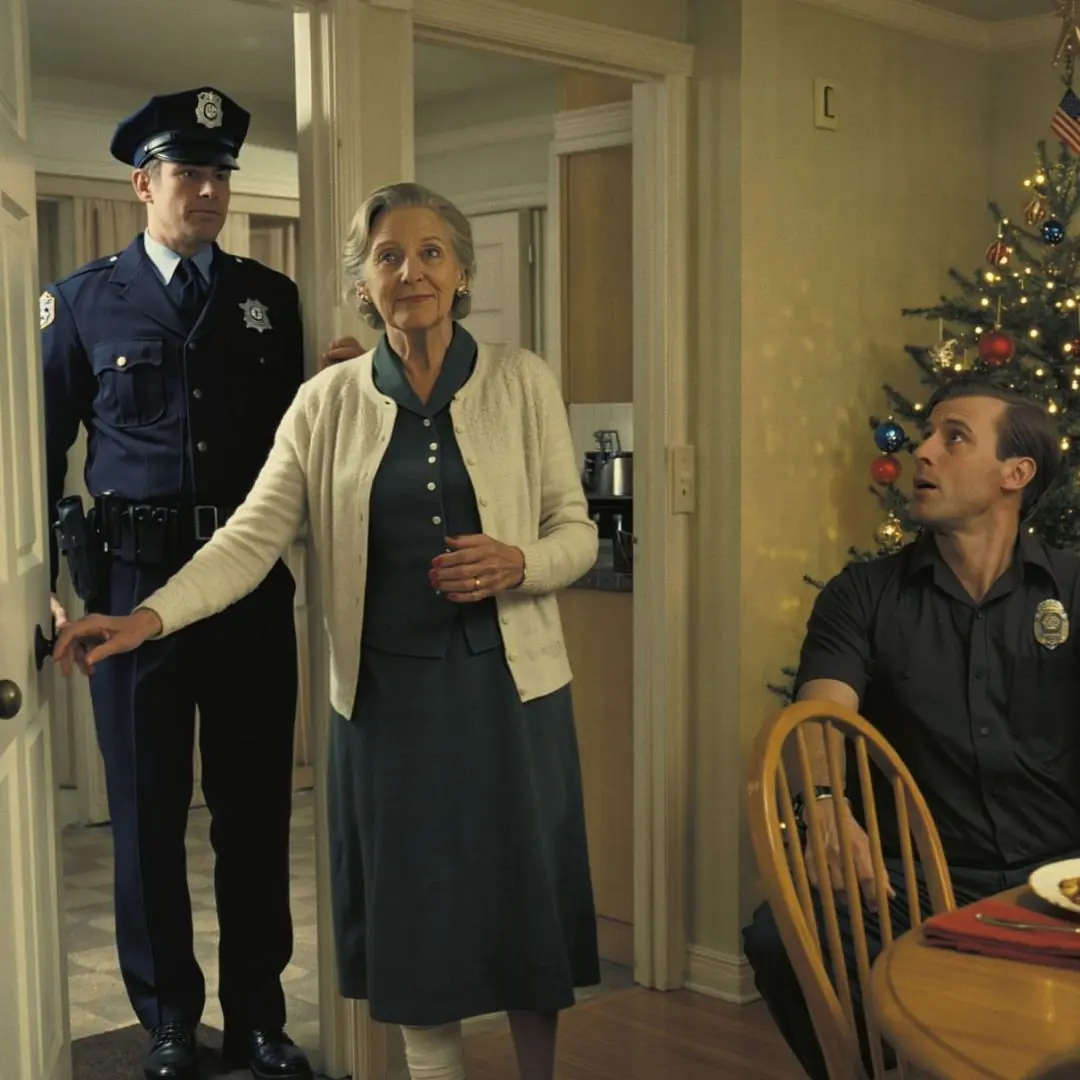
“Mrs. Sullivan?” A new voice rang out. “I’m Detective Morrison with the Vermont State Police. I require a word with you regarding your husband’s death.”
The police.
“Just a moment,” I responded quickly, my mind racing. I handed Rachel’s phone to Michael.
“Conceal this. Ensure no one sees it.”
He nodded and slipped toward the hallway’s rear. I composed myself, smoothing my apron, checking my reflection in the hall mirror, opening the door with a polite smile.
A woman in her forties stood at my porch, badge held in hand, her features uniformly professional.
<p“I apologize for the intrusion, Mrs. Sullivan. I’m reopening the investigation into your husband’s death. Recently reported allegations necessitate further examination.”
<p“Allegations?” My voice remained even due to sheer determination. “My husband succumbed to a heart attack five years ago.”
<p“Indeed, ma’am. However, we have received new information suggesting that his demise might not have occurred naturally.”
She brandished a notebook.
<p“Could you outline who had access to your husband’s medication in the weeks preceding his death?”
Murder.
She insinuated that Harold could have been murdered. Instantly, the affair, the betrayal, the confidential messages—everything took a more sinister tint.
<p“I believe,” I said cautiously, “that I should contact my lawyer.”
Detective Morrison smiled, but it did not touch her eyes.
<p“That’s certainly your prerogative, Mrs. Sullivan. However, I must inform you that the individual who filed the complaint explicitly named you as a suspect.”
Detective Morrison remained seated in my living room, her notebook open, scrutinizing every corner of my abode. Michael returned from his earlier task; his expression was carefully composed, masking the concerned son who had just unearthed a web of deception.
<p“Mrs. Sullivan, I must interrogate you about the days leading to your husband’s death,” Morrison stated. “In particular, his medications.”
<p“Harold was on three prescriptions,” I stated, keeping my voice serene. “Medication for blood pressure, a statin for cholesterol, and baby aspirin. All prescribed by Dr. Peyton. Was there an issue?”
<p“Dr. Peyton retired two years prior. We haven’t managed to retrieve his records yet.”
She flipped through her notes again.
<p“Could you identify who had access to those medications?”
<p“Merely my husband and me. They were placed in our bathroom cabinet.”
<p“And you were the one who administered his medications?”
<p“No. Harold was capable of taking his own pills.”
I stopped to reflect, remembering a period when things had shifted slightly.
<p“Hold on. That’s not entirely accurate. The last few months, Rachel would sometimes assist him. She was a nurse—previously a nurse before Michael married her.”
Morrison’s pen rapidly scribbled across her page.
<p“Your daughter-in-law had access to his medication.”
<p“She was a regular visitor. She wanted to help.”
Even as I declared it, I felt the puzzle pieces shifting into place, forming a darker panorama.
“Mom,” Michael spoke up, tension lacing his voice. “Are you implying Rachel might have—”
I interrupted, “I’m merely stating we must investigate what was in those pills.”
“Is it too late for exhumation?”
“After five years, toxicology would be challenging, but not unfeasible if we were to exhume,” Morrison replied. “Mrs. Sullivan, you must grasp something significant. You are still a person of interest in this case. The complaint distinctly names you, embedding details suggesting insider knowledge. Should you be falsely accused, we must ascertain who framed you and why.”
After she departed, Michael and I sat in stunned silence. The autumn twilight transitioned into evening, shadows stretching across the farmhouse floor.
<p“We need to confront Rachel,” Michael declared. “Reveal everything.”
<p“No.”
I stood, mind racing with possibilities.
<p“If Rachel filed that complaint, attempting to frame me for murder, confronting her will only lead her to destroy evidence and fabricate alibis, perhaps even flee.”
<p“Then what’s our next plan?”
<p“We will investigate her tonight. The message indicated she’s meeting T at the cabin. We need to ascertain what they are plotting.”
Michael appeared hesitant. “What if they are dangerous?”
<p“Then we shall remain concealed, documenting everything. We will record their dialogue, take photographs, gathering proof to confirm their actions.”
“Harold’s death may not have been from natural causes. That life insurance money went somewhere, and someone is attempting to frame me for murder. I need to discover the rationale behind it.”
With Michael’s truck, we started towards the coordinates, leaving my vehicle at the farmhouse to avoid raising suspicions if Rachel drove by. The GPS navigated us along Route 7, transitioning onto winding backroads engulfed by the encroaching twilight and forests. My phone’s mapping guided our arrival at a turnoff marked by an aged mailbox lacking any numbers.
The cabin sat a quarter-mile down a rugged dirt path, hidden from the main road. A quaint, tidy structure with a green metal roof and porch overlooking the lake, illuminated lights danced in the windows.
“That’s Rachel’s SUV,” Michael whispered, pointing to the silver sedan parked beside a newer pickup. “And that’s Tom’s truck.”
We parked discreetly, concealed by trees, keenly inching our way closer. The chilly October air greeted us, our breaths visible. Through the cabin’s front window, I could make out Rachel and Tom seated at a small table, wine glasses raised in a toast, appearing untroubled and intimate.
Michael activated his phone, capturing video through the window. I stood beside him, heart wrenching with trepidation as I observed my nephew and daughter-in-law sharing a moment toasting.
“Can’t imagine the old bat really fell for it,” Tom proclaimed, his voice drifting through the thin cabin walls. “The detective bought every word. That anonymous complaint—with its specific details regarding finances and motivations—she’ll have her arrested within the week.”
Rachel’s laughter carried, devoid of warmth.
“She’s far too trusting. Always has been. Even Harold said she was naïve, and that’s what made it so straightforward.”
Tom articulated something I didn’t quite catch; both broke into laughter, and it turned my blood to ice.
This was beyond an affair—they had orchestrated this, cultivated every aspect of their scheme.
“How soon until the insurance payout?” Tom queried.
“The policy had a two-year contestability clause. That expiration has long passed. Once they arrest Maggie, the insurance company will have no grounds for denying the claim,” Rachel explained, swirling her wine. “Once they detain Maggie for Harold’s murder, I’ll feign shock and sorrow. The devastated daughter-in-law, heartbroken that her beloved mother-in-law could perpetrate such deeds. The insurance company will be forced to concede to Harold’s estate, and I am the estate’s executor since his will remains unchanged.”
“And we split it fifty-fifty, just as we orchestrated it,” Tom interjected, “minus Michael’s portion, alas. But we can work around that. Once Maggie is imprisoned and the scandal passes, I’ll file for divorce, claiming emotional distress. I’ll obtain half of everything Michael possesses alongside the insurance windfall.”
Michael’s grasp tightened painfully on my arm.
Observing through the window, I witnessed Tom shifting behind Rachel’s seated form, his hands sliding over her shoulders.
“You’re brilliant,” he purred. “Using Harold’s paranoia over Maggie’s forgetfulness, leveraging it against him to sway his perception—simple enough. He became easy to manipulate, especially after I warned him about Maggie’s complaints regarding him, suggesting she wished for his death.”
Rachel tilted her head back to meet Tom’s gaze.
“He honestly thought that his own wife resented him. It turned out to be quite simple.”
I had never uttered such words, nor conceived of such tirades. But Harold had distanced himself from me during those final months, appearing resentful and withdrawn. I had attributed it to his illness and his lingering fear of death. Now, I uncovered he had likely been poisoned against me, isolated, left vulnerable.
“And the pills?” Tom continued.
“Digoxin. Easy to procure when you have the right connections. Ordered online and shipped to a PO box—a strategy that’s untraceable.”
Things had changed. They were so calculated.
“Until now,” Tom added.
“If that detective unveils everything—”
“She won’t.” Rachel interrupted. “She possesses her suspect, motive, and timeline. Maggie Sullivan—the spurned wife who uncovers her husband’s affair and opts to profit from his insurance payout.”
Rachel stepped forward, throwing her arms around Tom.
“In five months, we’ll be rich. In six months, we’ll be reunited. Meanwhile, Maggie will rot in prison for a murder we orchestrated.”
Michael turned, anguish flooding his features.
We crept back toward the truck, entering the vehicle in silence. Once settled inside, Michael ignited the engine amidst his trembling hands.
“They killed him,” he murmured. “Rachel murdered my father.”
“And Tom assisted her. And they will rue their choice; they’ve left us with incriminating evidence.”
“I’ll take this to the police,” Michael proposed, driving away from the cabin. “We’ll present the recording and Rachel’s phone, disclose everything.”
“No,” I contradicted. “Not yet.”
He stared incredulously at me.
“Mom, they’ve committed murder. They seek to imprison you. We must—”
“Michael, think clearly. That recording was obtained without their knowledge or consent. Vermont mandates two-party consent for recordings; a skilled lawyer could render it inadmissible. Furthermore, the phone—it might be deemed theft or invasion of privacy.”
<p“So what is our path forward?”
I glanced down the road before me, shadows closing in from the forest, and felt the cold resolve solidifying in my chest.
“We compel them into a confession,” I articulated, “formally, legally, accompanied by witnesses who are immune to intimidation or coaxing.”
<p“How do we achieve that?”
“Your father’s estate,” I remarked thoughtfully, mapping out my strategy. “It has never been formally settled due to the absent life insurance policy. We need to summon everyone—including you, Rachel, Tom, the lawyer, and even Detective Morrison—for a formal reading of the will.”
<p“And what comes next?”
“Then we set the trap,” I declared. “But first, we must ascertain the insurance money whereabouts. Whatever happened to it will unearth the final piece of evidence necessary to obliterate them.”
Michael accelerated, the truck’s headlights cutting through the encroaching night. Behind us, the cabin’s glow dimmed, but I knew we would return soon. The battle had only begun, and I was resolute to emerge victorious.
That night was spent in Michael’s home office, surrounded by five years of financial paperwork I had retrieved from the farmhouse—bank statements, credit card bills, insurance documents, all that Harold had left behind. Rachel stayed at her sister’s, or so she claimed via text. More than likely, she was at the cabin with Tom, savoring their supposed triumph.
<p“There,” Michael gestured, pointing at his computer screen at three in the morning. “Mom, look at this.”
The life insurance policy application, buried in a folder of scanned documents. Harold’s signature rested at the bottom, yet something appeared inconsistent. The curves were too perfect, too clean. Harold had possessed chaotic handwriting, scrawled hastily, reflecting a man who had spent forty years managing farm orders.
“That’s a forgery,” I affirmed confidently. “Rachel crafted it.”
“Is there a method to prove it?”
“Possibly—if we find samples of Harold’s authentic signatures, we can engage a handwriting specialist for comparison.”
Eyes heavy with exhaustion, I rubbed them. “But this process consumes time, and we’re running short. Once the detective concludes her investigation, my arrest becomes imminent. Subsequently, the challenges escalate—unearthing evidence from behind bars, dealing with legal disputes, enduring years of appeals.”
Michael leaned back in his chair, examining me with an expression I found difficult to decipher.
“You’ve transformed, Mom. You embody a different woman than you were just yesterday.”
“I’m battling for my existence,” I admitted. “For justice concerning your father. No matter what Harold did, he didn’t earn such a fate—slowly poisoned, manipulated, betrayed.”
“Do you find it in your heart to forgive him for the affair?” he questioned unexpectedly.
The inquiry caught me off guard. Do I? Harold exhibited weakness, vanity, and was susceptible to a younger woman’s allure. But Rachel had been predatory, deliberate—targeting him while embedding herself within the family through Michael before seducing a lonely, aging man feeling invisible to his wife.
<p“I don’t know,” I replied cautiously. “But that’s a question for another time. Currently, our focus rests on survival.”
<pSuddenly, my phone vibrated with a text from an unknown sender.
“Cease your investigation, or face repercussions upon your grandson.”
<p“Michael, where’s Ethan?”
<p“Staying with my mother-in-law. Rachel had him there yesterday afternoon. Why?”
He saw my expression, the phone in my hand.
<p“What’s happening?”
I revealed the message to him. He turned pallid instantly, phoning his mother-in-law without delay. The conversation was brief and frantic.
<p“He’s perfectly fine,” Michael confirmed. “Still resting. I told her not to permit anyone to take him without my call first.”
Another text arrived.
“We’re aware of what you discovered at the cabin. Eliminate the recording and drop the matter or your boy encounters danger. You’ve twenty-four hours to comply.”
They had seen us—or guessed. Either option indicated we had continually undervalued their capability.
<p“That’s it,” Michael seethed, teeth bared. “I’m notifying the police. We must disclose everything.”
<p“Not necessarily,” I insisted. “They are desperate now, cornered. It heightens their danger level. If we act rashly, we risk inciting them.”
<p“What is your proposed plan?”
<p“Leverage is necessary—something so incriminating they are rendered powerless, incapable of fleeing or issuing threats. They will be compelled to confess.”
<p“Such as?”
<p“Like the insurance funds. Tom claimed he is the executor of Harold’s estate, yet the policy notes me as the beneficiary. So where did the money genuinely go?”
Michael accessed the insurance company’s website, utilizing details from the scanned application. The password took three attempts to piece together. Rachel had cleverly tied it to Ethan’s name and birth date. Of course.
The policy remained active, the premium extracted through automatic withdrawals I had unfortunately overlooked amidst the myriad of medical bills during Harold’s final days. However, the beneficiary had changed two months following Harold’s passing—not to me, but to a trust established as The Harold Sullivan Memorial Trust, overseen by Thomas Sullivan as trustee.
“That scoundrel,” Michael breathed. “He established a trust under Dad’s name, claiming he was managing the estate. Can we access the trust documentation?”
“Not without a court order, but…”
Michael’s fingers raced across the keyboard.
“Mom. Tom filed the trust papers with the county clerk. Public record. I can retrieve it.”
The document emerged on his screen. The trust had been constituted for Harold Sullivan’s heirs, with Thomas Sullivan functioning as the sole trustee possessing total discretion over all distributions. In layman’s terms, Tom wielded control over the funds while deciding their fate.
<p“This is fraud,” I stated. “The insurance company believes the funds went to Harold’s estate, while Tom diverted them into a self-serving trust. A trust likely containing only that insurance payout.”
Michael’s jaw clenched.
<p“I’ll contact Tom this instant.”
<p“No!” I intervened, fully aware of the necessity of employing cunning. “Allow them to presume we’re fearful. Let them think their threats were effective.”
Another text arrived from an unknown source.
“We’ll be at the cabin tomorrow at noon. Come alone or endure consequences.”
“They’ve recognized us—or suspected. Either way, we nourished their confidence based on miscalculations.”
“That’s it,” Michael stated, his voice wavering with fury. “I’m alerting the authorities. We must divulge everything.”
“And the police would then take Ethan while they investigated,” I countered, maintaining a firm stand. “Michael, consider it. The situation has twisted. The desperate ones become reckless. If we move too quickly, we risk their hostility infecting our family.”
“But what’s on your mind?”
<p“I’ll offer them a deal.”
“I’m knowledgeable regarding the digoxin. I possess insight into the cabin. I’m aware of the insurance fraud at hand. You have twenty-four hours to transfer $250,000 to the account below or I shall inform the police concerning the evidence indicating Rachel murdered Harold. She gets imprisoned, while you walk free. Your decision.”
I supplemented it with a cryptocurrency wallet number Michael created—untraceable, completely anonymous.
You’re blackmailing him?” Michael hovered nearby, aghast.
I remarked, “I’m pushing him to choose wealth over Rachel. Should he comply, we gather proof of his knowledge concerning the murder. If he’s defiant but alarmed, he’ll contact Rachel, perhaps act rather rashly. Either outcome leads to their blunder.”
<p“And should he alert the police?”
“He won’t; approaching the authorities means confessing knowledge of a homicide. It involves covering for it, engaging in insurance fraud. We’re compelling them out of the shadows.”
About ninety minutes later, I received a response—not to the anonymous email but to my personal phone. I recognized Tom’s voice upon answering.
“Maggie, we must converse. Just you and I. Tomorrow, noon at the cabin. Attend alone or face consequences.”
Michael locked his gaze on mine across the diner table. The trap was effective, yet it was also constricting.
<p“I’ll be there,” I stated to Tom, keeping my tone unfaltering.
“Great. And Maggie, don’t be foolish. You’re an elderly woman. You can’t possibly win this.”
He cut the line.
Michael’s agitation escalated further.
<p“No! This is madness. You shan’t go alone. They’ve claimed lives before.”
<p“I must,” I declared. “If anything happens to me, you remain Ethan’s safeguard. You must stay with him.”
“Mom—”
“Michael. Hear me out. I’ll be wearing a recording device, the proper kind—two-party consent with a notification to Tom regarding the recording from the conversation. Anything he says will be deemed valid in court.”
<p“But if he should harm you once advised of the recording?”
“He won’t, for I will offer him an ultimatum he cannot evade.”
In anticipation of my meeting, I wrote a confession in my handwriting—a confounding document steeped in desperation, anguish, and rage.
“I, Maggie Sullivan, after sufficient contemplation, confess to the following.”
Stepping through the forest, I closed my eyes to breathe in the layered scents surrounding me—pine, earth, decay, and industry—the culmination of seasons and identities accumulating through time.
The cabin loomed before me, the door opening as I approached.
“Maggie, welcome,” Tom greeted, a charming façade concealing what lay beneath, as Rachel attempted to mask her disdain.
“Before we commence,” I stated to all present, “I’m recording this conversation for security purposes.”
Tom remained unaffected.
<p“Certainly. We venture forward without concealment.”
As I settled in and regarded Rachel, whose presence now felt more impactful, I discerned the telltale signs of danger—a gun resting on the table.
“In truth, Maggie,” Rachel drawled, “you’re not making any recording. That device you’re donning? It’s jammed. We have been eavesdropping on your calls, reading your emails. We comprehend all you have devised.”
Tom moved to secure the door.
Legitimacy rang through this simple act; humanity was discarded in moments of pressure, vulnerability exposed as they realized their escalating horror.
<p“Have a seat,” Rachel demanded, gesturing towards one of the chairs.
“Here’s what will transpire,” Rachel stated, her voice revealing malice beautifully veiled. “You are to pen a confession—an authentic confession. It shall testify to you killing Harold, driven by envy.”
“You poisoned him with digoxin obtained through your sister’s prescription,” Tom interjected, a cruel gleam in his eye. “She had a heart condition, and died three years ago. Margaret.”
Rachel posited the gun between us—a threat.
“If you refuse?”
“We will kill you and orchestrate a scene to masquerade as suicide.”
“This examination shall be cleaner. You’ll pen the confession, you shall write a suicide note listing your grief. You found yourself driven to Harold’s cabin where he once discovered love, and thus took your own life.”
“With what?” I countered. “I haven’t brought any pills.”
Tom produced a bottle from his coat.
“Prescribed sleeping pills, ample enough for the job. Stolen from your cabinet yesterday. Enough to barrel through the job cleanly.”
They had crossed too many boundaries—my house, my privacy, my trust shattered into fragments.
“And should I reject your offer?”
“We’ll execute you and contrive a lie” Tom replied, unfazed. “We are careful; we’ve orchestrated everything intricately.”
Suddenly, I began to reconsider.
A delicate tapestry emerged between negotiation and compulsion, stronger than any visual deception. In their coldly calculated lives, they had erased my identity—wrenched my agency to the sidelines while I felt the tether begin to snap.
“You discover a singular truth—victory lies within the constructs,” I demanded in return. “And if all is revealed?”
“Then,” Rachel responded evenly, “the police would implicate you as the guilty party. Evidence will be altered.”
“My phone and the truth shall awaken light in this ghastly darkness.”
A thread began to weave strength through all of us, binding us in an irrevocable dance of distrust and betrayal.
Suddenly, a crash rocked the cabin.
Michael burst through the window, a storm of energy and fury personified, pivoting power toward my safety. His shoulder collided with Rachel, sending the gun spiraling across the table as chaos erupted. A deafening bang resounded, the bullet lodging itself in the ceiling. Michael wrestled with Rachel as I dove back towards the door, realizing I could not let her get away.
Outside, the sound of pounding footsteps heralded Detective Morrison and two police officers pursuing, weapons drawn amidst their sobering exploration.
Our irreversible truth revealed; outsider voices echoed through against the unfinished truth attached to my heart.
Little did Rachel register the unaltered power embedded in my resolve—no longer the ignored guardian living within the shadows, but rather a truth-seeking spear refusing to be subdued.
Detectives swept into the interior space, expressions fierce and resolute. Ordinances shifted where love had once thrived through secrets and deceit—light returned where darkness had blanketed my heart.
As Morrison surveyed the scene, her focus returned to me with an expression balancing admiration and disappointment, “Mrs. Sullivan, you could have faced death.”
“But I remain unscathed,” I retorted gently, alluding to inherent strength hardened by the trials left behind.
“You have corroborated everything required.”
Joyous resolution washed over me; I had hunted and endured doubts concealed beneath darkness, upheaval instigated by lies and fear dealt in tandem. Emotions drifted outwards amidst my son’s indignant resolve to uncover justice.
“They never believed,” I stated gently but firmly. “They have endeavored to tread upon hope.”
Peace settled against the backdrop of my farmhouse—a refuge transformed into testimony, revealing the cost of ignorance amidst love betrayed.
Days turned into weeks, and weeks morphed into months as justice unfolded unfalteringly. Each hour marked by both healing and clarity brought starving resilience rising through the deepest wounds—from the ashes of suffering reborn into a profound determination.
Three months later, standing within the starlit kitchen on a brisk January morning, I observed snow cascading across fields belonging to Harold and I’s cherished memory—a blanket of white covering scars that life had occurred. The farmhouse stood as a monument of peace, glowing proudly after the tumultuous seasons endured.
The trials proceeded promptly; Rachel and Tom’s legal representatives arranged plea agreements the moment it became apparent their evidence was insurmountable. Michael’s recordings eliminated loopholes; my accounts cemented their culpability in faceless despair.
The remnants of insurance assets returned to Harold’s estate—delivered unto me, as I bore the title of his true widow. Half a million dollars I disdained to possess, wrangled from a life too eagerly extinguished; I dedicated most towards Ethan’s educational future, safeguarding what remained for my senescence and security.
Yet the fundamental triumph lay beyond the courtroom drama; it existed within the depths of heart, helping to mend a fractured family and spirit crushed under betrayal.
As I transitioned through the seasons spent—walking to accomplish modest chores and reflection—I began to embrace what it meant to rise above tribulation. For Ethan’s companions delivered the promise of a dependable legacy, nurturing a perspective forged through resilience and unyielding perseverance.
Outside, the winter continued to unfold amidst the snow. Tomorrow, and every day thereafter, I would rebuild the resilience as impervious as the oak trees that punctuated the horizon.
I would remain present, a sentinel of family and truth—the heart burdened yet radiant with fierce, unrelenting love.
One final text pinged from my phone. Michael had reached out.
“Thank you, Mom. For everything. For battling for us. For demonstrating greater strength than any of us ever believed.”
I responded with warmth, finalizing our connection through reassurance.
“I love you too. Now rest. Tomorrow, we embark on rebuilding our connection.”
Tomorrow would signify another ascent—another step toward creating growth from stones all around the foundation, where only wounds once resided.
The echoes of the past had ultimately transformed into the promise of progress. No longer remnants of despair clouded my existence; in their place sat a ferocious spirit of honesty, durability, and grace to protect at all costs—no longer forsaken by assumptions.
The farmhouse ceased its settling groans, and unseen specters lingered metaphysically through the well-lit corridors. I had nudged closed the door to betrayal and negotiated a different future, one that lay beyond darkness, veiled in peace.
At home among whispers of shattered dreams, I embraced truth reaffirmed, melding new layers within the clarity gained through facing pain with resilience.