Surprising Nutrition Insight: 4 Sprouted Foods That Become Even Healthier — Not Toxic
For many people, sprouted foods immediately raise concerns about toxins or food poisoning. In reality, not all sprouting is dangerous.
Food experts emphasize that while some sprouted items (such as potatoes) can produce harmful substances, several others become more nutritious, easier to digest, and richer in beneficial compounds when they begin to sprout.
Below are the four sprouted foods that are completely safe — and even healthier — when consumed properly.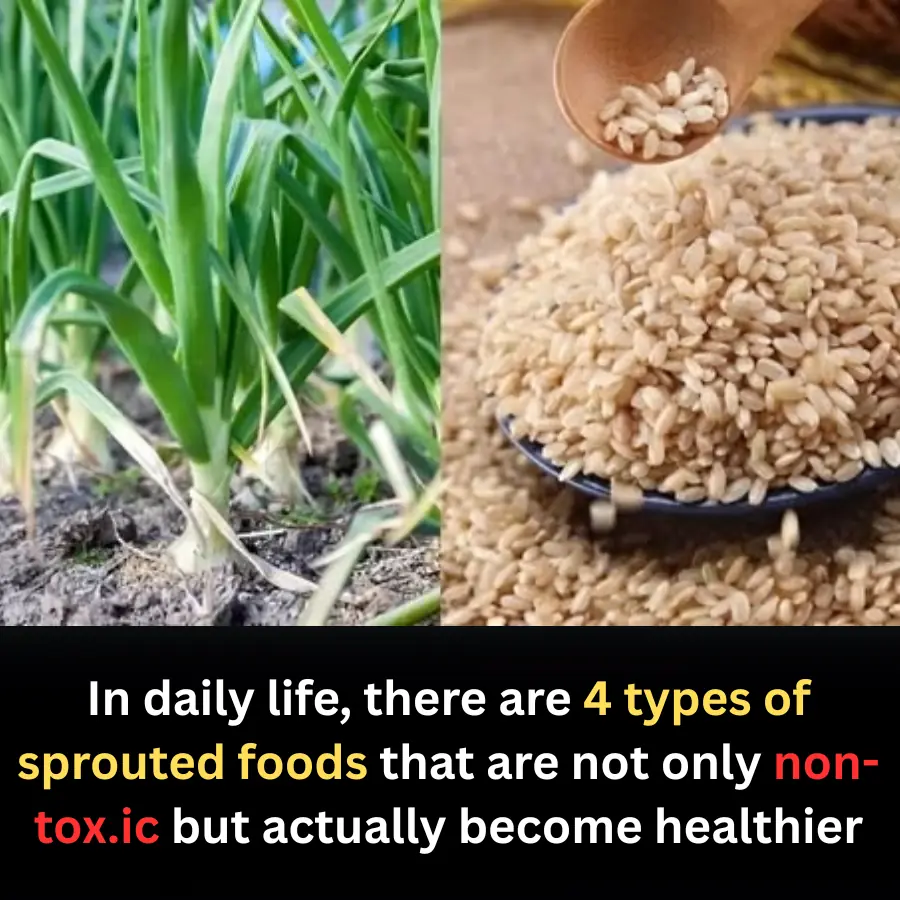
1. Sprouted Garlic: Stronger Antioxidant Power
When garlic forms green shoots, most households assume it has “gone bad.”
However, studies show that sprouted garlic contains up to five times more antioxidants than fresh garlic.
Benefits include:
-
Reduced inflammation
-
Improved cardiovascular protection
-
Enhanced immune function
Sprouting increases levels of polyphenols, making garlic more effective in fighting oxidative stress.
How to use it:
Sprouted garlic can be used just like regular garlic in stir-fries, soups, and sauces.
2. Sprouted Onions: Safer and More Nutritious
Unlike potatoes, sprouted onions do not develop toxins.
The green shoots contain:
-
High levels of vitamin A and C
-
Chlorophyll
-
Beneficial flavonoids
These nutrients support immunity and protect cells from free-radical damage.
How to use it:
The onion bulb can be cooked normally, and the shoots can be chopped and used like scallions.
3. Sprouted Ginger: Increased Anti-Inflammatory Compounds
When ginger begins to sprout, its active ingredients — gingerol and shogaol — do not decrease.
In fact, sprouting can enhance its:
-
Anti-nausea effects
-
Anti-inflammatory properties
-
Digestive support
Sprouted ginger is commonly used in Asian cooking and herbal remedies.
How to use it:
Add to teas, soups, or stir-fries for a stronger aromatic profile.
4. Sprouted Legumes: A Highly Valuable Functional Food
Some legumes become more nutritious after sprouting, including:
-
Mung beans
-
Soybeans
-
Chickpeas
-
Lentils
Sprouting increases:
-
Protein availability
-
Vitamin C
-
B-vitamins
-
Digestive enzymes
It also reduces antinutrients such as phytic acid, making sprouted legumes easier to digest.
How to use them:
Sprouted beans can be eaten raw in salads, lightly sautéed, or added to soups and side dishes.
When Is Sprouting Dangerous?
Food safety experts stress that only specific foods are toxic when sprouted — most notably potatoes.
Sprouted potatoes contain solanine, a compound that can cause:
-
Nausea
-
Vomiting
-
Dizziness
-
Neurological symptoms
Potatoes with green skin or sprouted eyes should always be discarded.
Conclusion
Sprouting is not always harmful.
In fact, garlic, onions, ginger, and legumes become even more beneficial after sprouting, thanks to higher antioxidant levels and improved digestibility.
Understanding which foods remain safe — and which do not — can help households reduce waste while maximizing daily nutrition.