When He Doesn’t Appreciate You, Do This: The Hard Truth About Walking Away
The image is unsettling at first glance: a woman walking forward while a man clings desperately to her leg, pleading, powerless, left behind. It is dramatic, almost shocking—but that is precisely why it resonates. It captures a reality many women experience in silence: staying in relationships where appreciation is absent, effort is one-sided, and self-worth slowly erodes.
“Ladies, when a man doesn’t appreciate you, do this.”
The message is blunt. The action implied is even blunter: walk away.
In a culture that often glorifies endurance, patience, and sacrifice—especially from women—leaving can feel like failure. But psychologists and relationship experts increasingly argue the opposite. Knowing when to walk away is not weakness. It is clarity.
Appreciation Is Not a Luxury—It’s a Baseline
Appreciation is not grand gestures or constant praise. It is consistency, respect, and effort that does not need to be begged for. When appreciation is missing, the signs are usually subtle at first: your needs are minimized, your boundaries tested, your presence taken for granted. Over time, those small dismissals accumulate into emotional exhaustion.
Research in relationship psychology shows that chronic lack of appreciation is strongly linked to anxiety, lowered self-esteem, and emotional burnout. When one partner gives while the other merely receives, the imbalance becomes unsustainable.
Yet many women stay—not because they don’t see the problem, but because they are taught to fix it.
Why Women Are Conditioned to Stay
From a young age, women are often socialized to be patient, understanding, and emotionally accommodating. We are told that love requires sacrifice, that men “take time,” that if we communicate better, give more, wait longer—things will change.
This conditioning creates a dangerous loop: the more unappreciated a woman feels, the harder she tries to earn appreciation. Ironically, this often reduces her perceived value in the relationship. What is given freely, endlessly, and without consequence is rarely respected.
Walking away breaks that loop.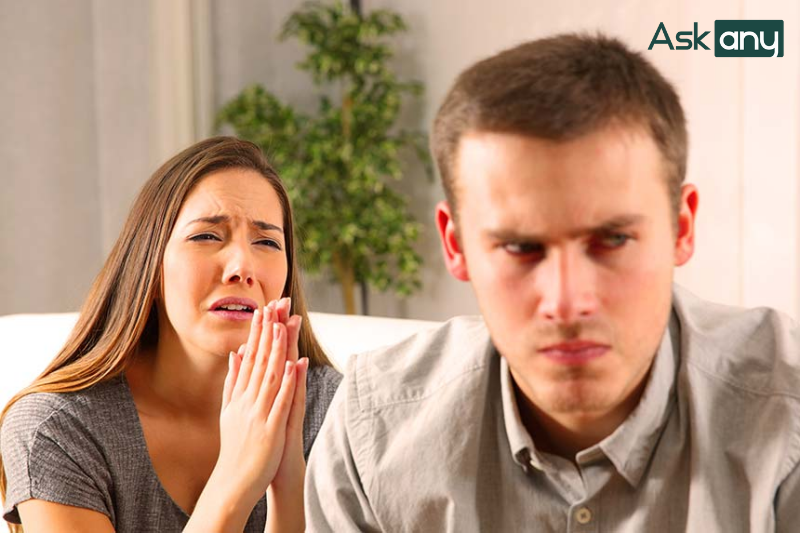
Walking Away Is Not Revenge—It’s Self-Respect
The image does not depict cruelty. The woman is not kicking, shouting, or humiliating the man. She is simply moving forward. That distinction matters.
Walking away is not about punishing someone who failed to value you. It is about refusing to participate in a dynamic that diminishes you. Boundaries are not ultimatums. They are decisions.
Experts note that self-respect is communicated more through actions than words. You can explain your needs repeatedly, but nothing speaks louder than choosing yourself when those needs are ignored.
The Shock Factor: He Notices When You’re Gone
Here is the uncomfortable truth many avoid saying out loud:
Some people only recognize your value once access to you is gone.
Not because you suddenly became valuable—but because your absence reveals what your presence provided. Emotional labor, stability, care, support. When those disappear, reality sets in.
However, walking away should never be a strategy to make someone change. If the goal is to be chased, you are still handing over control. Walking away works only when it is final in intention, even if not dramatic in execution.
Choosing Yourself Changes the Ending
The most powerful part of the image is not the man on the floor—it is the woman’s posture. Upright. Forward-facing. Unapologetic.
Choosing yourself does not guarantee immediate happiness. It often comes with loneliness, doubt, and grief. But it also creates space—space for respect, reciprocity, and relationships that do not require you to shrink.
In the long run, walking away from what doesn’t appreciate you is an act of preservation. It protects your time, your emotional health, and your sense of worth.
So when a man doesn’t appreciate you, do this:
Stop explaining. Stop proving. Stop waiting.
And walk—calmly, firmly—toward a life where appreciation is not requested, but given.