A clogged kitchen sink is one of the most common household problems. Over time, grease, food particles, soap residue, and oils accumulate inside the pipes. What begins as a slow drain can eventually turn into a completely blocked sink accompanied by unpleasant odors.
Many people immediately reach for strong chemical drain cleaners, but these products can sometimes damage pipes, harm the environment, or release harsh fumes. Fortunately, there is a simple and effective household solution that many people already have in their kitchen: baking soda and vinegar combined with hot water.
This natural method can help break down grease buildup, loosen debris in pipes, and reduce unpleasant odors without relying on harsh chemicals.
Why Kitchen Sink Pipes Get Clogged
Kitchen sinks handle a wide variety of substances every day. Even when we try to be careful, small amounts of grease and food often end up going down the drain.
Common causes of pipe buildup include:
-
Cooking oils and grease
-
Butter and fat from meat
-
Food scraps
-
Coffee grounds
-
Soap residue
When grease cools inside pipes, it solidifies and sticks to the pipe walls. Over time, additional debris sticks to the greasy layer, slowly narrowing the pipe and slowing water flow.
This buildup can also trap bacteria that produce unpleasant smells.

The Simple Cleaning Solution
One of the easiest ways to address grease buildup is by using three basic ingredients:
-
Baking soda
-
White vinegar
-
Hot water
These ingredients create a gentle chemical reaction that helps loosen grease and debris.
Why It Works
Baking soda is mildly alkaline and helps break down grease and organic material.
Vinegar is acidic and reacts with baking soda to create a bubbling reaction that helps dislodge debris.
Hot water helps melt grease and flush loosened particles through the pipes.
Together, they create a simple yet effective cleaning process.
Step-by-Step Instructions
Step 1: Pour Baking Soda into the Drain
Start by pouring about half a cup of baking soda directly into the kitchen drain.
Try to ensure the powder reaches inside the pipe rather than sitting on the surface.
Step 2: Add Vinegar
Next, slowly pour one cup of white vinegar into the drain.
You will immediately notice bubbling and fizzing. This reaction helps break apart grease and loosen trapped debris.
Let the mixture sit for 10–15 minutes.
Step 3: Flush with Hot Water
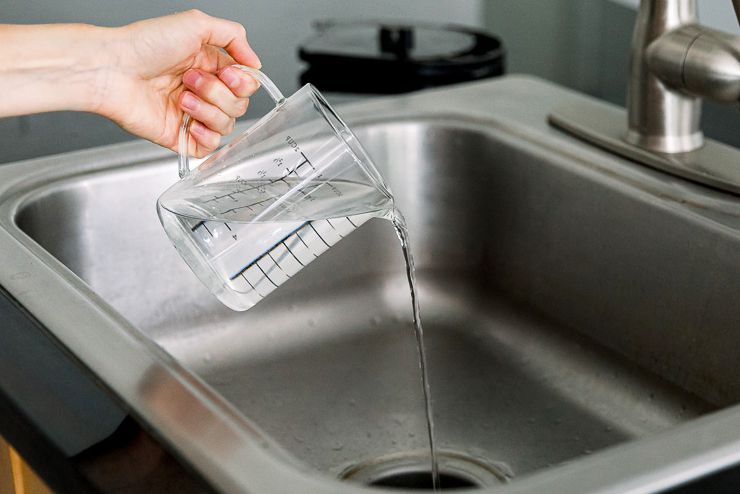
After the reaction has worked inside the pipe, carefully pour a kettle of hot water down the drain.
The hot water helps melt grease and push loosened residue further down the pipe, restoring smoother water flow.

How This Helps Remove Odors
Unpleasant sink odors are often caused by bacteria feeding on trapped food particles inside the drain.
The baking soda and vinegar combination helps:
-
Neutralize odors
-
Break down organic material
-
Clean the inner surfaces of the pipes
Hot water then washes away the residue that contributes to bad smells.
When to Use This Method
This natural solution works best for:
-
Mild clogs
-
Slow drains
-
Grease buildup
-
Unpleasant sink odors
It can also be used regularly as a preventive maintenance routine.
Running this cleaning process once every one or two weeks can help keep pipes clear and odor-free.
When It May Not Be Enough
While this method is effective for minor problems, it may not resolve severe blockages.
If your sink:
-
Drains extremely slowly
-
Makes gurgling noises
-
Is completely blocked
then the clog may be deeper in the plumbing system.
In these cases, additional tools such as a plunger, drain snake, or professional plumbing service may be necessary.
Additional Tips to Prevent Grease Clogs
Prevention is always easier than fixing a blockage. A few simple habits can keep your kitchen pipes cleaner for longer.
Avoid Pouring Grease Down the Drain
Cooking oils and fats should be poured into a container and disposed of in the trash after cooling.
Use a Sink Strainer
A simple sink strainer can catch food scraps before they enter the drain.
Flush with Hot Water After Cooking
Running hot water for 20–30 seconds after washing greasy dishes can help move oils through the pipes before they solidify.
Regular Maintenance
Using the baking soda and vinegar method occasionally helps prevent buildup from forming in the first place.
Environmental Advantages
Unlike many commercial drain cleaners, this natural cleaning method has several environmental benefits.
It:
-
Produces fewer harmful fumes
-
Reduces chemical pollution
-
Is safer for most plumbing systems
-
Uses inexpensive household ingredients
Because baking soda and vinegar are widely available and biodegradable, they provide a more eco-friendly alternative to stronger chemical products.
Final Thoughts
A clogged or smelly kitchen sink can be frustrating, but the solution does not always require expensive products or harsh chemicals. Sometimes the simplest household ingredients can help restore your drain’s performance.
The combination of baking soda, vinegar, and hot water offers a gentle yet effective way to dissolve grease, loosen debris, and eliminate odors in kitchen pipes.
By using this method regularly and practicing a few preventive habits, you can keep your kitchen sink running smoothly and avoid many common plumbing problems.
Sometimes, the most effective solutions are already waiting in your kitchen.