Dry Mouth at Night Could Be a Warning Sign: Don’t Ignore These 8 Possible Causes
Waking up in the middle of the night with a dry mouth is something many people experience occasionally. It might feel like your throat is parched, your tongue sticks to the roof of your mouth, or you need water immediately after waking up. In many cases, this is harmless. However, frequent nighttime dry mouth—known medically as xerostomia—can sometimes indicate underlying health issues.
Saliva plays an important role in maintaining oral health. It helps wash away bacteria, aids digestion, and protects the teeth and gums. When saliva production decreases during sleep, the mouth can become dry and uncomfortable.
If this problem happens regularly, it may be worth paying attention to the possible causes.
1. Mouth Breathing During Sleep

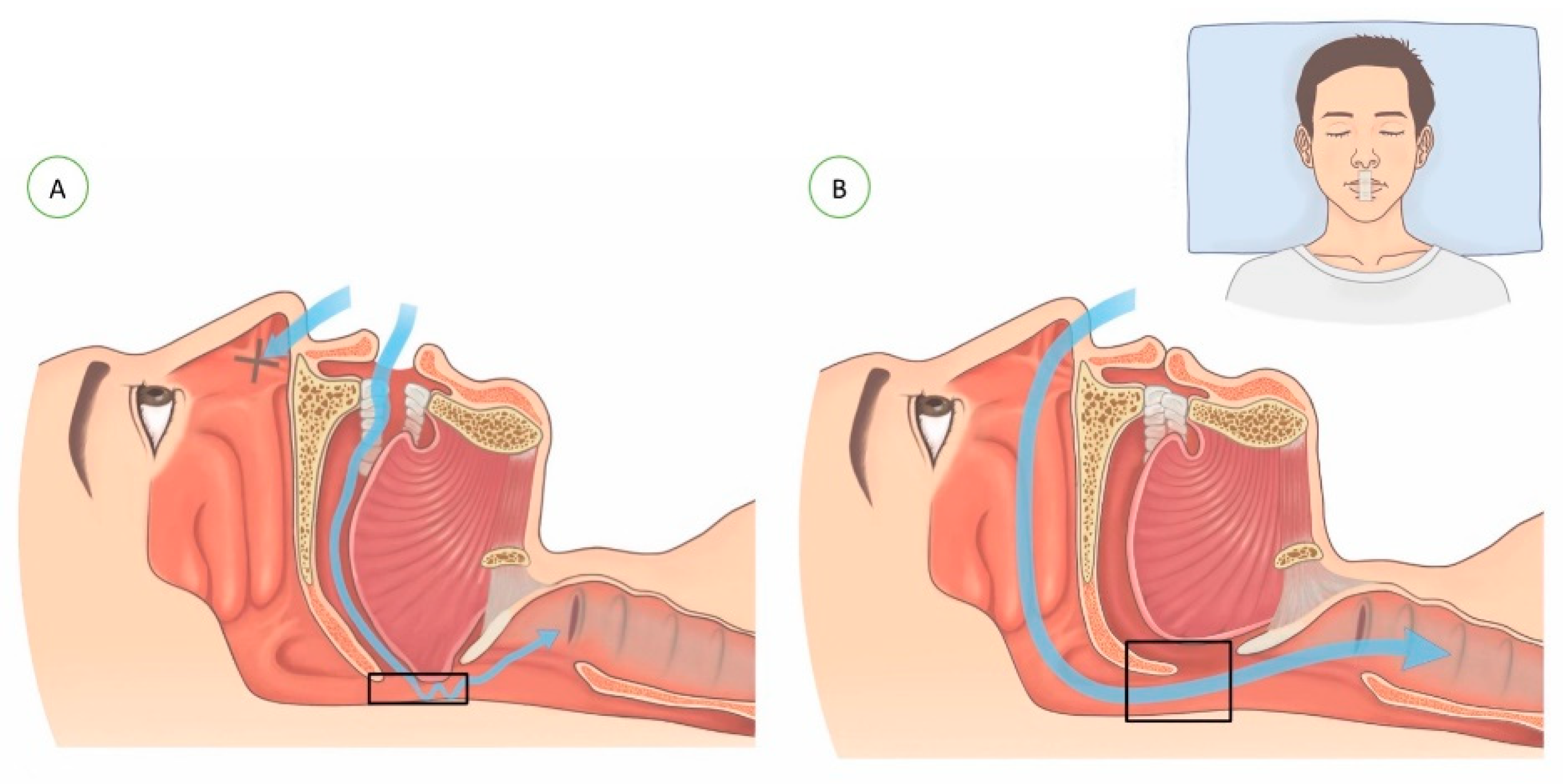

One of the most common causes of dry mouth at night is breathing through the mouth instead of the nose.
This may happen because of:
-
Nasal congestion
-
Allergies
-
Deviated nasal septum
-
Habitual mouth breathing during sleep
When air passes directly through the mouth for several hours, saliva evaporates more quickly, leaving the mouth dry by morning.
2. Dehydration

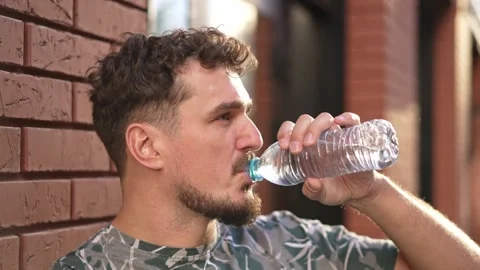

Another simple but common cause is not drinking enough water during the day.
When the body becomes dehydrated, saliva production decreases. This can result in symptoms such as:
-
Dry mouth
-
Thirst during the night
-
Dry lips
-
Fatigue
Staying properly hydrated throughout the day can help reduce nighttime dryness.
3. Acid Reflux (GERD)


Gastroesophageal reflux disease (GERD) occurs when stomach acid flows back into the esophagus. This condition may cause irritation in the throat and mouth, especially when lying down at night.
Symptoms may include:
-
Burning sensation in the chest
-
Sour taste in the mouth
-
Dry mouth during sleep
-
Chronic throat irritation
Managing acid reflux through diet and lifestyle changes may help reduce these symptoms.
4. Certain Medications

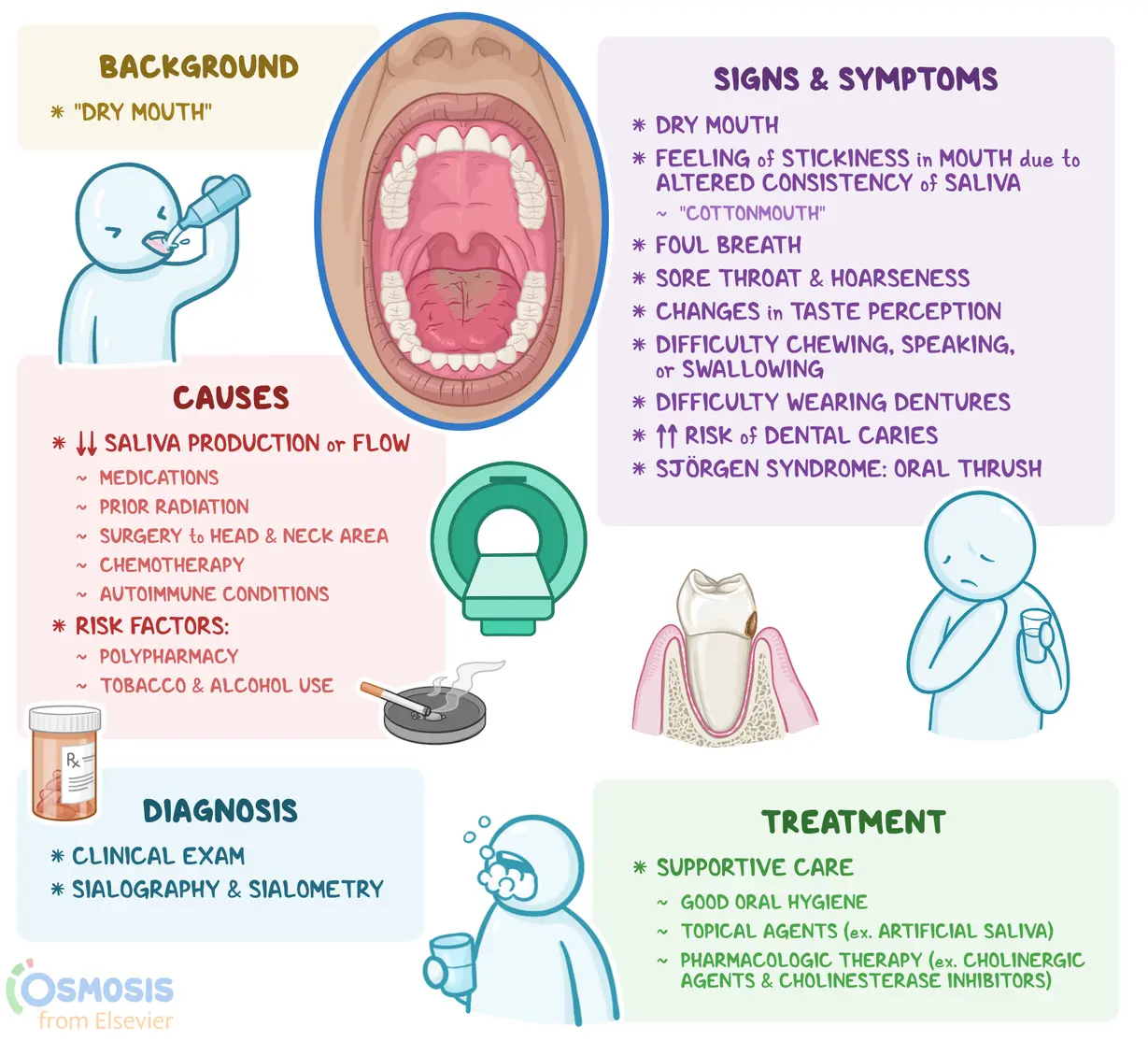

Many medications list dry mouth as a side effect. These may include drugs used to treat:
-
High blood pressure
-
Depression or anxiety
-
Allergies
-
Pain
Some medications affect the nerves that stimulate saliva production, which can lead to reduced moisture in the mouth.
If nighttime dry mouth began after starting a new medication, discussing this symptom with a doctor may be helpful.
5. Sleep Apnea


Sleep apnea is a condition where breathing repeatedly stops and starts during sleep. People with sleep apnea often snore loudly and breathe through their mouths, which can cause dry mouth during the night.
Common signs include:
-
Loud snoring
-
Gasping for air during sleep
-
Morning headaches
-
Daytime fatigue
If dry mouth occurs alongside these symptoms, medical evaluation may be necessary.
6. Smoking or Alcohol Consumption
Both smoking and alcohol can reduce saliva production.
Smoking irritates the mouth and throat, while alcohol acts as a dehydrating substance that can worsen dryness during sleep.
People who smoke or drink alcohol in the evening may notice stronger dry-mouth symptoms overnight.
7. Stress and Anxiety
Stress can affect many bodily functions, including saliva production. When the body experiences chronic stress, it may activate the sympathetic nervous system, which reduces saliva flow.
People under stress may also grind their teeth or breathe through their mouths at night, worsening the problem.
8. Salivary Gland Problems
In some cases, dry mouth may be related to issues affecting the salivary glands themselves.
Conditions such as infections, autoimmune diseases, or gland blockage may reduce saliva production. When saliva levels remain low for long periods, oral health problems such as tooth decay and gum disease may develop.
Persistent dry mouth should therefore be evaluated by a healthcare professional.
Simple Ways to Reduce Nighttime Dry Mouth
Many people can improve symptoms by making small lifestyle changes, such as:
-
Drinking enough water during the day
-
Using a humidifier in the bedroom
-
Avoiding alcohol before bedtime
-
Maintaining good nasal health
-
Practicing good oral hygiene
In some cases, doctors may recommend saliva substitutes or treatments that stimulate saliva production.
Final Thoughts
Occasional dry mouth at night is usually harmless, but persistent symptoms may indicate underlying health conditions or lifestyle factors that need attention.
By paying attention to these signals and making simple adjustments, many people can improve their sleep quality and protect their oral health.
If the problem continues for weeks or becomes severe, consulting a healthcare professional is the safest way to identify the cause and find the appropriate solution.