When Buying an Apartment, Avoid These 4 Floors No Matter How Cheap — Uncomfortable to Live In and Quick to Lose Value
Many people look for “bargain” apartments, but some units are cheap for a reason. In high-rise buildings, certain floors tend to have structural, environmental, or psychological drawbacks that make them difficult to resell. Real estate experts warn that buying the wrong floor can affect daily comfort, safety, and long-term property value.
Here are 4 floors you should avoid, even if the price looks tempting.
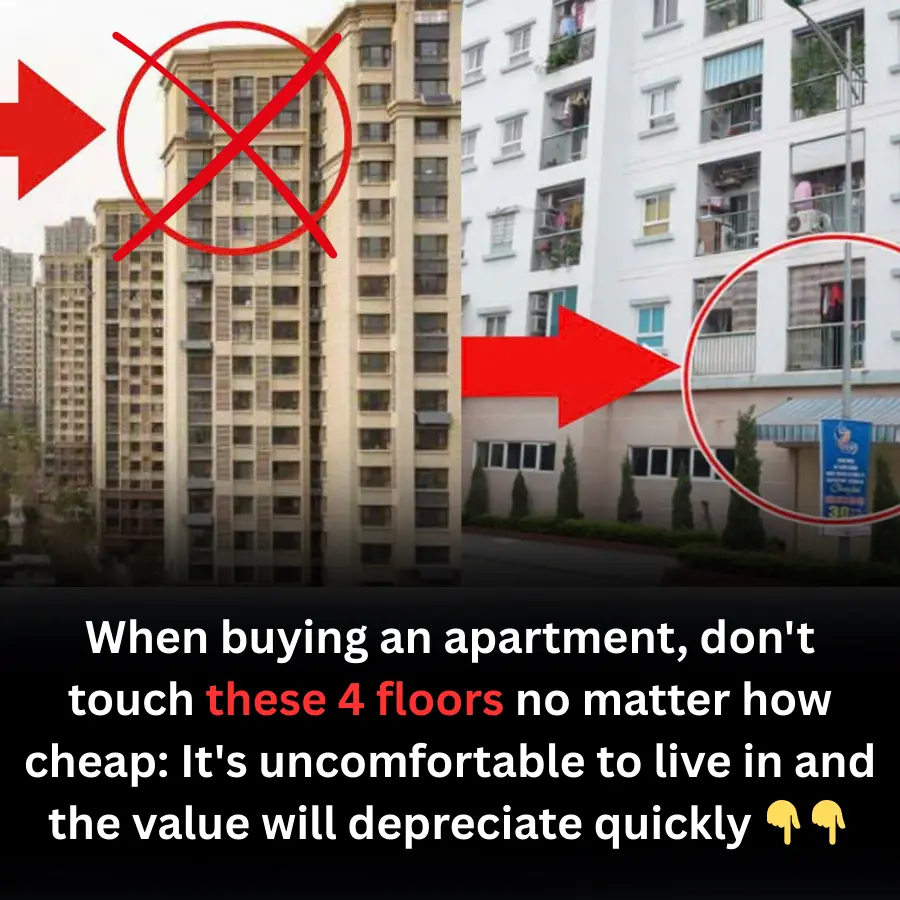
1. The Ground Floor (1st Floor)
Although convenient, ground-floor units often come with multiple problems:
-
High noise levels from foot traffic and shared areas
-
Poor privacy due to people passing by
-
More dust, mosquitoes, and outdoor pollution
-
Higher risk of theft or intrusion
-
Increased humidity and mold, especially in areas with heavy rain
Because of these issues, ground-floor apartments typically depreciate faster and are harder to sell.
2. Floors Near the Garage or Commercial Areas
Units located directly above:
-
parking decks
-
building garages
-
supermarkets
-
restaurants
-
community activity rooms
…often experience constant noise, strong odors, or vibration from machinery and vehicles.
This not only affects sleep quality but also creates long-term discomfort. Buyers tend to avoid these floors, leading to lower demand and lower resale value.
3. “Middle-Low” Floors With Poor Ventilation (Usually 2nd–4th Floor)
These floors may seem acceptable at first, but they are often:
-
too close to street level noise
-
not high enough to avoid pollution
-
not low enough to enjoy convenient access
-
more prone to mosquito and insect problems
-
lacking airflow due to surrounding buildings or trees
As a result, they often feel damp and stuffy—especially in humid climates.
Real estate agents note that air circulation and light exposure are the biggest complaints about these levels.
4. Top Floor Apartments
Top-floor units attract buyers with views, but they also come with hidden risks:
-
Heat absorption from the roof makes the apartment hot in summer
-
Higher risk of roof leakage
-
Poor insulation in older buildings
-
Limited water pressure in some systems
-
Difficult evacuation during emergencies
Because maintenance issues are more common, top-floor units lose value faster unless the building has premium insulation and modern construction standards.
Conclusion: Cheap Does Not Mean Worth It
While these floors may have lower upfront prices, the long-term trade-offs include:
-
discomfort
-
higher maintenance costs
-
difficulty reselling
-
depreciation faster than other floors
For a balanced choice, most experts recommend mid-high floors (from the 6th to 15th floor) in standard apartment buildings—where ventilation, light, safety, and resale value tend to be the most stable.