Potassium remains an important feature of the fruit as well.
So a banana with brown spots should not automatically be thrown away simply because it looks different from a perfect yellow banana.
Potassium Doesn't Disappear When the Banana Turns Brown
Potassium is one of the nutrients most commonly associated with bananas.
It plays important roles in fluid balance, nerve signaling, and normal muscle function.
Ripening does not suddenly eliminate the banana's potassium content.
This means you can still enjoy the fruit as part of a balanced diet regardless of whether it is slightly green, bright yellow, or more heavily spotted.
People with certain kidney conditions, however, may need individualized guidance about potassium intake. In that situation, “healthy” foods may still need to be eaten in controlled amounts.
Brown Spots Do Not Automatically Mean a Banana Is Spoiled
A few brown spots on the peel are usually simply a sign of ripening.
As the banana becomes increasingly soft, the color may become darker and the fruit may develop a stronger aroma.
But there is a difference between ripeness and spoilage.
A banana that has mold, an unusual fermented or rotten smell, leaking liquid, or significant decomposition should be discarded.
The peel can look unattractive while the fruit inside is perfectly usable.
This is one reason very ripe bananas are excellent for cooking.
Ripe Bananas Can Help Reduce Food Waste
One of the easiest ways to use brown-spotted bananas is to stop treating them as “bad” food.
Very ripe bananas work beautifully in:
Banana bread
Smoothies
Oatmeal
Pancakes
Yogurt bowls
Homemade frozen desserts
Because they are naturally sweet, they may allow you to reduce added sugar in certain recipes.
In this way, ripeness can actually be an advantage.
Which Banana Is Best Before Exercise?
The answer depends on the type and timing of your workout.
A yellow banana is often convenient because it provides easily digestible carbohydrates and is relatively portable.
For exercise sessions where quick energy is useful, a ripe banana may be easier to tolerate than a firm green one.
However, athletes and highly active individuals may have different nutritional needs depending on the duration and intensity of exercise.
There is no requirement to choose one exact shade of yellow for every workout.
Which Banana Is Best for Weight Management?
Bananas can fit into a weight-conscious diet at any stage of ripeness.
The more important questions are portion size, total calorie intake, and the overall quality of the diet.
A banana is generally more filling and nutrient-rich than many highly processed snacks, particularly when eaten with protein or healthy fats.
For example, a banana with a small portion of nuts or unsweetened yogurt can make a satisfying snack.
Choosing green over brown bananas is not, by itself, a weight-loss strategy.
Is One Color Actually “Healthier”?
Not in an absolute sense.
Each stage has different characteristics.
Green bananas: higher in resistant starch, less sweet, firmer, and potentially more difficult for some people to digest.
Yellow bananas: balanced texture and sweetness, easy to eat, and a practical everyday choice.
Brown-spotted bananas: softer, sweeter, and useful for baking and smoothies, with more starch converted into sugars.
The differences make each stage useful for different purposes.
Instead of asking, “Which banana is healthiest?” a better question may be:
“Which banana best fits what I need right now?”
How to Choose the Right Banana for Your Needs
If your priority is resistant starch, a less-ripe banana may be more appealing.
If you want a simple everyday snack, a yellow banana is an easy choice.
If you want natural sweetness for baking or smoothies, a brown-spotted banana may be ideal.
If you have blood-glucose concerns, pay attention to ripeness, portion size, and what you eat alongside the banana.
And if you have digestive sensitivity, choose the ripeness that your body tolerates best rather than forcing yourself to follow a particular nutrition trend.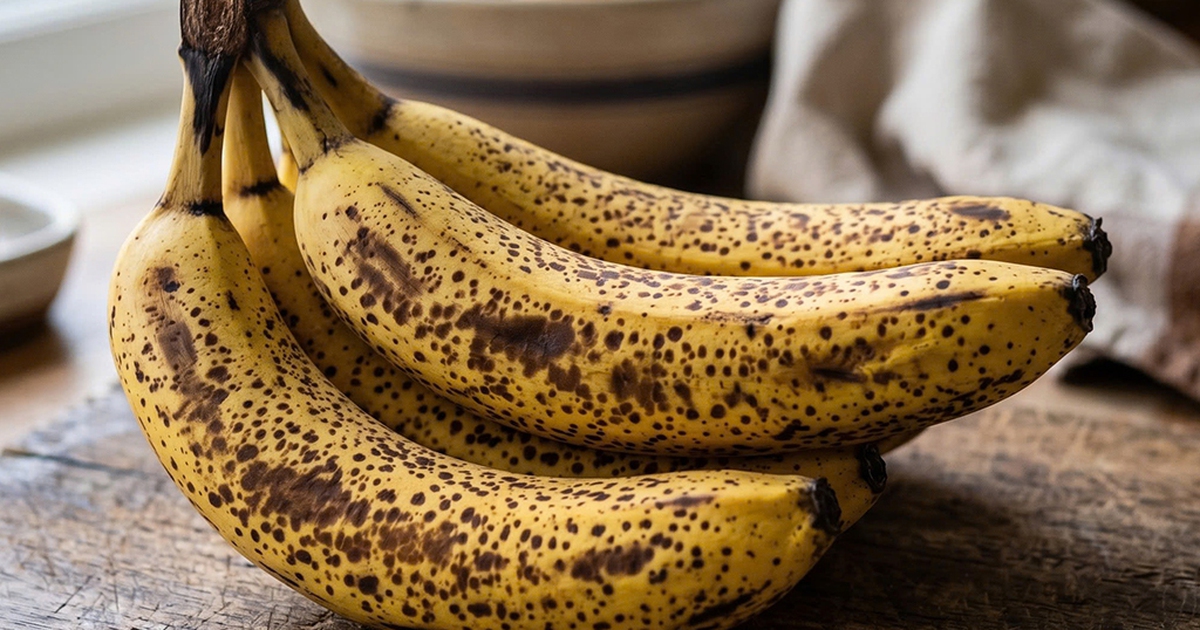
The Bottom Line
Green, yellow, and brown bananas are not three different foods. They are the same fruit at different stages of ripeness and that ripening process changes their texture, sweetness, and carbohydrate composition.
Green bananas contain more resistant starch and less readily available sugar.
Yellow bananas offer a balanced combination of sweetness, texture, and convenience.
Brown-spotted bananas are softer and sweeter and can be especially useful in smoothies and baking.
There is no single banana color that is healthiest for everyone.
The best choice depends on your dietary goals, digestive comfort, blood-glucose needs, and personal preference.
So the next time you see a banana changing color on the counter, don't automatically think it has become less nutritious.
A green banana has its advantages.
A yellow banana has its place.
And a brown-spotted banana may be exactly what you need for your next smoothie or homemade banana bread.
The healthiest banana is often the one that fits comfortably into an overall balanced diet and that you will actually enjoy eating.