A Once-Discarded Leaf Now Becomes a Billion-Dong Industry as China Buys in Bulk
For years, many rural households considered this leaf worthless—something people would give away for free, burn as firewood, or simply sweep off the ground. But in recent years, the same leaf has become a lucrative agricultural commodity after China began purchasing it in large quantities for food, medicine, and industrial production.
The unexpected surge in demand has transformed what used to be a “throwaway plant” into a profitable crop, helping some farmers earn billions of đồng (tens of thousands of USD) each year.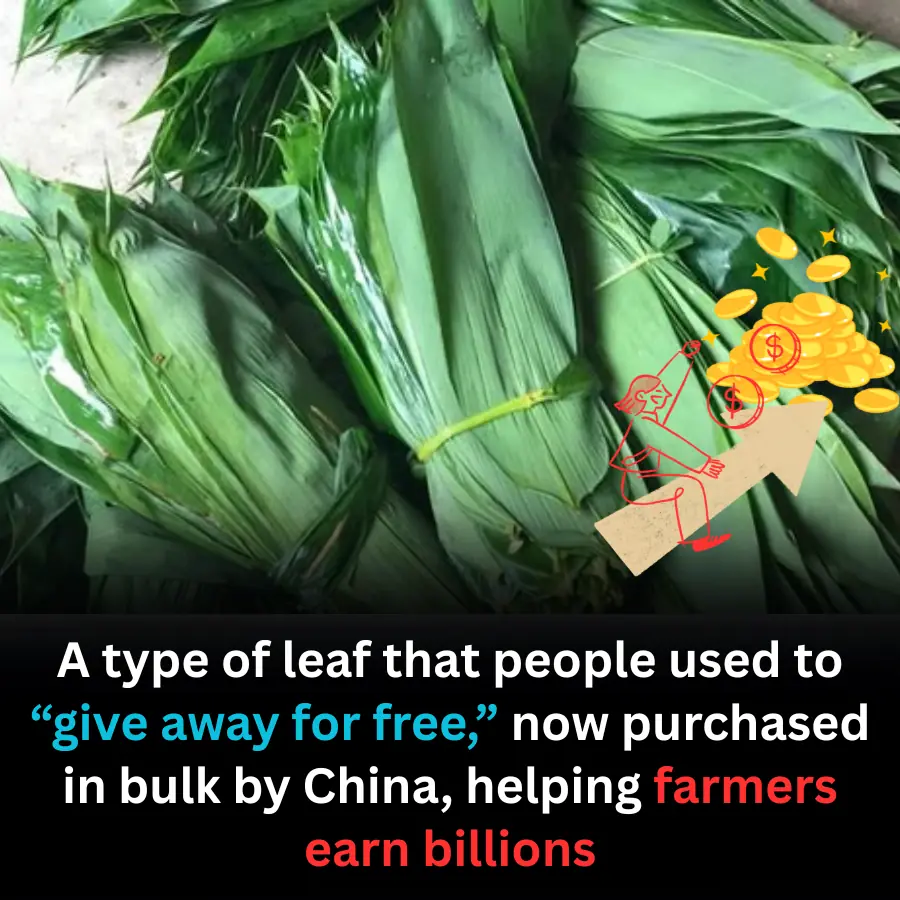
From Neglected Plant to High-Value Export
This plant—the leaves of the fig tree (lá sung)—was once seen as an ordinary wild leaf used only as a garnish or wrap in some traditional dishes. Many families didn’t bother harvesting it because the economic value seemed insignificant.
However, Chinese buyers discovered that fig leaves contain:
-
High levels of antioxidants
-
Natural anti-inflammatory compounds
-
Fibers useful for digestive health
-
Aroma suitable for pickling and fermentation
-
Bioactive substances valued in traditional medicine
As a result, the fig leaf quickly became a sought-after export item, especially for dried leaf products.
China’s Market Demand Boosts Local Income
Chinese companies now use fig leaves in a wide range of products:
-
Herbal teas
-
Medicinal extracts
-
Anti-inflammatory supplements
-
Natural health foods
-
Packaging for fermented dishes
Because of this demand, purchasing prices have surged. In some regions, farmers who once ignored the plant are now harvesting, drying, and selling leaves for substantial profit.
Export cooperatives report that high-quality dried fig leaves can sell for 10–15 USD/kg, and a household with a large fig grove can earn the equivalent of tens of thousands of dollars per year—a dramatic shift from past decades.
Farmers “Harvest Money” From What Was Once Waste
Local agricultural officials note that the plant’s advantages make it ideal for cultivation:
-
Grows easily in poor soil
-
Requires minimal care
-
Naturally pest-resistant
-
Provides year-round leaves
Because input costs are nearly zero, the profit margin is exceptionally high. Many farmers now say they are “picking money from the trees.”
A Reminder That Agricultural Value Can Change Overnight
Experts point out that the story of the fig leaf is another example of how global markets can transform ordinary crops into valuable commodities. What one community considers useless may be a prized ingredient in another culture.
The rapid shift in demand encourages farmers to stay informed about export trends and diversify their crops to avoid reliance on traditional staples.